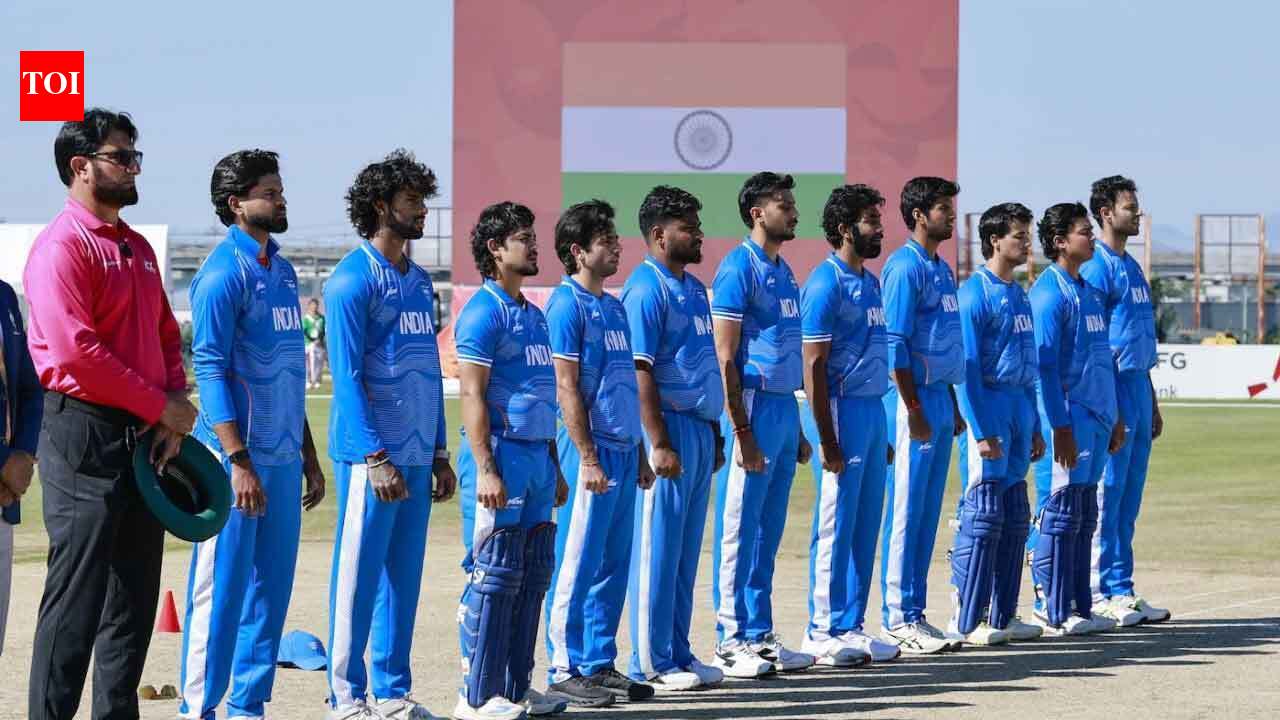
When Jasprit Bumrah knocked over Sri Lanka’s top order in his very first over at Korogi Sports Park, India did more than seal a 124-run semi-final victory—they signalled that the defending champions are running at full throttle. On Saturday, October 3, 2026, the Asian Games men’s cricket tournament reaches its climax in Nisshin, Aichi Prefecture, when World No. 1 India face arch-rivals Pakistan in a gold medal showdown.
The stakes extend beyond historic regional rivalry. India arrive in Nisshin attempting to complete a cricket gold sweep at Aichi-Nagoya after the Indian women’s team routed Sri Lanka to claim gold earlier in the Games. Led by Shreyas Iyer, the Men in Blue are seeking back-to-back Asian Games titles after winning gold at Hangzhou 2022. Pakistan, captained by Sahibzada Farhan, enter their first men's Asian Games final aiming for their maiden cricket gold, having previously claimed bronze at Guangzhou 2010.

Semi-Final Demolitions and the Route to Nisshin
Both finalists advanced through quarterfinals without bowling a ball after persistent rain washed out India’s clash against Afghanistan and Pakistan’s fixture against Hong Kong, China. As seeded teams based on ICC T20I rankings, both powerhouses progressed straight to the final four before delivering authoritative performances.
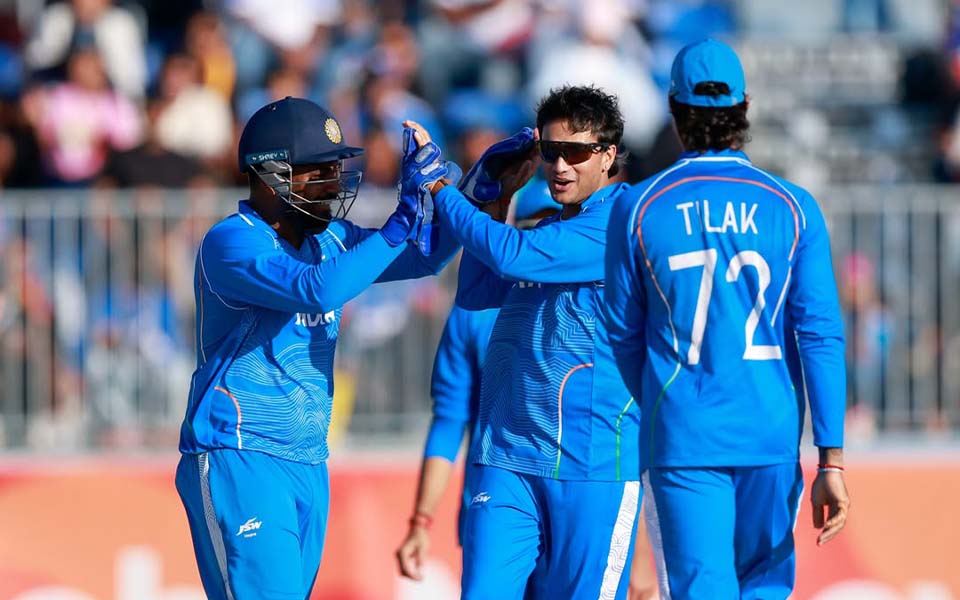
India’s 124-run win over Sri Lanka in Thursday's semi-final was built on explosive middle-order hitting and relentless powerplay bowling. Sent in on a challenging surface, India registered 169 for seven in 20 overs. Wicketkeeper-batter Ishan Kishan delivered the standout knock, smashing an unbeaten 80 off 46 balls with four boundaries and five sixes. 15-year-old batting prodigy Vaibhav Sooryavanshi provided vital momentum on his return to the side, scoring 38 off 21 balls with six fours and two sixes to resurrect the innings after early losses. India’s attack then skittled Sri Lanka for just 45 runs in 9.5 overs. Bumrah struck twice in the opening over, while Axar Patel, Washington Sundar, and Abhishek Sharma chipped in alongside three crucial run-outs.
Pakistan’s semi-final path required composure under altered conditions against Bangladesh. Delayed by a wet outfield, the match was curtailed to 13 overs per side. Bangladesh set a target of 111 for seven, pegged back by left-arm wrist-spinner Sufyan Moqim, who collected figures of 3 for 26 in three overs. Pakistan tracked down the 112-run target in 11.3 overs to secure a six-wicket victory, driven by vice-captain Abdul Samad’s blistering unbeaten 30 off 15 deliveries, featuring five boundaries and a six.
The Shared Gold Rule and Weather Context
Unsettled weather has hovered over the tournament, forcing six consecutive abandoned matches during the competition's opening stage. That history introduces crucial tactical and logistical considerations for Saturday’s final at Korogi Sports Park.
Should damp conditions force a reduced-overs match, both sides have shown capacity to adjust quickly. Pakistan’s top order adjusted seamlessly to a 13-over sprint against Bangladesh, while India’s seam-and-spin depth bowled Sri Lanka out in under ten overs.
Recent T20 History and Broadcast Details
Saturday's fixture marks the first T20 meeting between the sides since February 15, when India defeated Pakistan by 61 runs during the T20 World Cup group stage in Colombo, Sri Lanka. Ishan Kishan was the architect of that victory as well, scoring 77 off 40 balls. Pakistan’s last victory over India in T20Is came on September 4, 2022, during the Asia Cup semi-finals, when Mohammad Rizwan scored 71 to complete a five-wicket win.
Match action begins at 1:30 PM local time in Japan (10:00 AM IST / 9:30 AM PKT / 04:30 GMT). In India, Sony Sports Network will broadcast the match on television with live streaming on SonyLIV. Dedicated build-up and live coverage for international audiences will begin from 02:30 GMT on Al Jazeera Sport.
Squad Breakdown for the Gold Medal Final
| Team | Captain / Key Leaders | Specialist Batsmen & All-Rounders | Bowling Attack |
|---|---|---|---|
| India | Shreyas Iyer (C), Tilak Varma (VC) | Abhishek Sharma, Vaibhav Sooryavanshi, Ishan Kishan (wk), Sanju Samson (wk), Shivam Dube, Axar Patel, Washington Sundar, Vipraj Nigam | Jasprit Bumrah, Arshdeep Singh, Ravi Bishnoi, Yash Thakur |
| Pakistan | Sahibzada Farhan (C), Abdul Samad (VC) | Saim Ayub, Usman Khan (wk), Hasan Nawaz, Haider Ali, Arafat Minhas, Saad Masood, Maaz Sadaqat | Sufyan Moqim, Abrar Ahmed, Ahmed Daniyal, Akif Javed, Ali Raza, Mohammad Wasim Jr / Salman Mirza |
Evidence-Led Forecast: Asian Games Gold Medal Clash
Powerplay Mechanics and Middle-Over Control
Analysis of semi-final performances at Korogi Sports Park indicates that early seam movement heavily dictates powerplay strategies. India will look to unleash Jasprit Bumrah immediately to exploit initial moisture and isolate Pakistan’s top order. Conversely, Pakistan's tactical route relies on wrist-spinner Sufyan Moqim holding control during the middle overs to deny Ishan Kishan and Shreyas Iyer leverage over the boundary fielders.
Decisive Matchup: Sufyan Moqim vs. Ishan Kishan
The core contest pits Sufyan Moqim against India's middle-order left-handers, specifically Ishan Kishan. Moqim's 3 for 26 against Bangladesh demonstrated his ability to extract turn on wet, tacky surfaces. If Kishan maintains the aggressive posture that netted 80 off 46 against Sri Lanka and 77 off 40 in their previous World Cup meeting, India can dismantle Pakistan’s spin choke before the death overs.
Chasing Potential Under Shortened Overs
Pakistan’s powerplay batting unit, featuring Saim Ayub and Sahibzada Farhan, possesses raw aerial capabilities. If Pakistan win the toss, bowl first under overcast skies, and pick up early wickets before India’s stroke-makers settle on a slow pitch, Abdul Samad’s late-order hitting (demonstrated by his 15-ball 30 in the semi-final) gives Pakistan the firepower to chase down modest targets in abbreviated overs.
Weather Variables and Toss Dynamics
A wet outfield or overhead rain delay reducing the contest below 10 overs dramatically elevates toss importance and shifts advantage to the team batting second, as wet ball conditions complicate wrist-spin control for both Sufyan Moqim and Ravi Bishnoi.
Sources
These sources formed the evidence pack for this article. Links open the original publisher; inclusion does not imply endorsement.
- timesofindia.indiatimes.com original
- aljazeera.com original
- thesportstak.com original
- crictracker.com original