Scores, fixtures and picks
These are current fixtures from the same sport, shown as a separate live companion rather than evidence for the article. Live status and scores come from the normalized SportyPulses data feed; predictions are reader picks, not betting advice.
The International Ice Hockey Federation lost its case at the Court of Arbitration for Sport. It did not lose its nerve.
The IIHF announced Wednesday that it will appeal the CAS ruling before Switzerland's Federal Tribunal, challenging the impartiality of two judges on the three-person panel that ordered Russian and Belarusian national teams back into IIHF competition. The appeal turns on a narrow procedural question: whether arbitrators Giulio Palermo and another panel member can be considered independent given reported past ties to Russia.
That legal maneuver is the governing body's formal answer. But the IIHF knows, as does everyone watching the 2027 Men's World Championship in Germany, that the survival of this tournament may depend less on Swiss jurisprudence than on whether anyone is willing to play, host, or sponsor it once Russia arrives.

The Ruling That Broke the Boycott
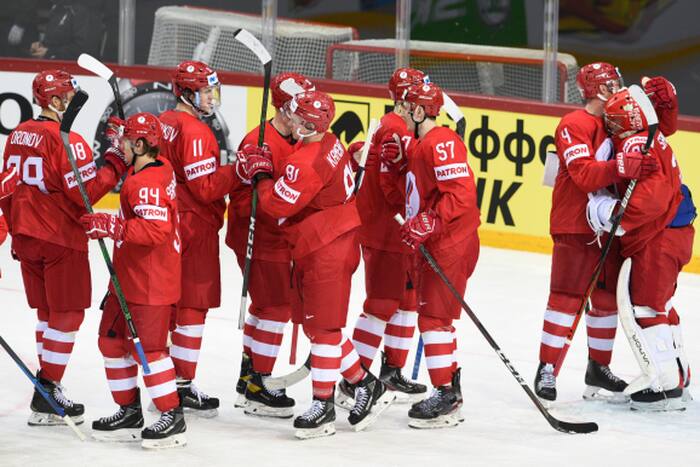
CAS determined in November that the IIHF had suspended Russia solely on security grounds without proving those risks. Under the court's reading, "only unequivocally proven safety risks can justify excluding athletes on the basis of their nationality." The decision clears Russia's men's team for the May 2027 championship in Germany, with the women's team eligible for November 2027.
Russian Sports Minister Mikhail Degtyarev praised the court for agreeing with Russia's "justified demands." That endorsement should be read as a signal: Moscow intends to arrive not as a supplicant but as a full national team, flag and anthem intact, at a tournament hosted by a country that has spent years contending with what the German Ice Hockey Federation describes as a Russian hybrid warfare campaign including sabotage, espionage, and disinformation.
Germany's Impossible Hosting Problem
Germany accepted the 2077 championship under one political reality; it now faces another. As host, Berlin must weigh security for a Russian delegation that German officials believe could include intelligence officers against the economic risk of losing sponsors, and against its own Olympic ambitions.
The International Olympic Committee has made the trap explicit: a country that bars athletes from a particular nation cannot host the Olympic Games. Munich hopes to bid for the 2036-2044 window. Any German move to exclude Russia could damage that bid. Yet accepting Russia means confronting a federation that said it "rejects the decision to readmit the Russian national team" while acknowledging it may have to relinquish hosting rights altogether.
Canada has already drawn its own hard line. Foreign Minister Anita Anand said Canada will maintain restrictions on Russian athletes at federally funded competitions, which means the World Junior Championship in Edmonton and Red Deer, beginning December 26, will proceed without Russia.
Sponsors Revolt Before the First Face-Off
The CAS verdict did not merely create a sporting problem. It created a commercial crisis.
| Sponsor | Stated Position if Russia Plays |
|---|---|
| Skoda (main sponsor) | "Reassess" involvement and take further action |
| Strauss | Forgo all logo exposure; considering full withdrawal |
| Nokian Tyres | End backing entirely |
| AJ Products (sponsor since 1989) | Ask for logo not to be shown |
Skoda, a Czech automaker within Germany's Volkswagen Group, said Russia's return is "incompatible with the values we have consistently upheld." Strauss's CEO, Henning Strauss, said his company would refuse logo exposure and is weighing withdrawal. Nokian Tyres and AJ Products have made similar threats.
The IIHF's response was unusually candid. The federation said the impact of lifting Russia's exclusion had been "significantly underestimated," and that it was "carefully analyzing the scenarios" around visa requirements, security provisions, logistical constraints, and competition formats.
That underestimation is now visible across the tournament's participant list.
Who Will Actually Take the Ice?
Finland, Sweden, Latvia, Denmark, and Norway signed a petition calling for a boycott of Russian games, and later confirmed they will play the tournament but not against Russia. The Czech Republic is considering joining them. Austria became the seventh federation to rule out facing Russia, with CEO Alexander Helwig telling ORF, "as of now, we would certainly not play against Russia."
The mathematical problem is stark. If six or seven top-tier nations refuse to play Russia, the competition format collapses. Russia expects to be awarded wins for forfeited games, according to statements relayed by Tass, but a championship built on walkovers is not a championship in any meaningful sense.
Ukraine, which earned its spot as the final qualifier for the 2027 men's tournament, could theoretically be pushed out to make room for Russia under IIHF tournament structures, though no such reallocation has been announced.
The Legal Appeal: Strong Ground, Uncertain Outcome
The Swiss Federal Tribunal can overturn CAS decisions only on limited procedural grounds, such as judicial integrity, not on the merits of the ban itself. The IIHF is therefore not arguing that Russia should stay out; it is arguing that the judges who let Russia in may have been compromised.
Swiss media reported that two CAS judges had traveled to Moscow for legal conferences within the past 18 months. One, Giulio Palermo, was listed on his firm's website as an investigator for the Russian-backed International Boxing Association led by Umar Kremlev. The IIHF said its appeal is "based on concerns around the independence and impartiality" of those arbitrators.
History offers a mixed precedent. Chinese swimmer Sun Yang successfully challenged a CAS panel's composition before the Swiss Federal Tribunal and won a retrial, though the new panel also found him guilty and he ultimately lost at the federal level. The IIHF is chasing a procedure, not a guaranteed verdict.
Analysis: The Tournament as It Stands Today
The IIHF's appeal is the correct legal move, but it is not a rescue plan. Even if the Federal Tribunal sends the case back to CAS, a new panel could reach the same conclusion. The underlying issue remains: the IIHF banned Russia on security grounds it could not prove to a court's satisfaction, and now it must host a team it does not want, in a country that may not be able to protect it, while sponsors depart and opponents refuse to play.
From the IIHF's perspective, the trade-off was always clear. Keeping Russia out required proof the federation did not have. Letting Russia in requires managing a tournament that may not function as a tournament. The appeal buys time and preserves the federation's institutional argument, but it does not solve the practical collapse unfolding in Germany.
What would change the read? A Federal Tribunal ruling that disqualifies the CAS panel would reset the legal clock. A German government decision to deny visas would force the IIHF to find a new host or forfeit the championship. A mass forfeit by Finland, Sweden, and the Czech Republic would render the competition format unworkable regardless of who wins in Lausanne. Until one of those events occurs, the 2027 Men's World Championship exists as a scheduled event with an uncertain field, an alienated sponsor base, and a defending legal argument that has yet to be tested by Switzerland's highest court.
Sources
These sources formed the evidence pack for this article. Links open the original publisher; inclusion does not imply endorsement.
- ynetnews.com original
- clickorlando.com original
- cbc.ca original
- deseret.com original