A press is not simply a team running toward the ball. It is a coordinated attempt to remove the easy options, force one predictable pass and arrive at that pass with numbers.
Start with the first line
When the goalkeeper or a centre-back has possession, look at the forwards instead of the ball. Are they approaching straight on, or curving their runs? A curved run uses the attacker’s body to block a passing lane behind them. Coaches call that blocked space the cover shadow. If the run closes the pass into midfield while still pressuring the defender, the press has already done two jobs with one player.

The key question is where the pressing team wants the ball to go. Many sides show the opponent toward the touchline because the line acts like an extra defender. Others leave a tempting central pass open, then collapse around the receiver. The apparently free player may be the trap.
Find the spare player
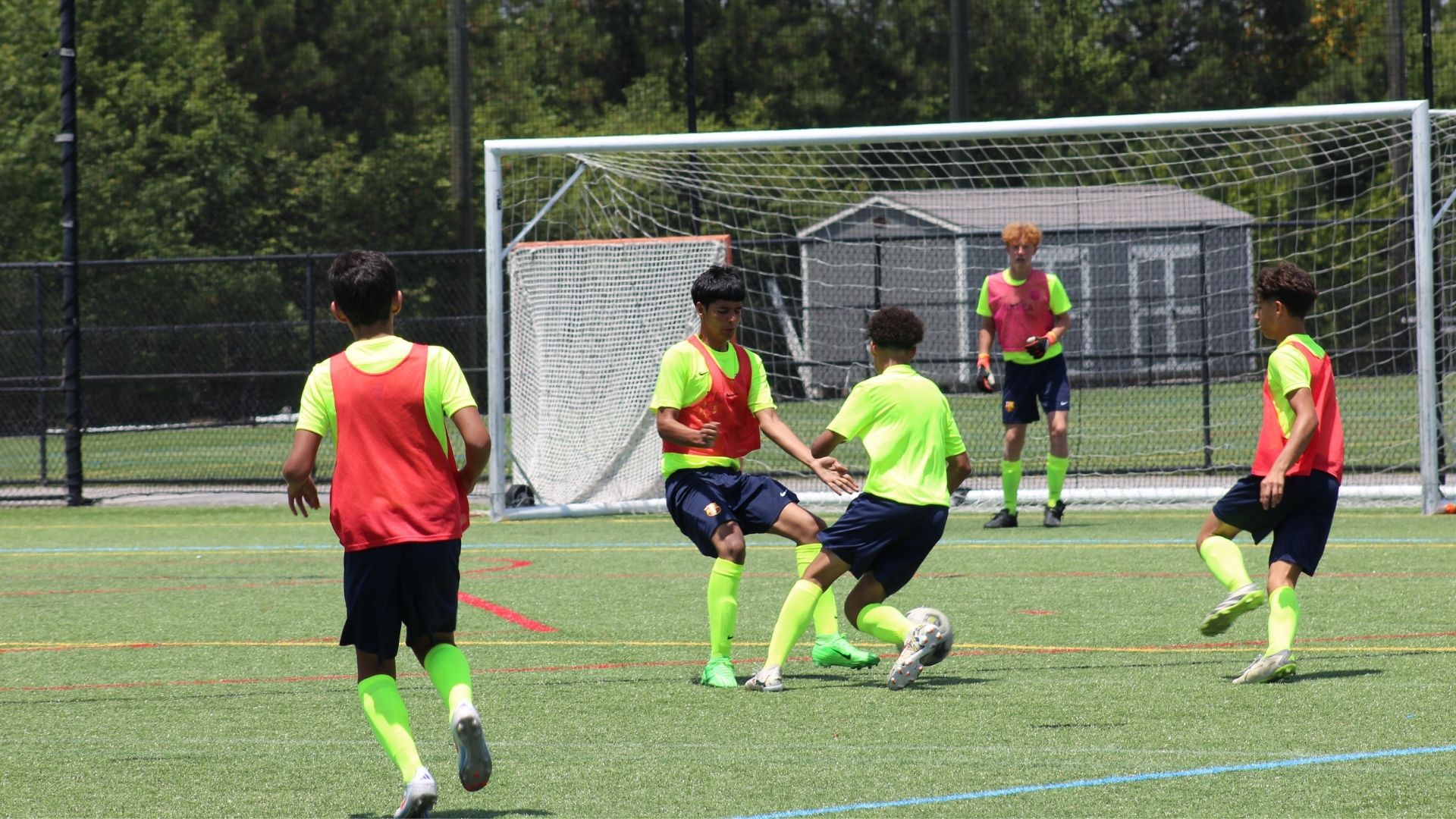
Count the players around the first build-up line. If three attackers press four defenders, one defender should be free. The defending team can solve that problem by pushing a midfielder forward or by asking the goalkeeper to become the spare player. The pressing team answers by jumping from midfield, which opens a new space somewhere else.
This is why the best view is often twenty metres away from the ball. Watch the next defender deciding whether to step forward. That choice tells you whether the press is controlled or about to be broken.
The moment that matters
The press is judged by what happens after the first challenge. If the ball is won, the opponent’s shape is stretched and its defenders are facing their own goal. The first pass after the regain should usually travel forward or across the exposed line. A safe backward pass may protect possession, but it gives away the advantage the press created.
Read the run, find the spare player, then watch the first pass after the regain. Those three cues reveal almost the entire idea.
A three-question checklist
- Which passing lane is the first attacker removing?
- Who becomes free when a midfielder jumps to press?
- Does the winning team attack before the opponent can reset?
Use that checklist for ten minutes and a match that once looked chaotic starts to look choreographed.