When Carlos Alcaraz felt his right wrist give out while retrieving a return against Finland’s Virtanen in Barcelona, the 23-year-old Spaniard and his team faced an immediate crossroad. Rather than rushing back to defend ranking points, Alcaraz committed to complete wrist immobilisation and a structured multi-phase physical readaptation program. That deliberate approach underscores a career philosophy that consistently places structural health ahead of short-term tournament gains.
The Four-Stage Physical Readaptation Timeline
The damage sustained on the clay in Barcelona demanded total rest to prevent long-term joint issues. For weeks, Alcaraz wore a protective brace on his right wrist, restricting his training regimen strictly to aerobic conditioning to preserve stamina without loading the injured arm.
His functional return to tennis movements followed a strictly monitored schedule:
- Early June: Racquet drills resumed exclusively with his left hand to keep spatial feel intact while leaving the right wrist completely at rest.
- Mid-June: Medical staff removed the protective brace, transitioning his work to running and footwork drills prior to hitting any balls.
- Late June: Light indoor forehands began at his academy, followed by a brief resting period during which he attended the World Cup final to watch Spain capture the title.
- August Progress: Practice moved from indoor courts to outdoor hard courts, culminating in a public hitting session in Alicante where Alcaraz showcased a trimmed haircut after removing his signature braids.
Trading Cincinnati Points for Physical Integrity
The decisive evaluation of that patient recovery arrived ahead of the North American summer hard-court swing. As the defending champion at the Cincinnati Masters 1000, Alcaraz faced a significant ranking penalty if he opted out. Cincinnati tournament director Bob Moran acknowledged that Alcaraz was doing everything possible to prepare, yet the Spaniard decided to withdraw from both Canada and Cincinnati.
The competitive consequence was sharp: Alcaraz surrendered 1,000 ranking points and yielded the world No. 2 position he had briefly reclaimed. Still, skipping those events aligned directly with how his team handled earlier injuries, including the abdominal and leg issues that sidelined him from the 2023 Australian Open and the right forearm trouble that curtailed his 2024 appearances in Monte Carlo, Barcelona, Madrid, and Rome.
US Open Context and the Autumn Tour Calendar
As competition shifted toward Flushing Meadows, Alcaraz focused entirely on his primary discipline. While early tournament reports occasionally created confusion around mixed doubles results—where a German tennis prospect and an American partner suffered a first-round exit—Alcaraz did not participate in the mixed doubles draw at all. Instead, he concentrated on singles competition, where he initially found momentum in early rounds before ultimately bowing out during a hard-court swing where physical strain also hampered 20-time participant Novak Djokovic.
Looking past New York, Alcaraz’s autumn schedule balances exhibition commitments with key tour events. Alongside planned appearances at the Laver Cup and the October Six Kings Slam, his tour calendar features scheduled stops in Tokyo, Shanghai, Paris, and the year-end ATP Finals, with a final decision on the Davis Cup dependent on joint resilience.
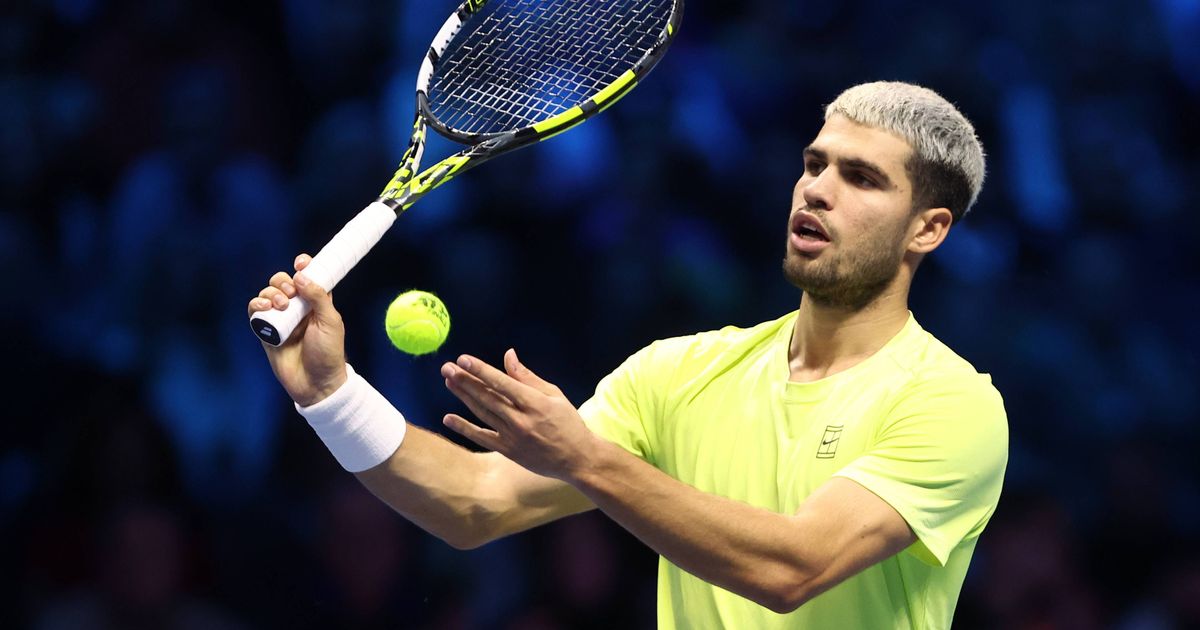
Evidence-Led Forecast: Autumn Hard-Court Swing
Grounded in his physical readaptation and carefully paced workload, Alcaraz’s autumn swing will depend on managing match intensity across indoor and Asian hard courts.
Tactical Matchup Dynamics: Alcaraz will aim to construct rallies through heavy forehand topspin to establish court position early, limiting late wrist adjustments under pressure. Flat-hitting counter-punchers who force extended defensive scrambling will present the primary test for his right wrist during dynamic lateral changes of direction.
Calendar Flexibility: Should high match volume trigger inflammation during deep tournament runs, Alcaraz’s team remains likely to pare back entries in Tokyo or Paris, prioritizing full strength for the ATP Finals in Turin.
Sources
These sources formed the evidence pack for this article. Links open the original publisher; inclusion does not imply endorsement.
- antenne.de original
- en.as.com original
- cic.at original