When Ben Stokes delivered his bombshell announcement following a 2–1 home series defeat to New Zealand, it wasn't just an international retirement; it was an earthquake that laid bare the fragile architecture of England's Test setup. Stokes walked away having fallen out of love with the relentless demands and non-stop scrutiny of the international game, leaving Rob Key and Brendon McCullum to pick up the pieces with a series against Pakistan looming large.
Before signing off, Stokes offered an unequivocal endorsement for his vice-captain. “You don’t ask someone to be vice-captain if you don’t think they’ve got the skills and the ability to be able to captain the team when they need to,” Stokes declared at Trent Bridge, throwing his hundred percent support behind Harry Brook. Brook himself made no secret of his ambitions, stating that leading the Test side would be a great honour
and the pinnacle
of a career built on a total commitment to English cricket that has seen him bypass lucrative global franchise leagues like the IPL and PSL.
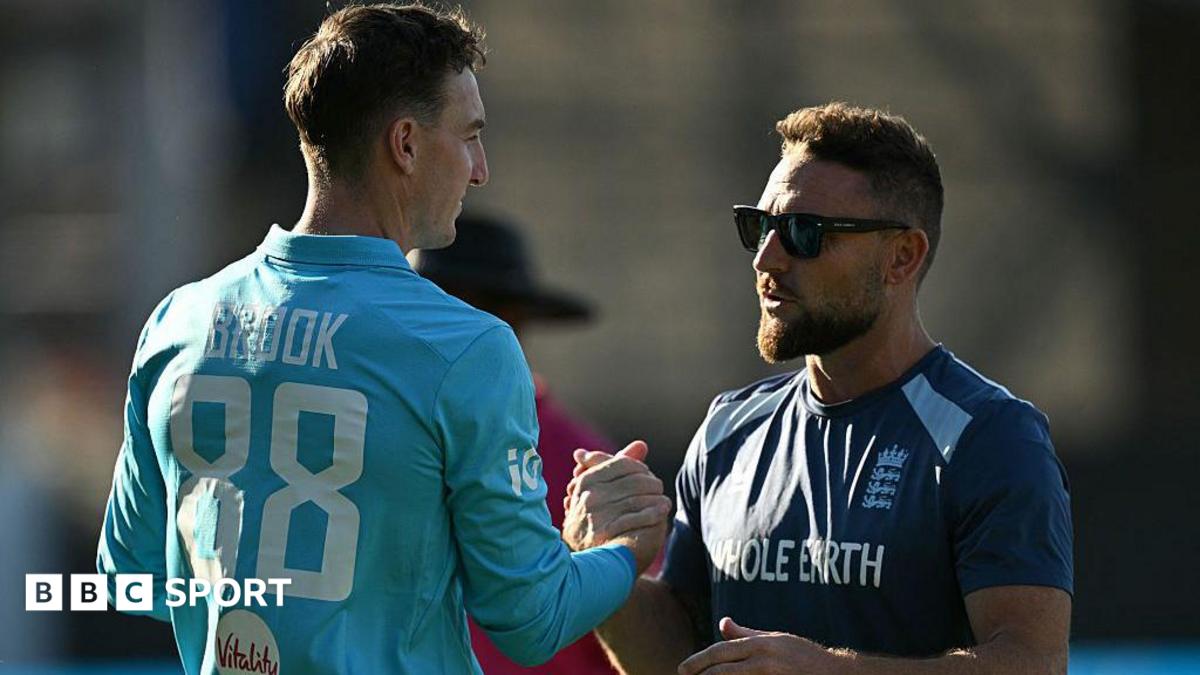
Yet, when the immediate moment of crisis arrived, the England and Wales Cricket Board opted for institutional caution over a clean break. Despite Brook holding the vice-captaincy, management passed him over when Stokes was absent at the Oval, turning instead to Joe Root. Root, who captained England in 64 Tests between 2017 and 2022, was reappointed to hold the fort for the upcoming series against Pakistan.
The Bridging Logic and the White-Ball Horizon
The decision to install Root as a short-term solution reflects a delicate balancing act within the ECB. Officials firmly believe that no single individual should lead England across all three formats. By appointing Root for the immediate Test assignments leading toward the 2027 Ashes, the board allows Brook to concentrate on his thriving white-ball leadership alongside McCullum.
McCullum noted that Brook's time will come
in the Test arena, envisioning a future where the 27-year-old eventually unifies the leadership role across formats in time for the 2027-28 winter. Until then, the transition requires careful orchestration, especially as the Test side transitions under incoming coach Stephen Fleming, who succeeds McCullum.

Weighing the Tactical Trade-Offs
The hesitation to hand Brook the red-ball reins immediately is not merely about workload management. It also stems from navigating past disciplinary hurdles—such as Brook's altercation with a bouncer in Wellington—and the sheer physical toll that caught up with Stokes. Brook acknowledged the harsh realities of the sport, noting that everything’s tough in cricket.
For a team that has lost seven of its last nine Tests and faces an uphill battle to reclaim the urn from Australia in 2015-style redemption fashion next year, the choice between Brook’s fearless, modern ceiling and Root’s steady institutional memory defines the current era. Root offers an indispensable safety net, but Brook remains the undisputed focal point of England's long-term future.
Sources
These sources formed the evidence pack for this article. Links open the original publisher; inclusion does not imply endorsement.
- dailymail.com original
- independent.co.uk original
- bbc.com original
- mirror.co.uk original