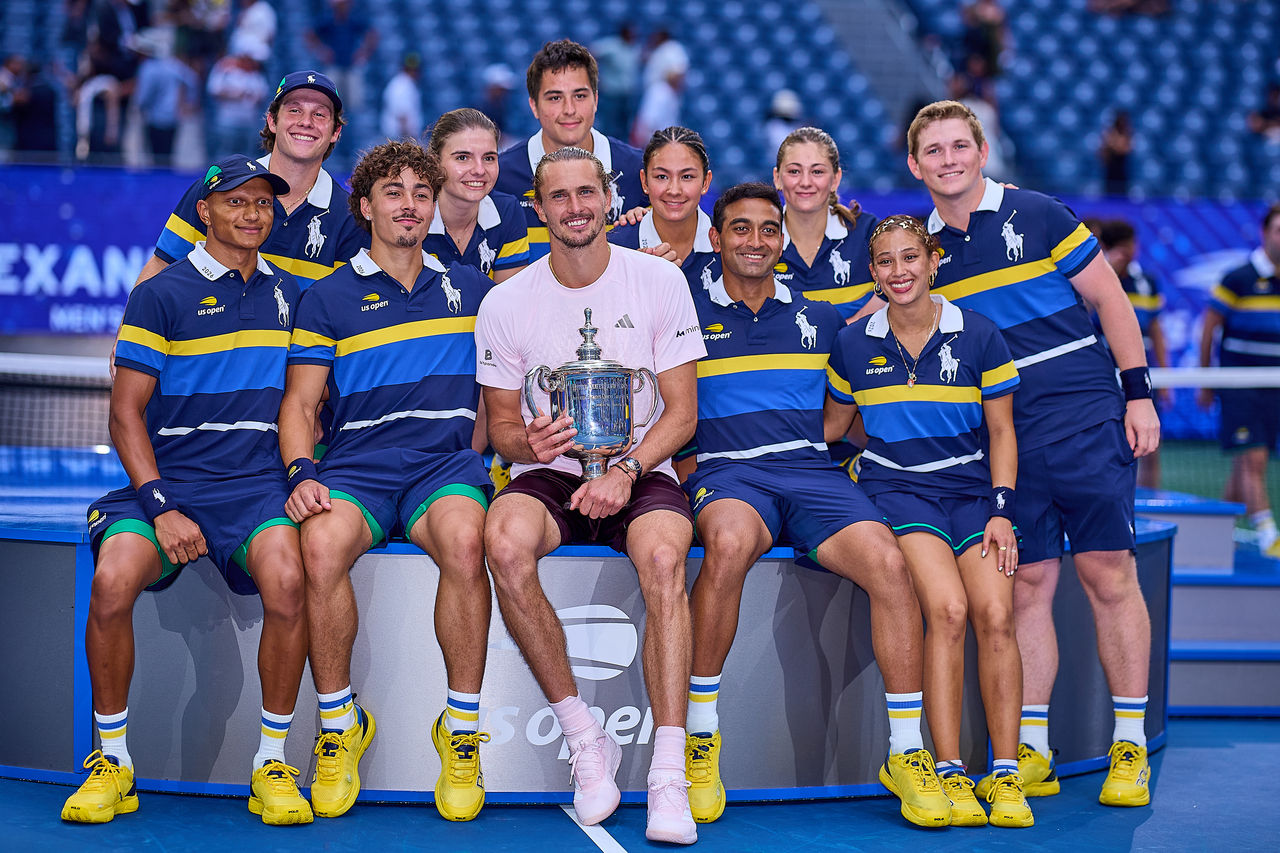
The final Grand Slam of the season arrives with high drama, tactical intrigue, and a sprawling international broadcast matrix. Set at the USTA Billie Jean King National Tennis Center in Corona Park, Flushing Meadows, Queens, the 2026 US Open runs from August 24 through September 13 (with alternative regional scheduling noting play beginning as early as late June in domestic preview calendars). Across 22 hard courts, culminating in the colossal 23,771-seat Arthur Ashe Stadium—the largest tennis arena on the planet—128 players in both the men's and women's singles brackets, alongside 64 doubles teams, will battle for hard-court supremacy.
For supporters looking to tune in live, navigating the tournament requires paying close attention to regional rights holders. In the United States, ESPN remains the exclusive broadcaster, accessible via traditional cable sign-ins or over-the-top streaming alternatives such as YouTube TV, Sling TV (via its Blue package), and DirecTV. Fans watching from the United Kingdom must turn to Sky Sports or the Now TV Sports pass. In Canada, coverage is split between TSN (English commentary) and RDS (French commentary). Australian viewers can catch selected matches for free on 9Now, while comprehensive coverage requires a Stan Sport subscription. New Zealand audiences stream exclusively via Disney+, and European fans look primarily to Eurosport 1 and 2 alongside HBO Max streaming. Because these official platforms are strictly geo-blocked, travelers abroad frequently rely on Virtual Private Networks like NordVPN to access their home subscriptions securely.
The Contenders and Historical Stakes
The men's and women's singles fields present starkly different narratives as players step onto the Flushing Meadows hard courts. On the men's side, world number one and recent Wimbledon champion Jannik Sinner enters as a primary favorite, backed by dominant recent form and multiple Grand Slam titles over the past three years. However, he faces immense pressure from formidable rivals. Novak Djokovic commands respect despite battling injuries following his Australian Open final defeat to Carlos Alcaraz, while Alexander Zverev seeks to capitalize on deep major runs. Meanwhile, a significant cloud hangs over Carlos Alcaraz, whose participation has faced severe question marks due to wrist injury rehabilitation following a grueling season.
The women's draw revolves around Aryna Sabalenka, the world number one and two-time defending US Open champion. Sabalenka chases history: should she capture a third consecutive Flushing Meadows crown, she will join an elite cohort of just 10 players in tennis history to achieve a three-peat at the tournament, matching a feat last accomplished by Serena Williams in 2014. Standing in her path are heavy-hitting competitors including Iga Świątek, Elena Rybakina, and Wimbledon champion Linda Nosková, alongside a deep contingent of Czech stars like Karolína Muchová, Barbora Krejčíková, and doubles world number one Kateřina Siniaková.
Venue Evolution and Tournament Innovations
The US Open's current home at Flushing Meadows carries a rich technological and structural history. First staged in 1881 and opened to professionals in 1968—when Arthur Ashe became the first Afroamerican player to capture the open-era singles title—the tournament has continually driven tennis innovation. In 1970, the US Open became the inaugural major to introduce tie-breaks instead of endless deciding sets. After shifting surfaces from grass to clay and eventually settling on its current hard courts, the venue made history again in 2006 by debuting Hawk-Eye electronic line-calling technology on its courts.
Sources
These sources formed the evidence pack for this article. Links open the original publisher; inclusion does not imply endorsement.
- apps.apple.com original
- techradar.com original
- comparitech.com original
- isport.blesk.cz original