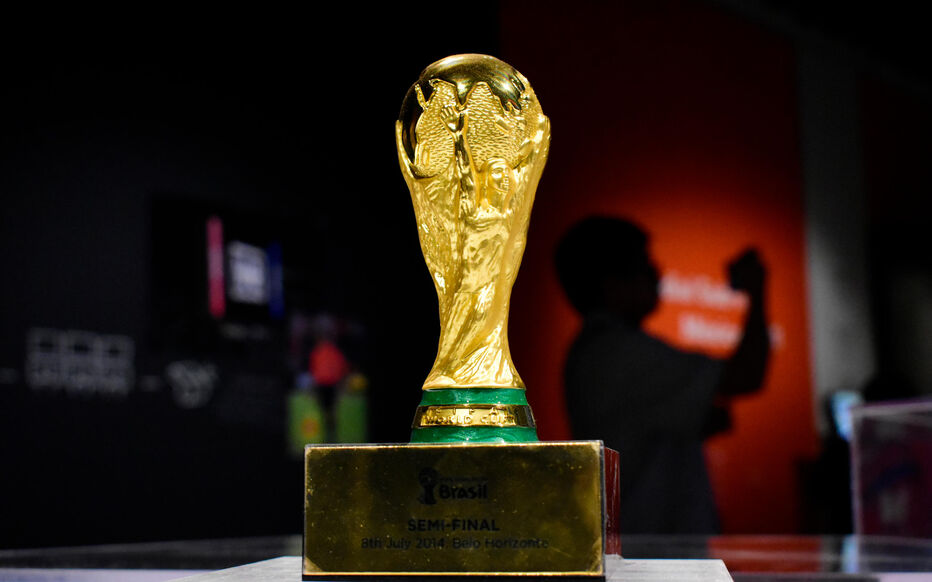
When the 2026 FIFA World Cup expanded across the United States, Canada, and Mexico, the tournament did not merely import fixtures; it absorbed the corporate and pageantry architecture of North American major-league sports. Long before the decisive matches at MetLife Stadium in East Rutherford, New Jersey, FIFA president Gianni Infantino signaled a deliberate pivot toward the entertainment paradigms of the NFL and NBA. For traditionalists, the evolution has triggered immediate friction, yet the structural changes are now deeply embedded into the fabric of the game.
The most striking departure from global football tradition arrives in the form of the championship ring. In a move directly copied from the NBA and other American leagues, FIFA announced that a total of 2,026 uniquely numbered rings will be created to honor the tournament year. While the head coach and captain of the winning finalist—Spain or Argentina—will receive symbolic versions immediately on the podium, custom-measured and name-engraved editions will follow for thirty members of the victorious squad. Unlike the informal, player-funded diamond rings commissioned privately by Paul Pogba and Antoine Griezmann following France's 2018 triumph, these are officially produced and recognized by governing bodies. Furthermore, the remaining 1,996 rings are slated for commercial release as officially licensed products, creating a high-end retail channel that mirrors American championship merchandise.
The Connected Ball and the High-Tech Final
Beneath the commercial pageantry sits an unprecedented technological overhaul. The 2026 tournament introduced the Adidas Trionda—the first World Cup match ball powered by artificial intelligence. Operating on the Connected Ball Technology system, the ball requires wireless charging for approximately 90 minutes prior to kickoff to power an internal 14-gram motion sensor. Operating at 500Hz within a specialized layer of one of the ball's four segments, the sensor transmits real-time telemetry data.
When paired with 12 high-speed tracking cameras around the pitch, the system feeds AI models that generate 3D reconstructions to assist VAR in judging tight offside decisions, handballs, and goal-line scrambles. For the concluding stretch of the tournament—covering the semifinals, the third-place playoff, and the July 19 final—Adidas rolled out the "Trionda Final" edition. Adopting a classic aesthetic of gold, white, and black rather than the multi-country color-blocking of the group stage, the ball stands as the physical centerpiece of a tournament heavily influenced by digital precision.
The Super Bowl Blueprint and Corporate Scale
The convergence with American sports culture reaches its absolute peak during the interval of the final. FIFA confirmed the first-ever Super Bowl-style halftime show at a World Cup final, produced in association with Global Citizen. This entertainment spectacle joins other high-profile logistical traditions, including the official World Cup trophy arriving on the pitch inside a custom-designed luxury trunk crafted by Louis Vuitton, mirroring a partnership established across previous cycles but heightened by the North American host market.
Yet, these innovations have not occurred in a vacuum. Online criticism from supporters has tracked the growing corporate footprint of the tournament, questioning whether the relentless pursuit of American-style entertainment dilutes the traditional culture of association football. At the same time, diplomatic and political visibility has shadowed the competition, highlighted by Infantino acknowledging recognition from U.S. leadership during Washington gatherings.
Forward Implications for Future Tournaments
As the tournament resolves on July 19, the core question facing football administration is whether these American imports are isolated novelties born of a co-hosted North American edition or permanent fixtures of the global game. While player-market reactions and fan debates continue to swirl around commercialization, the integration of biometric tracking balls and high-finance entertainment models has permanently altered how global governing bodies package their premier showcase. The modern football laboratory has officially opened its doors, and closing them will be an impossibility.
Sources
These sources formed the evidence pack for this article. Links open the original publisher; inclusion does not imply endorsement.
- antena3.ro original
- Báo Tiền Phong original
- golazo.ro original
- Romeo Ene original
- Daniel Işvanca original
- Gabriel-Alexandru Ioniță original
- eurosport.ro original