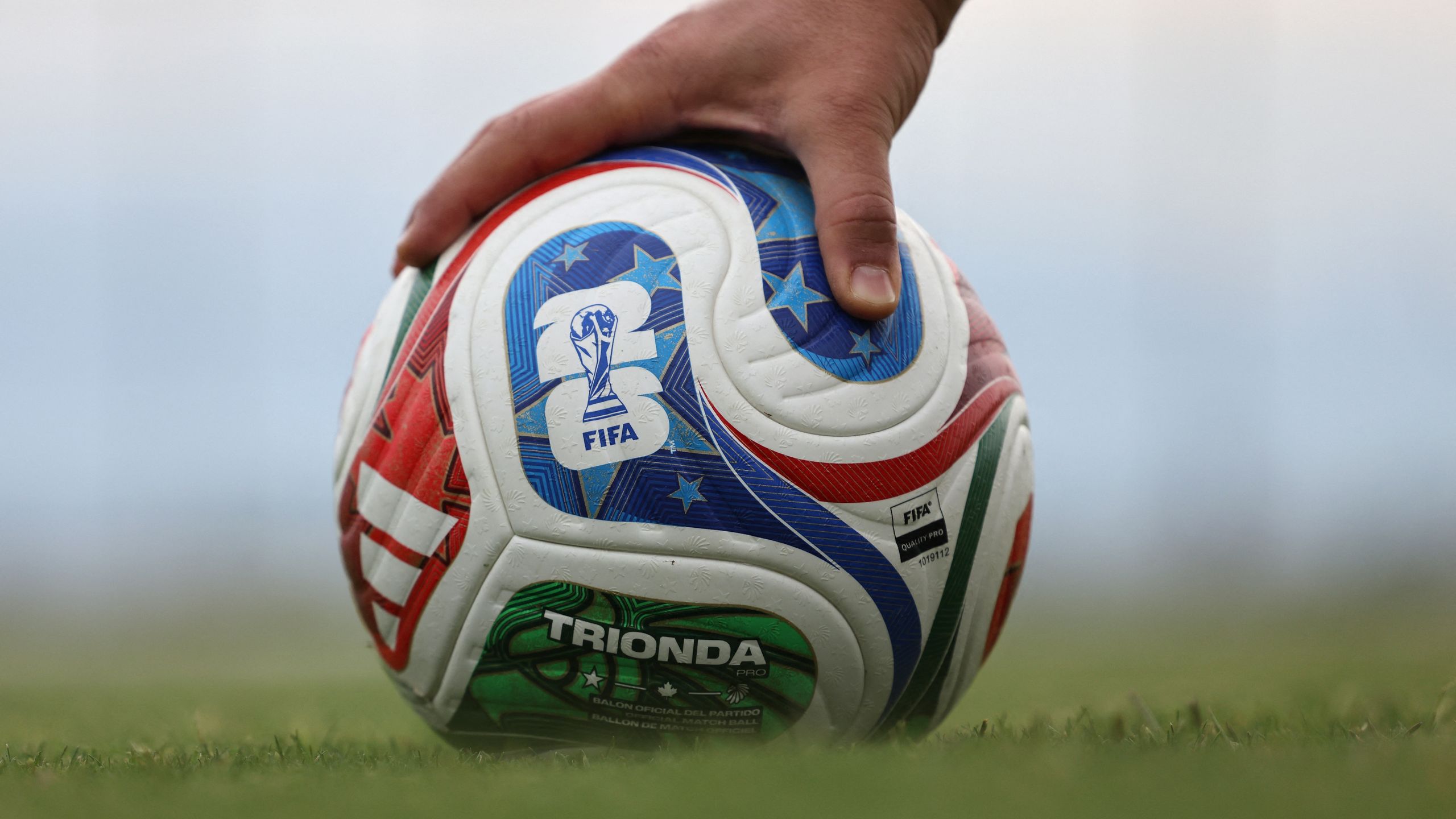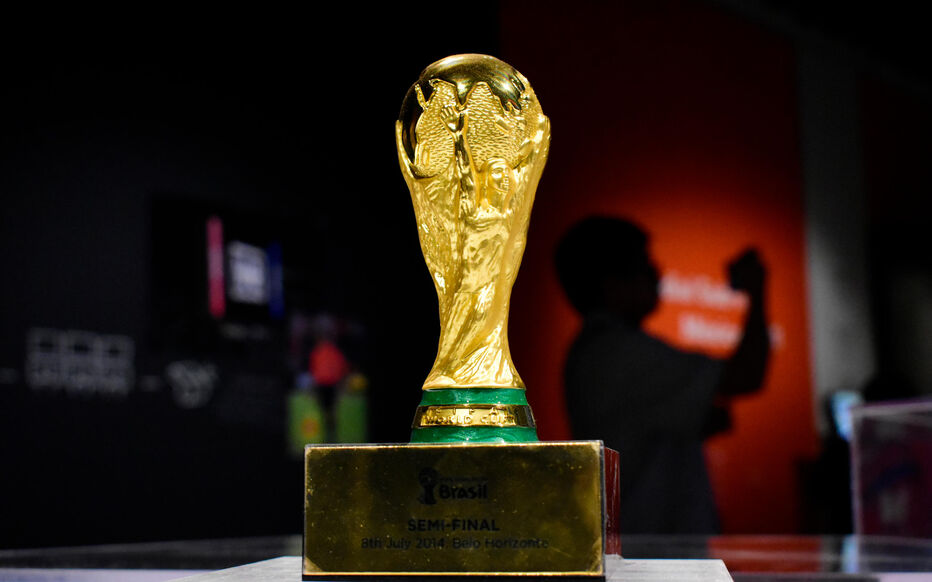
Spain’s 2026 FIFA World Cup victory over Argentina on July 19 was framed as the crowning moment of an expanded 48-team tournament across the United States, Canada, and Mexico. Yet as mid-September arrives, on-field achievements have been overshadowed by a fierce governance battle. FIFA President Gianni Infantino is facing concerted resistance from European football leadership over a controversial plan to partially privatize the sport's global commercial engine.
Commercial Privatization and Private Equity Incursion
At the center of the dispute is FIFA Forward Enterprise (FFE), a proposed commercial entity valued at $20 billion (approximately €17.3 billion). The subsidiary is structured to manage marketing and media rights for FIFA’s marquee competitions, including the men's and women's World Cups alongside the expanded Club World Cup. Infantino has pressed all 211 member federations for approval ahead of a September 19 deadline, offering a $40 million (€35 million) development grant to nations that vote in favor, while warning that a rejection will result in a 75 percent cut to baseline FIFA funding.
The integration of private capital has drawn immediate blowback. Prospective investors tied to the initiative include Thrive Eternal, a venture capital firm directed by Joshua Kushner, brother of Donald Trump’s son-in-law Jared Kushner. UEFA, supported by prominent national federations and aligned with concerns voiced by CONCACAF figures, has raised the prospect of a complete World Cup boycott. Opponents argue that ceding commercial authority to private equity compromises governing independence and concentrates power within Zurich's executive inner circle.
Political Pressure and Structural Realignment
The institutional friction follows a tournament marked by political scrutiny. Concerns regarding executive influence flared during the World Cup when FIFA eased a suspension against United States forward Folarin Balogun prior to the match against Belgium. While FIFA maintained that its independent disciplinary committee acted without outside interference, reports highlighted direct entreaties from U.S. President Donald Trump to Infantino, illustrating the increasingly overlapping interests between political figures and global football administration.
These dynamics reflect Infantino's broader effort to build voting coalitions beyond traditional European strongholds. By distributing future hosting hosting roles across Morocco, Uruguay, Paraguay, Argentina, Portugal, and Spain for 2030, and securing Saudi Arabia for 2034, FIFA leadership has systematically cultivated support across Asia, Africa, and Oceania to insulate its policy agenda against European pressure.
Algorithmic Analysis, Spatial Officiating, and Predictive Benchmarks
Away from executive boardrooms, the 2026 tournament served as an operational proving ground for artificial intelligence. Through a joint initiative between Lenovo and FIFA, all 48 participating federations were equipped with Football AI Pro. The system processed millions of match data points into over 2,000 real-time performance indicators, allowing technical staffs from developing football nations such as Curaçao and Cape Verde to run instant tactical simulations and condense post-match analysis that previously required lengthy written reports.
Match officiating integrated 3D spatial models representing more than 1,200 players to resolve complex offside rulings when physical camera angles were obstructed. Across host stadiums catering to nearly five million visitors, emergency response teams utilized automated translation software to assist multi-lingual supporters. On digital platforms, large language models became a central fixture of tournament discussion: Claude and OpenAI correctly projected Spain’s title run, Mistral picked France, and Deepseek and Qwen tipped Argentina, prompting researchers at Ludwig-Maximilian University in Germany to operate a live benchmark platform tracking model accuracy against pitch results.
Unconventional narrative frameworks also gained attention surrounding the final. Astrologer Priscilla Lima de Charbonnières examined the July 19 match through the rare Panier de Barbault
planetary alignment—featuring an opposition between Jupiter in Leo and Pluto in Aquarius—interpreting the configuration as a symbol of systemic disruption and shifting power dynamics. That symbolic tension has now translated directly into the ongoing institutional standoff between Zurich, Nyon, and Miami.
Sources
These sources formed the evidence pack for this article. Links open the original publisher; inclusion does not imply endorsement.
- biggie.co original
- theconversation.com original
- vogue.fr original