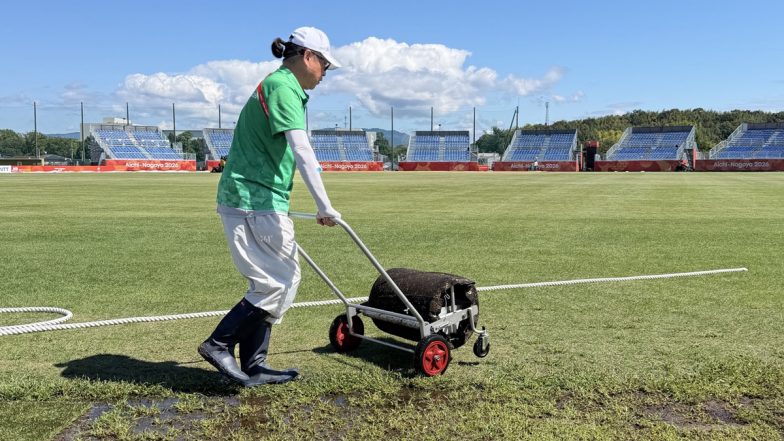
The stage is set for one of cricket’s most storied rivalries to ignite at the Korogi Sports Park in Nisshin, Japan. But as India and Pakistan prepare to battle for the Men's Cricket Gold Medal at the XX Asian Games, the most formidable opponent might not be the opposing XI, but the Japanese sky.
Scheduled for 1:30 PM JST on Saturday, October 3, 2026, this T20 final promises a high-octane encounter. However, the atmospheric conditions in Nisshin have introduced a layer of uncertainty that could fundamentally alter the tournament's conclusion, leaving fans to wonder if a winner will even be determined by the bat and ball.
A Split Forecast: The Afternoon Precipice
Weather projections for the match window present a conflicting and increasingly tense outlook. While some forecasts suggest a day of "nice with clouds and sun" with temperatures hovering around 26°C (79°F), others highlight a more volatile pattern.
The timing of the match is critical. According to hourly data, the early stages of the contest appear relatively safe, with rain probabilities staying below 25% during the morning hours. This window should ideally allow for a full first innings to proceed. However, the meteorological tension spikes significantly as the match progresses into the afternoon.
- Match Start (1:30 PM JST): Expected temperature of 24°C with an 18% chance of rain.
- The Danger Zone: Probability of precipitation is forecast to jump to approximately 51% in the later afternoon, remaining high at roughly 47% an hour later.
This mid-afternoon surge suggests that if the game does not reach a definitive conclusion quickly, the tournament could be forced into reduced-overs calculations—a scenario Pakistan has already navigated during their six-wicket semifinal victory over Bangladesh.
The Rulebook Riddle: Who Claims the Gold?
Perhaps more confusing than the clouds is the discrepancy regarding what happens if the match is abandoned without a result. In a high-stakes final, the protocol for a washout is the difference between solo glory and shared honors, and current reports offer two distinct narratives.
One line of reporting suggests that the traditional hierarchy will prevail: if no result is possible, the team ranked higher in the official ICC T20I rankings—a position currently held firmly by India—would be declared the winner. This mirrors the protocols seen during the 2023 Hangzhou Games, where India secured gold after an abandoned final against Afghanistan due to their superior ranking.
However, a different set of playing conditions for the 2026 Asian Games suggests a departure from that precedent. Under these reported rules, if the final is washed out without a result, India and Pakistan would be declared joint champions, sharing the gold medal, with no silver medal awarded. This shift would mean that the pursuit of a definitive winner remains entirely dependent on the ability to complete the overs before the rain arrives.
Pathways to the Podium
The tension in the weather is compounded by the contrasting ways both sides arrived at this final. India, the defending champions, entered the decider with a sense of clinical dominance. Their semifinal performance was nothing short of an onslaught, where Shreyas Iyer’s side posted 169/7 before the bowling unit dismantled Sri Lanka for a mere 45 runs. The trio of Jasprit Bumrah, Axar Patel, and Abhishek Sharma each claimed two wickets, signaling a bowling attack in peak form.
Pakistan, meanwhile, have shown resilience in the face of environmental instability. Their path to their first-ever Asian Games men's cricket final involved overcoming Bangladesh in a rain-affected semifinal, proving they can maintain composure when the elements intervene. As both nations vie for gold, the ability to manage the tempo of the game—and the impending moisture—will be the ultimate test of championship pedigree.
Evidence-Led Forecast: The Afternoon Precipice
Likely Tactical Pattern: Expect a high-intensity start. India will likely attempt to exploit the relatively dry morning window to post a massive total, knowing the afternoon weather provides a narrow margin for error. Pakistan may adopt a more cautious approach to ensure they don't lose wickets to a potentially damp surface if the humidity spikes early.
Decisive Matchup: India's premier bowlers (Bumrah and Patel) vs. Pakistan’s middle order in the transition period between the dry morning and the high-probability afternoon showers.
Strongest Counter-Case: A sudden, unpredicted morning shower could trigger the high-probability rain window prematurely, forcing the match into reduced-overs format before either side can establish rhythm.
What Would Change the Read: Any definitive confirmation from tournament officials regarding the "Joint Champion" rule will immediately shift the psychological pressure, either intensifying the need for a result or providing a safety net for the higher-ranked side.
Sources
These sources formed the evidence pack for this article. Links open the original publisher; inclusion does not imply endorsement.
- timesofindia.indiatimes.com original
- latestly.com original
- sports.yahoo.com original
- freepressjournal.in original