When Didier Deschamps was appointed to the French national team bench on July 9, 2012, he inherited a fractured squad burdened by the ghosts of Knysna and an anonymous quarterfinal exit at Euro 2012 under Laurent Blanc. Over the next fourteen years, alongside a remarkably stable technical staff anchored by assistant Guy Stéphan since 2009, the Bayonne native reconstructed Les Bleus from a maligned collective into a permanent fixture at the summit of global football.
That journey reached its definitive horizon in the summer of 2026 across North America. Following a 0-2 semifinal defeat to Spain—and a subsequent third-place fixture in Miami—Deschamps's unprecedented stint concluded, leaving behind a 27-match World Cup résumé as manager and a legacy defined by pragmatism, squad cohesion, and an eventual tactical pivot toward attacking liberation.
The Milestones: From Kyiv Revival to Moscow Glory
To understand the magnitude of Deschamps's tenure requires looking at the institutional inflection points that saved and defined it. Guy Stéphan frequently points to two foundational moments at the Stade de France. The first arrived in November 2013 during a World Cup playoff return leg against Ukraine. Trailing 2-0 from the opening leg in Kyiv, France responded with a 3-0 victory powered by a Mamadou Sakho double, igniting a packed arena and securing passage to Brazil.
Three years later, the same venue bore witness to the cruelest heartbreak of the era: a 1-0 extra-time defeat to Portugal in the Euro 2016 final. Stéphan noted that the team had exhausted its emotional reserves in a bruising semifinal win over Germany in Marseille. Yet, that collective scar tissue proved vital two years later.
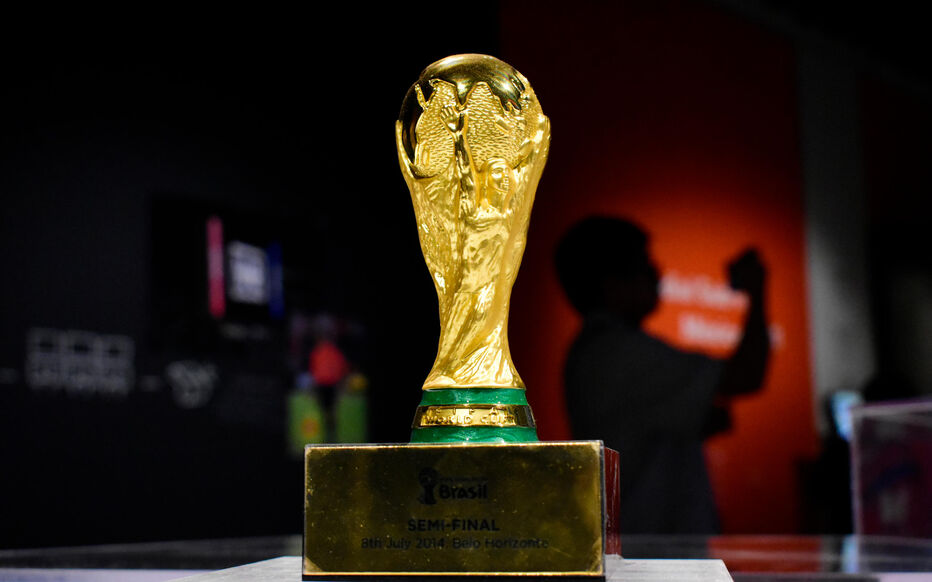
At the 2018 World Cup in Russia, Deschamps engineered the ultimate triumph, securing a 4-2 victory over Croatia in the final. By joining Mario Zagallo and Franz Beckenbauer as men to lift the World Cup as both player and manager, Deschamps permanently altered his historical standing. His foundational spine—anchored by captain Hugo Lloris and tireless metronome Antoine Griezmann, both of whom featured in all 19 of his World Cup matches—provided unshakeable stability.
| Tournament | Key Stage Reached | Decisive Fixture / Opponent |
|---|---|---|
| World Cup 2014 | Quarterfinals | Germany (0-1) |
| Euro 2016 | Final | Portugal (0-1 a.e.p.) |
| World Cup 2018 | Champions | Croatia (4-2) |
| Euro 2020 | Round of 16 | Switzerland (3-3, 4-5 pen.) |
| UEFA Nations League 2021 | Champions | Spain (2-1) |
| World Cup 2022 | Final | Argentina (3-3, 2-4 pen.) |
| Euro 2024 | Semifinals | Spain (1-2) |
| World Cup 2026 | Semifinals / 3rd Place | Spain (0-2) |
The Tactical Evolution: Remising Pragmatism for Explosive Talent
Long labeled a pragmatic, cautious tactician who favored defensive solidity and transition speed over expressive artistry, Deschamps made a calculated adjustment for his final campaign in 2026. Recognizing an embarrassment of riches in the final third—anchored by Kylian Mbappé’s record 12 World Cup goals, alongside rising talents like Bradley Barcola and Désiré Doué—the manager cast aside some of his older principles.
As Bradley Barcola noted during the 2026 tournament regarding the team's attacking freedom, On prend la balle, on fait un peu ce qu'on veut, on ne se pose pas de question et c'est comme ça que ça marche.
This shift created a flamboyant, highly entertaining attacking style that captivated global audiences, even if defensive vulnerabilities and structural automation issues occasionally surfaced during warm-up friendlies against Côte d'Ivoire and throughout the North American knockout rounds.
The Inheritance for the Next Regime
As Deschamps steps aside, handing the baton to an expected successor in Zinédine Zidane, the blueprint is robust. The historical record stands at 62 wins from 89 domestic matches in France, a FIFA ranking peak at the summit, and an unmatched consistency in reaching the deep ends of major tournaments. Though the 2026 adventure ended in semifinal disappointment against an indomitable Spanish side, the foundation allows the incoming manager to inherit an enviable stable of young individual talents primed to dictate the next decade of international football.
Sources
These sources formed the evidence pack for this article. Links open the original publisher; inclusion does not imply endorsement.
- Jean-François Pérès original
- Baptiste Desprez original
- franceinfo.fr original
- fifa.com original
- france24.com original