Scores, fixtures and picks
These are current fixtures from the same sport, shown as a separate live companion rather than evidence for the article. Live status and scores come from the normalized SportyPulses data feed; predictions are reader picks, not betting advice.
In the high-performance ecosystem of modern hockey, equipment evolution is rarely just about raw power or aesthetic flash. It is an exercise in custom geometry, materials science, and physical accessibility. Whether looking at the rigorous demands of elite carbon composite manufacturing or the diverse ways gear manufacturers deploy options across junior, intermediate, and adult tiers, the objective remains singular: engineering a tool that matches the specific biomechanics of the individual.
The Carbon Revolution and Material Trade-Offs
The traditional era of the singular wooden stick—hailed for its affordability and distinct feel for the ball—has largely been reframed by advanced composites. High-performance models now lean heavily on carbon fiber weaves, yielding ultra-lightweight builds such as the 390g AK Kevlar construction. These materials are explicitly chosen for structural durability and rapid energy transfer, allowing for faster shot speeds and crisper handling.
However, the shift from wood to carbon introduces distinct trade-offs in price point and flex profile. While wooden alternatives offer a forgiving, traditional damping feel, composite sticks open the door to precision tuning:
- Junior Flex (50): Built for lower physical force generation, ensuring younger participants can properly load the shaft.
- Intermediate Shaft (60): Designed as a transitional bridge for developing players.
- Adult Tiers (75, 85, 95): Tailored for higher weight classes and stronger shooting mechanics.
Flex Points and Tactical Deployment
Understanding how a shaft bends under load is vital for analyzing player efficiency on the floor or ice. The distinction between kick points dictates how quickly energy converts into ball or puck velocity.
Low-kick shafts feature a flex point situated much closer to the blade, facilitating an instantaneous release ideal for quick wrist and snap shots. Conversely, mid-kick models place the flex zone nearer the middle of the shaft, storing heavier loads for blistering slap shots and one-timers. Pairing the correct flex number and kick point with a player’s weight and position ensures that performance is never bottlenecked by ill-fitting hardware.
The ideal length for a hockey stick generally falls between the player's nose and chin, allowing for optimal control and balance when handling the ball.
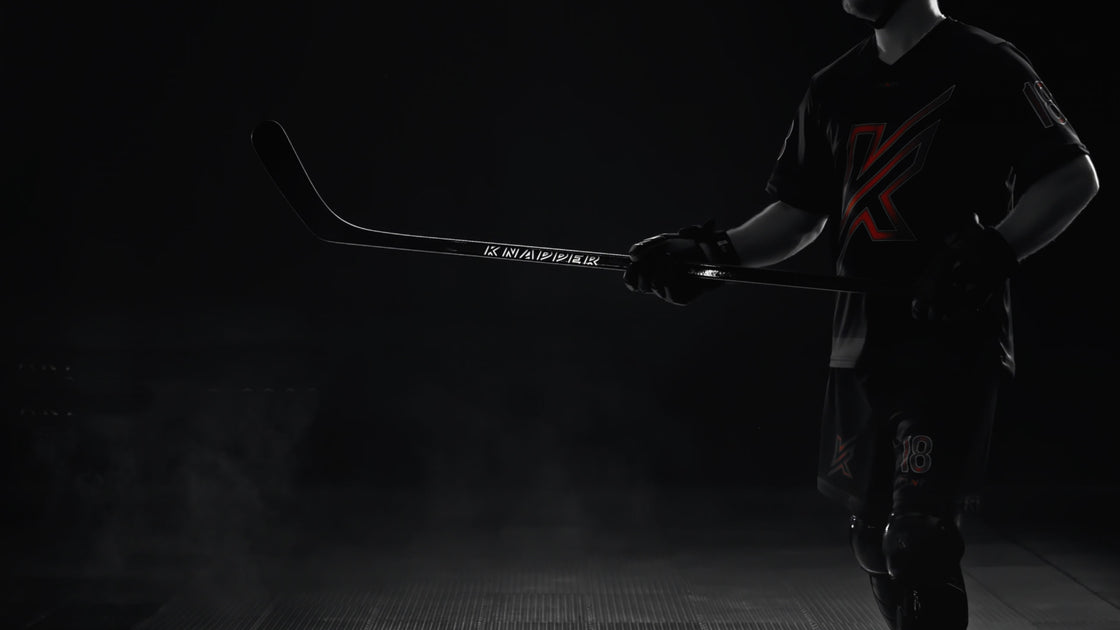
Knapper Equipment Guide
Blade Geometry and Personalization
Beyond the shaft, the geometry of the blade dictates passing accuracy and elevation control. Offensive players often gravitate toward shorter sticks for tight-quarters stick handling, paired with more curved patterns like the P28 or classic B92 (Backstrom) to assist with lifting the ball. Defensive profiles, meanwhile, frequently lean toward longer shafts for extended reach and flatter, less-curved blades to guarantee consistent, accurate distribution.
Manufacturers have also addressed maintenance variables directly integrated into play. Modern innovations—such as tape-similar blade textures engineered to bypass the need for traditional tape wraps on the bottom side of the blade—demonstrate how minute structural adjustments continue to streamline the game for participants at every level.
Sources
These sources formed the evidence pack for this article. Links open the original publisher; inclusion does not imply endorsement.
- knapper.com original
- bauer.com original
- remyndow.com original
- visit.brussels original