In the expansive landscape of facial modifications, the zone surrounding the mouth has long served as a primary canvas for individual expression. While traditional choices like standard labrets, vertical labrets, and Monroe placements have anchored piercing trends for decades, contemporary counterculture and alternative fashion circles have increasingly embraced more dramatic modifications. Among these, the Angel Fangs piercing has surged in visibility across platforms like Instagram and TikTok, favored by subcultures and pop-culture influencers alike for its sharp, distinct silhouette.
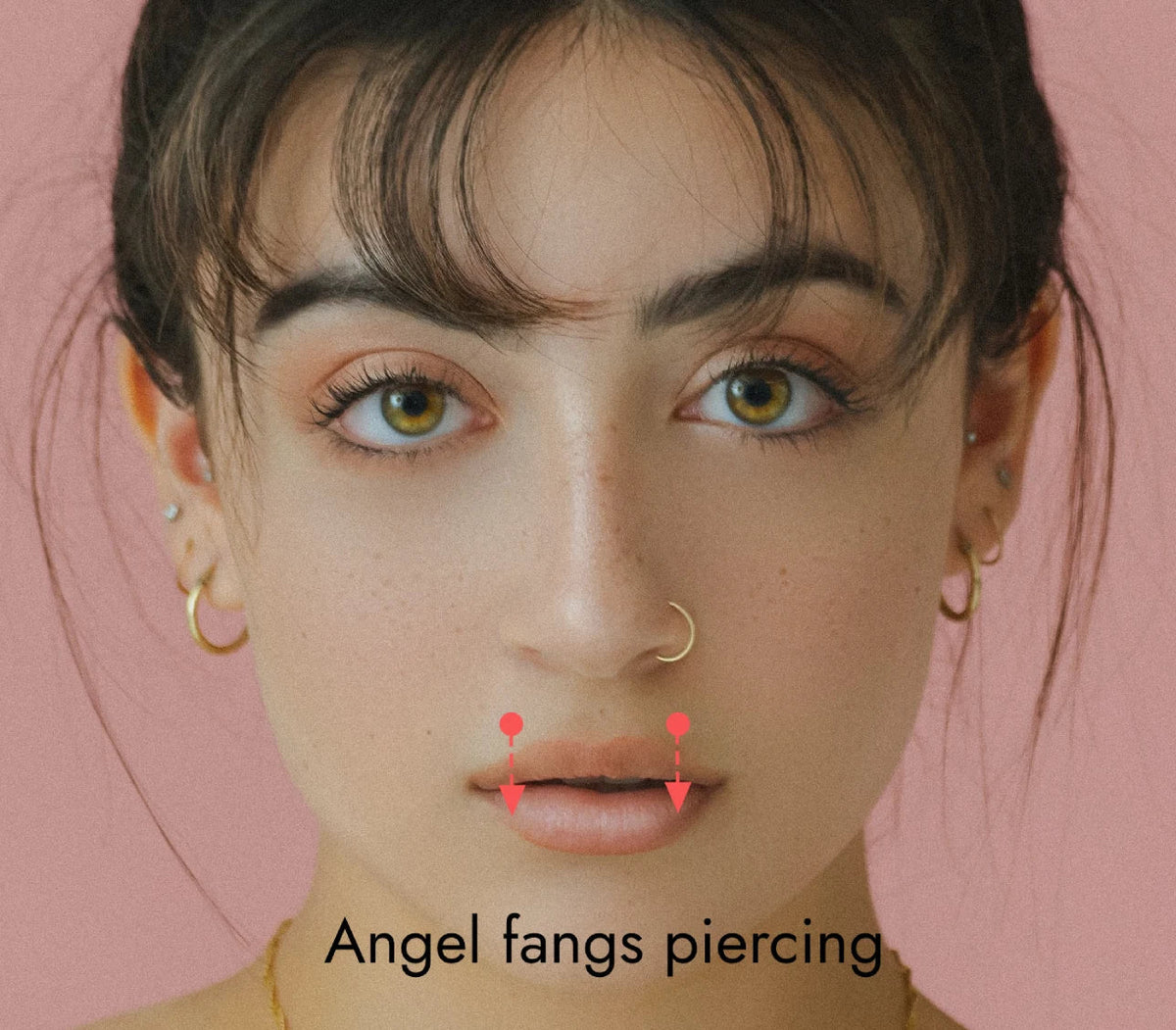
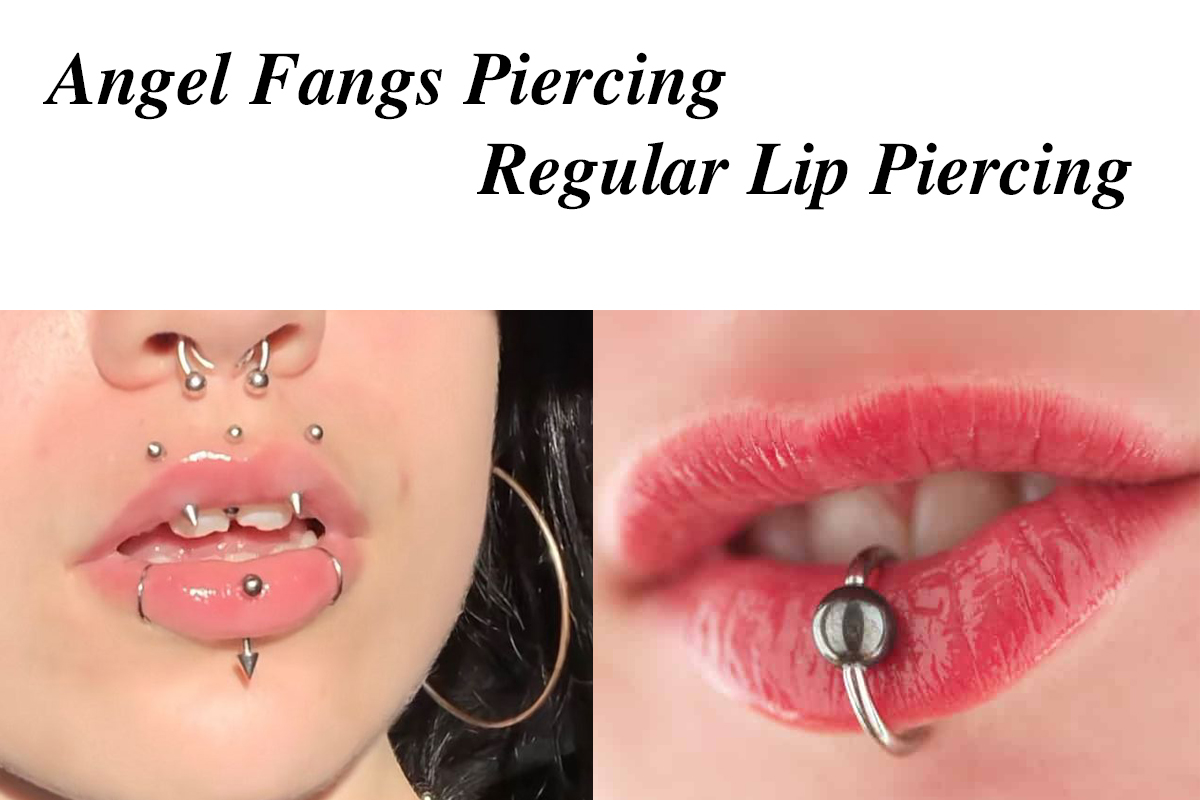
Achieving that distinctive look requires a specific anatomical setup and precise execution. Unlike traditional horizontal lip piercings, Angel Fangs consist of two vertical piercings placed symmetrically on either side of the upper lip, positioned above or near the canines and traversing the outer flesh of the lip without entering the oral cavity. When fitted with curved barbells featuring spiked ends that protrude from beneath the upper lip, the jewelry creates the illusion of animal fangs.
Anatomical Requirements and Technical Constraints
Body modification experts note that this particular style is not universally compatible with all lip structures. Specifically, Angel Fangs are poorly suited for thin lips. The procedure carries an elevated risk of complications such as jewelry rejection, tissue migration, and scarring if the tissue lacks sufficient depth or a well-defined philtrum ridge to stabilize the piercing. Because the upper lip moves constantly through eating, speaking, and everyday facial expressions, adequate fleshy volume is mandatory to keep the initial jewelry secure during the healing phase.
The mechanics of the procedure also contrast sharply with inverse variations, sometimes called Angel Bites or inverted Angel Fangs. While standard Angel Fangs involve inserting the needle from the exterior of the lip—leaving both ends of the curved barbell visible—inverted variants require insertion from the inside. This hidden internal placement carries a significantly higher probability of causing gum erosion and subsequent dental weakening unless the interior hardware features a flat end resting flush against the tissue.
Financial and Healing Parameters
For those clearing the anatomical requirements and reaching the age of consent (typically 18, or 16 with parental accompaniment depending on the jurisdiction), the procedure involves several practical considerations:
- Cost: Professional procedures generally range between $60 and $120, fluctuating based on geographic location, the piercer's experience level, and the initial jewelry selected.
- Discomfort Level: On a scale of 1 to 10, the pain associated with Angel Fangs typically registers between 3 and 5. Because the upper lip possesses heightened sensitivity, it often generates more discomfort than lower lip placements.
- Healing Timeline: Following strict aftercare guidelines usually yields full healing within 12 to 16 weeks, though individual complications can prolong this window.
Hardware Selection and Material Safety
Selecting the appropriate initial jewelry is vital for minimizing complications. Standard sizing typically utilizes a 16G (1.2 mm) gauge, though some practitioners may utilize 14G (1.6 mm). Due to the dense concentration of blood vessels in the region, substantial swelling occurs during the first few days. Consequently, initial piercings utilize an elongated curved barbell—typically 10 mm or approximately 3/8 inches—before downsizing to 5/16 inches (8 mm) or 1/4 inches (6 mm) after two to four weeks once the swelling subsides.
Material integrity dictates how successfully the tissue accepts the hardware. Professional standards strongly favor biocompatible metals:
| Metal Type | Key Advantages | Primary Drawbacks |
|---|---|---|
| Implant-Grade Titanium (ASTM F-136) | Lightweight, highly durable, entirely nickel-free, non-porous, and hypoallergenic. Ideal for initial healing. | Higher initial financial cost. |
| 14k or 18k Gold | Aesthetically customizable and durable compared to pure 24k variants. | High price point; softer metal susceptible to bending and scratching; heavier weight. |
| Surgical Steel (ASTM F-138) | Lower price point and high fracture resistance. | Contains trace nickel; heavier weight can reduce comfort during extended wear. |
| Niobjum | Titanium-like durability with enhanced flexibility and malleability for custom shaping. | Slightly heavier than titanium and carries specialized manufacturing costs. |
Aftercare Protocols
Maintaining cleanliness is paramount given the dynamic nature of oral tissue. Specialists recommend store-bought sterile saline solutions rather than homemade mixtures, as incorrect salt concentrations can dry delicate tissue and delay cellular recovery. While mild, fragrance-free soap and water can assist, harsh antiseptics like isopropyl alcohol or hydrogen peroxide should be avoided for daily maintenance because they risk damaging regenerating cells. Consulting an experienced piercer for personalized downsizing and troubleshooting remains the safest path toward long-term aesthetic stability.
Sources
These sources formed the evidence pack for this article. Links open the original publisher; inclusion does not imply endorsement.
- ashleypiercingjewelry.com original
- fansided.com original
- sensagem.com original
- wikihow.com original