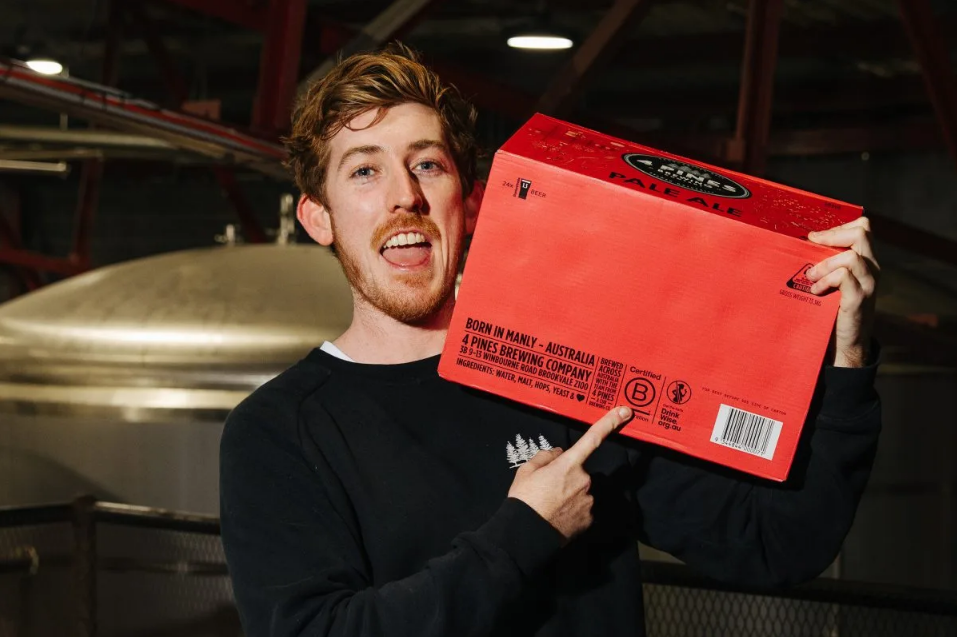
When Australian batters struck boundary fours during the summer of cricket, the primary metric on the broadcast was four runs added to the team total. Behind the traditional match statistics, however, lay a direct ecological conversion: four native trees planted for every four hit on the pitch. Spearheaded by certified B Corp craft brewery 4 Pines in partnership with Landcare Australia and the Australian men's national team, the commercial campaign translated elite athletic performance into 44,444 native trees, shrubs, and ground covers planted across South Australia's Fleurieu Peninsula.
As major sports venues and international grounds face mounting pressure to lower their environmental footprint, the operational mechanics surrounding matchday delivery are undergoing a fundamental redesign. Stadium managers, event organizers, and commercial partners are moving past traditional green marketing campaigns toward verified clean power sourcing, venue waste diversion, and supply chain decarbonization.
Boundaries to Biodiversity: Quantifying Cricket's Reforestation Drive
The collaboration between 4 Pines, Landcare Australia, and the Australian men's cricket team demonstrates how sports partnerships are being leveraged for tangible environmental outputs. The campaign's primary planting site at Cape Jervis on the Fleurieu Peninsula was selected to enhance landscape connectivity, boost local biodiversity, and establish long-term habitat for endangered fauna, including the Glossy Black Cockatoo. In tandem with the public campaign, an additional 3,000 trees were planted at Ryfield Hops, a family-owned farm supplying the brewery.
According to Sarah Turner, environmental and social impact advisor for 4 Pines, maintaining third-party verified metrics is crucial at a time when sports fans and consumers actively scrutinize corporate environmental claims.
blockquote>“Our customers can be confident that by choosing our products they are supporting a business that cares about people and planet,” Turner said, highlighting that B Corp status requires rigorous independent auditing across social, governance, and environmental impact performance.
This commitment to operational efficiency extends directly into hospitality and manufacturing facilities. All 4 Pines-owned venues and breweries operate on 100 per cent renewable electricity. Water consumption at their brewing facilities currently sits at 3.4 hectolitres per hectolitre of beer produced—well below the broader industry average of 5.3 hL/hL—while 70 per cent of production waste is diverted away from landfills and waterways.
Macro Grid Transformations: Clean Energy Outpaces Fossil Power
The ability of sporting venues to maintain 100 per cent renewable operational footprints relies on structural changes in national energy grids. In Great Britain, a landmark power milestone was reached as annual electricity generated from renewable sources surpassed fossil fuel generation across a full calendar year for the first time on record.
Data compiled by energy think tank Ember shows that wind, solar, and hydropower combined to generate 37 per cent of the UK's total electricity over the year, eclipsing the 35 per cent share contributed by fossil fuels—primarily natural gas. Nuclear and biofuels supplied the remaining share. The shift marks a total overhaul of the power landscape compared to 2000, when fossil fuels accounted for roughly three-quarters of electricity generation, and from three years prior, when fossil fuels generated 46 per cent against renewables' 27 per cent.
A critical driver of this structural transition was the full decommission of the UK's last coal-fired power station at Ratcliffe-on-Soar, ending 142 years of national reliance on coal generation. Simultaneously, onshore wind generation increased by 23 per cent during the first nine months of the year following the removal of de facto planning bans in July 2024.
blockquote>“The renewables future is here,” said Frankie Mayo, analyst at Ember. “This long-awaited milestone is a testament to how much progress the UK has made. It’s time to seize the moment, to cut reliance on expensive gas with new renewables, storage, and grid upgrades.”
Energy Economics and Facility Financial Models
The business case for integrating clean energy into stadium supply agreements is reinforced by widening price disparities between renewable generation and fossil fuels. Projected generation costs for offshore wind stand at £44 per megawatt-hour (MWh), compared to £114 per MWh for natural gas power. Government clean energy targets aim to reduce gas generation to below 5 per cent of total electricity by 2030, down from 30 per cent in 2024.
Similar commercial mechanisms have yielded results in regional Australian grid deployments. In the Australian Capital Territory (ACT), structured long-term contract-for-difference agreements underwrote utility-scale clean installations like the Mugga Lane solar farm. Developed by Maoneng Group, Mugga Lane's 48,000 solar panels generate up to 24,600 MWh annually under a guaranteed baseline rate of $178 per MWh, complementing wind power assets such as South Australia's Hornsdale wind farm to lift the territory's renewable share to 35 per cent during initial operational phases.
Reflecting on grid performance audits during extreme summer heatwaves, ACT Climate Change Minister Shane Rattenbury noted that renewable assets maintained continuous supply across peak demand windows while traditional coal-fired power plants in adjacent networks suffered thermal capacity failures.
Commercial Integration and Supply Chain Standards
For stadium concessionaires and commercial partners, achieving genuine zero-carbon matchday operations requires coordinating commercial strategy across suppliers and retail partners. Troy Mullins, national channel account manager at 4 Pines, emphasized that driving sustainability in commercial sport requires integrating green objectives directly into joint operational plans.
“This can be achieved by partnerships through incorporating sustainability objectives in joint business plans and adjusting to focussing on more sustainable options through ongoing marketing and messaging to consumers,” Mullins explained, highlighting ongoing commercial education as an essential requirement across retail and spectator environments.
| Sector / Initiative | Renewable & Sustainability Target | Baseline / Fossil Benchmark |
|---|---|---|
| UK Annual Grid Power Share | 37% (Wind, Solar, Hydropower) | 35% (Fossil Fuels, Natural Gas) |
| Offshore Wind vs. Gas Generation Cost | £44 per MWh (Offshore Wind) | £114 per MWh (Natural Gas) |
| Brewery Water Consumption Ratio | 3.4 hL water / hL beer (4 Pines) | 5.3 hL water / hL beer (Industry Standard) |
| Coal Generation Capacity | 0 MW (Ratcliffe-on-Soar Closed) | 142-Year Historical Coal Dominance Ended |
| Cricket Boundary Planting Campaign | 44,444 Native Trees Planted at Cape Jervis | 4 Trees Planted Per Boundary 4 Hit |
As international grounds and venue networks align matchday logistics with 100 per cent clean power contracts, boundary performance metrics, waste reduction targets, and clean power purchase agreements are becoming standard operating metrics across modern professional sport.
Sources
These sources formed the evidence pack for this article. Links open the original publisher; inclusion does not imply endorsement.
- beerandbrewer.com original
- thenationalnews.com original
- canberratimes.com.au original
- independent.co.uk original