A decade after Australia’s last one-day international on Zimbabwean soil, Harare Sports Club delivered an opening contest defined by early seam menace, milestone pressure, and a mid-innings tactical rescue. Opting to bat first in a daytime fixture to open the three-match series, Australian captain Mitchell Marsh marked his 100th ODI appearance under immediate pressure as local seamers Brad Evans and Newman Nyamhuri ripped through the top order. It required a punchy counter-attacking half-century from Cooper Connolly and a composed maiden ODI century from Matt Renshaw to elevate Australia to 283 for 7 through 48 overs, transforming a perilous start into a dominant platform.
Nyamhuri and Evans Rattle Top Order Before Connolly Counter-Attacks
Zimbabwe’s new-ball attack made an instant impact after Sikandar Raza lost the toss, finding bounce and movement off the Harare deck. Brad Evans struck in the second over when explosive opener Travis Head attempted a cut shot, only to drag the ball onto his own stumps for 4 and leave Australia wobbling at 10 for 1. Marsh retaliated with aggressive intent, pairing six boundaries and a cleared rope in a brisk 36 off 28 balls alongside Connolly. However, the introduction of 19-year-old seamer Newman Nyamhuri shifted the contest back to the hosts. On the final delivery of his opening over, Nyamhuri generated awkward bounce wide of off stump, inducing a slashed edge from Marsh that Brian Bennett swallowed at 78 for 2.
Nyamhuri struck again in the 13th over, producing a back-of-a-length delivery that forced Josh Inglis (4) to drive on the up. Wicketkeeper Brendan Taylor pulled off a spectacular one-handed dive behind the stumps to reduce Australia to 84 for 3. Connolly then launched an assertive counter-charge to stabilize the middle order, hitting three clean sixes to reach his half-century off just 44 deliveries. Yet just as Connolly threatened to break the game open, Zimbabwean captain Sikandar Raza stepped in, firing a delivery through Connolly’s defense to bowl him for 51 off 46 balls and leave Australia at 130 for 4 in the 22nd over.

Renshaw’s Tactical Century Rescues Australian Middle Order
With the upper order dismantled, Matt Renshaw joined Alex Carey in a disciplined fifth-wicket recovery. Operating against a varied spin rotation of Raza, Bennett, and Wellington Masakadza, the pair consolidated through patient strike rotation, adding 51 runs across the next ten overs before Carey fell for 27, diving catch taken by substitute fielder Ryan Burl off Evans at 181 for 5.
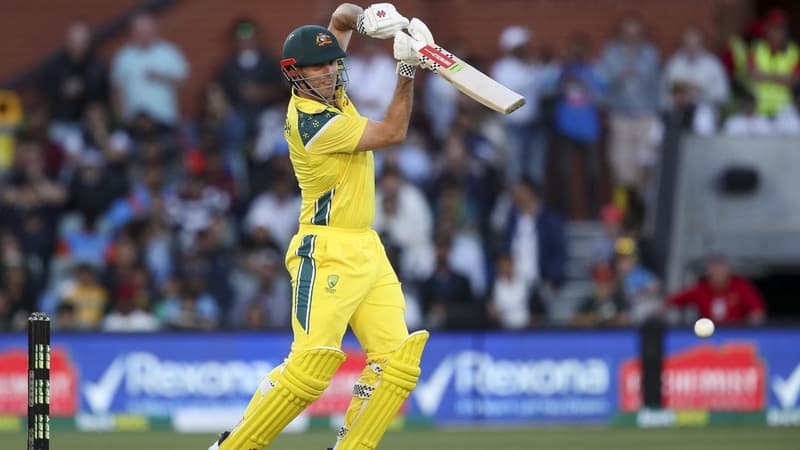
Renshaw subsequently accelerated alongside youngster Oliver Peake. Pacing his knock from a 55-ball half-century—brought up with a towering six off Masakadza—Renshaw systematically targeted the boundaries as Australia brought up their 200 in the 36th over. Peake contributed a steady 30 off the bench before departing in unusual fashion, hit wicket off Nyamhuri at 266 for 6 in the 45th over. Unfazed by the late wicket, Renshaw pushed through to his maiden ODI century with a single off Evans in the 48th over, advancing Australia to 283 for 7 with two overs remaining and setting their sights firmly past the 300 mark.
Roster Constraints, 2014 Echoes, and World Cup Building Blocks
Beyond the scorecard, the match spotlighted Australia’s white-ball depth and tactical restructuring ahead of the 2027 ODI World Cup in Southern Africa. Resting regular captain Pat Cummins ahead of an upcoming tour to South Africa, and holding out Cameron Green due to shoulder soreness, Australia fielded a newly configured seam attack featuring Xavier Bartlett, Nathan Ellis, and Spencer Johnson alongside frontline leg-spinner Adam Zampa, while senior quick Josh Hazlewood sat out and Mitchell Starc remained absent.
The historical parallels at Harare Sports Club added narrative friction to the toss. Marsh stands as the solitary Australian player remaining from the 2014 tour to Zimbabwe, where the hosts famously upset Australia. On the Zimbabwean team sheet, Raza and Taylor represent the surviving duo from that 2014 victory. Fresh off a 2-1 ODI series win over Bangladesh, Zimbabwe’s bowling discipline reinforced their ambitions as future World Cup co-hosts, proving that reputation alone will not secure easy wins in Harare.
Evidence-Led Forecast: Second-Innings Dynamics and Defense Parameters
Tactical Pattern: Defending a target near 300 in warm daytime conditions, Australia’s fast-bowling trio of Bartlett, Ellis, and Johnson must exploit initial seam movement to replicate Zimbabwe's powerplay effectiveness. As the Harare pitch flattens in the afternoon, middle-overs squeeze duties will fall primarily on Adam Zampa.
Decisive Matchup: Sikandar Raza versus Adam Zampa. Raza’s prowess against leg-spin in the middle overs serves as Zimbabwe's primary weapon when chasing totals above six runs per over. If Zampa curtails Raza's scoring arcs early, Zimbabwe's middle order will struggle to maintain the required run rate.
Strongest Counter-Case: Brendan Taylor and Craig Ervine bring extensive international experience to Harare. If Zimbabwe's top order—Brian Bennett, Ben Curran, and Innocent Kaia—survives the initial 10 overs without losing more than two wickets, their veteran middle order can target Australia's unproven second-tier pace combination under pressure.
What Would Change the Read: Early swing and multi-wicket bursts from Bartlett with the new ball would eliminate Zimbabwe's chase foundation before the spin overs arrive, rendering Australia's rotated bowling attack untroubled.
Sources
These sources formed the evidence pack for this article. Links open the original publisher; inclusion does not imply endorsement.
- cricketteamhub.com original
- livemint.com original
- cricketnews.com original
- aapnews.aap.com.au original