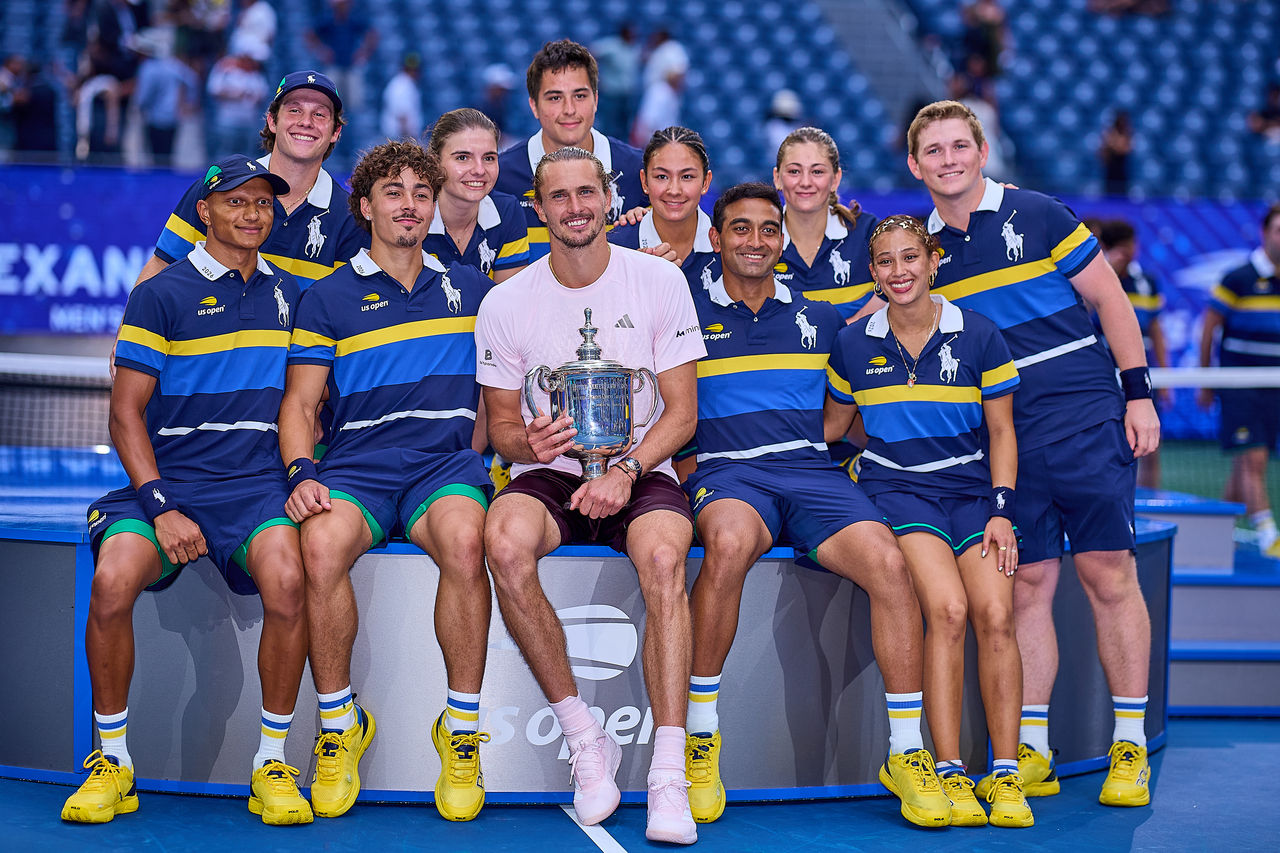
The professional tennis calendar offers little room for sentiment, but before the world's elite descend upon the hard courts of Flushing Meadows, a different kind of drama unfolds on sun-drenched regional courts. Long before players hoist trophies at major championships or secure multi-million-dollar career earnings, they must navigate the unforgiving terrain of junior development circuits. Here, young competitors trade strokes under scorching suns, fighting for the gold balls and wild cards that alter the trajectory of their tennis lives.
Consider the architecture of a breakthrough. At the Barnes Tennis Center, under a bright and breezy morning sky, the mechanics of future stardom are laid bare through endurance, tactical discipline, and mental fortitude. When sixteen-year-old Kayla Day of Santa Barbara carved her path through the USTA Girls' 18s National Championship, she relied on a potent combination of early aggression and third-set resilience. Cruising through the early rounds without dropping a set, Day demonstrated the exact blueprint required to transition from junior prominence to the professional ranks: dictating play from the baseline, utilizing a lethal serve under pressure, and refusing to yield momentum when opponents like seventh-seeded Nicole Frenkel mounted a second-set charge.
The stakes at these national tournaments extend far beyond local prestige. A championship run converts raw talent into tangible professional currency. For Day, capturing the 18s title yielded a coveted wild card into the main draw of the US Open—a direct pipeline from junior dominance to the senior major stage. Similarly, in the Girls' 16s division, local standout Nicole Mossmer engineered a grueling championship run that culminated in her first USTA gold ball and a wild card into the US Open Junior Championships, realizing a lifelong dream of traveling to New York to test her game on an international stage.
To understand the magnitude of these junior pathways, one must look at how modern legends forged their competitive identities. Germany's Angelique Kerber, who officially concluded her storied professional career in Paris, famously built her Hall of Fame resume on a foundation of relentless consistency and hard-court mastery. Long before collecting three Grand Slam titles—including an unforgettable 2016 run where she defeated Serena Williams in a thrilling Australian Open final and later captured the US Open crown to ascend to World No. 1—Kerber was grinding through qualifying draws and building the match-win resilience that ultimately yielded 683 career victories and over $32 million in prize money.
The parallels between elite professional longevity and junior-level trials highlight a shared truth across the sport: greatness is rarely an accident of birth; it is constructed through accumulated tactical battles. Whether examining a tense third-set tiebreak in a junior final or analyzing the rhythmic thwock-tock of strokes at a Grand Slam tournament, the underlying physics of competitive tennis remain identical. The junior circuit tests whether a player can cut down on unforced errors when the wind picks up, whether a server can rely on mechanics when fatigue sets in, and whether an athlete can sweep five consecutive games to close out a championship.
As the tennis ecosystem continues to evolve, the documentation and analysis of these developmental milestones carry profound importance. High-level sports journalism—recognized through honors like the inaugural Billie Jean King Award for Excellence in Women’s Sports Coverage, awarded to Sally Jenkins of The Washington Post—plays a crucial role in illuminating these trajectories. By capturing the nuanced realities of both emerging juniors and veteran icons, writers provide the contextual depth required to appreciate how tomorrow's champions emerge from the local courts of Southern California to the grandest arenas in sport.
Sources
These sources formed the evidence pack for this article. Links open the original publisher; inclusion does not imply endorsement.
- usta.com original
- wtatennis.com original
- apsportseditors.com original