Rory McIlroy’s victory at the 2025 Masters—outlasting Justin Rose in a dramatic Augusta National playoff—reordered the modern golf landscape. By ending an 11-year major championship drought, the 36-year-old Northern Irishman became the first European golfer to complete the Career Grand Slam and just the sixth player in history to win all four modern majors. That breakthrough at Augusta placed McIlroy alongside Gene Sarazen, Ben Hogan, Gary Player, Jack Nicklaus, and Tiger Woods. Yet as golf historian Fergus Bisset and host Neil Tappin highlight on Golf Monthly's 18 Majors: The Golf History Show, modern triumphs are constantly evaluated against the game's rich archival blueprint. From Young Tom Morris claiming four consecutive Open Championship titles between 1868 and 1872 to Tiger Woods’s staggering 15-stroke victory at Pebble Beach in 2000, major success demands an elusive blend of mechanical mastery and psychological composure.
2 Augusta Milestones and the Rarity of the Modern Grand SlamThe historical scarcity of Career Grand Slam winners underscores the unique demands of golf's four distinct major venues. Long before Augusta National was founded in 1934 by Bobby Jones, Clifford Roberts, and architect Alister MacKenzie, Jones established the pre-Masters single-year Grand Slam in 1930. The legendary amateur swept all four major championships of his era during a golden seven-year run from 1923 to 1930, accumulating 13 major titles before retiring at age 28. In the modern era, only five men had completed the career sweep prior to McIlroy's 2025 Augusta triumph.
Gary Player became the youngest player to complete the Grand Slam at the time when he added the 1965 U.S. Open to his resume, anchoring a career that featured nine major titles, 24 PGA Tour victories, and his landmark 1961 win as the Masters' first international champion. Player also stands as the only 20th-century golfer to capture Claret Jugs across three different decades (1959, 1968, and 1974). For Jack Nicklaus, securing the 1966 Open Championship completed his first of three career Grand Slams, highlighting a record-setting career defined by 18 major championships, six Masters victories, and seven runner-up finishes at The Open.
| Player | Major Titles | Grand Slam Completion | Defining Archival Benchmark |
|---|---|---|---|
| Jack Nicklaus | 18 | 1966 Open Championship | Record 6 Masters titles; 7 Open Championship runner-up finishes |
| Tiger Woods | 15 | 2000 Open Championship | 82 PGA Tour wins; 15-stroke victory at 2000 U.S. Open (Pebble Beach) |
| Ben Hogan | 9 | 1953 Open Championship | Captured 6 of 9 majors after surviving a near-fatal 1949 car crash |
| Gary Player | 9 | 1965 U.S. Open | First international Masters champion (1961); Open titles in 3 decades |
| Rory McIlroy | 5 | 2025 Masters | First European Career Grand Slam winner; ended 11-year drought in playoff |
As Bisset—a level-three rules official from North East Scotland—illustrates in his historical research, major glory often requires prevailing in head-to-head pressure cookers. The 2016 Open Championship at Royal Troon provided a modern counterpart to the legendary 1977 "Duel in the Sun" between Tom Watson and Nicklaus at Turnberry. At Troon, Henrik Stenson and Phil Mickelson lapped the field. Stenson fired a final-round 63 to finish at 20-under-par (264), clipping Mickelson’s 17-under-par (267), while third-place finisher J.B. Holmes finished 11 strokes behind Mickelson at 6-under-par (278). Stenson’s 264 established the lowest 72-hole aggregate in major history while matching Jimmy Walker’s 20-under benchmark from the 2015 PGA Championship, making Stenson the first Scandinavian man to capture a major championship.
Fergus Bisset brings these episodes to life by delving into the archives to uncover the details, the quotes and the characters behind the most pivotal moments the game has ever seen.
That capacity for supreme match-play tension extends back to Walter Hagen, who transformed professional golf's public standing during the 1920s. Hagen became the first native-born American to lift the Claret Jug in 1922, eventually winning four Open Championships (1922, 1924, 1928, and 1929) alongside a historic 1923 PGA Championship match-play duel against Gene Sarazen. Hagen’s sartorial flair off the course elevated the financial and social standing of touring professionals, setting a template for modern athletic charisma.
2 Technical Overhauls and Physical Resilience Across Major HistoryEnduring major success frequently forces players to re-engineer their mechanics or overcome severe physical trauma. Ben Hogan’s legendary ball-striking precision produced nine major titles, yet his legacy reached iconic status following a near-fatal February 1949 car crash. Just 16 months after physicians cautioned he might never walk again, Hogan captured the 1950 U.S. Open at Merion, proceeding to win six of his nine career major titles post-accident.
Similarly, Phil Mickelson fashioned one of the most distinctive careers in sports history by playing left-handed despite being naturally right-handed—a setup learned in childhood by mirroring his father's swing. Mickelson compiled 45 PGA Tour titles, six major championships, and 12 Ryder Cup appearances while maintaining a continuous presence inside the Official World Golf Ranking top 50 for over 25 consecutive years. His 2021 PGA Championship victory at age 50 made him the oldest major champion in golf history, honoring the longevity of Sam Snead, whose 82 PGA Tour victories stood as the solo gold standard until Tiger Woods matched the record.
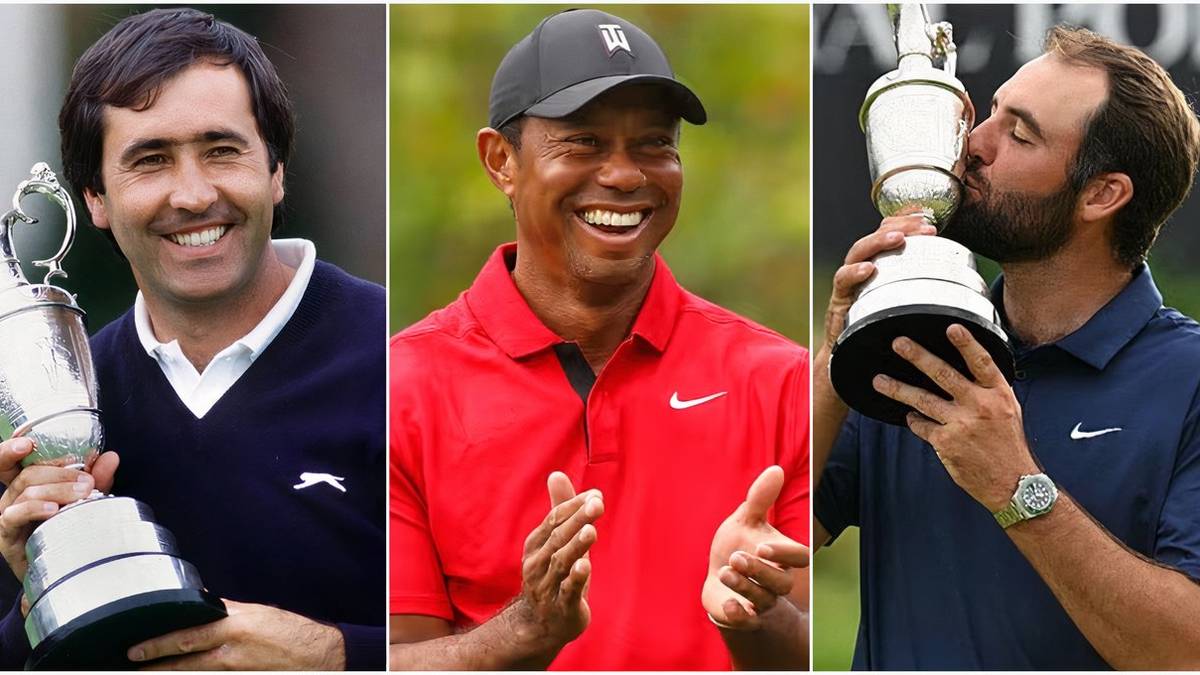
As golf historians look forward to upcoming major tests at historic venues like Royal Portrush for the 153rd Open Championship, archival history demonstrates that defining breakthroughs require unyielding composure. Whether studying Seve Ballesteros anchoring European Ryder Cup passion starting in 1979, John Daly’s improbable 1991 PGA Championship win at Crooked Stick as a ninth alternate, Tiger Woods conquering the 2008 U.S. Open on a broken leg at Torrey Pines, or Roberto De Vicenzo becoming Latin America’s first Open champion at Hoylake in 1967 at age 44, major history confirms that immortality is reserved for those who execute when the stakes are highest.
Sources
These sources formed the evidence pack for this article. Links open the original publisher; inclusion does not imply endorsement.
- golfmonthly.com original
- givemesport.com original
- golfcollege.edu original


