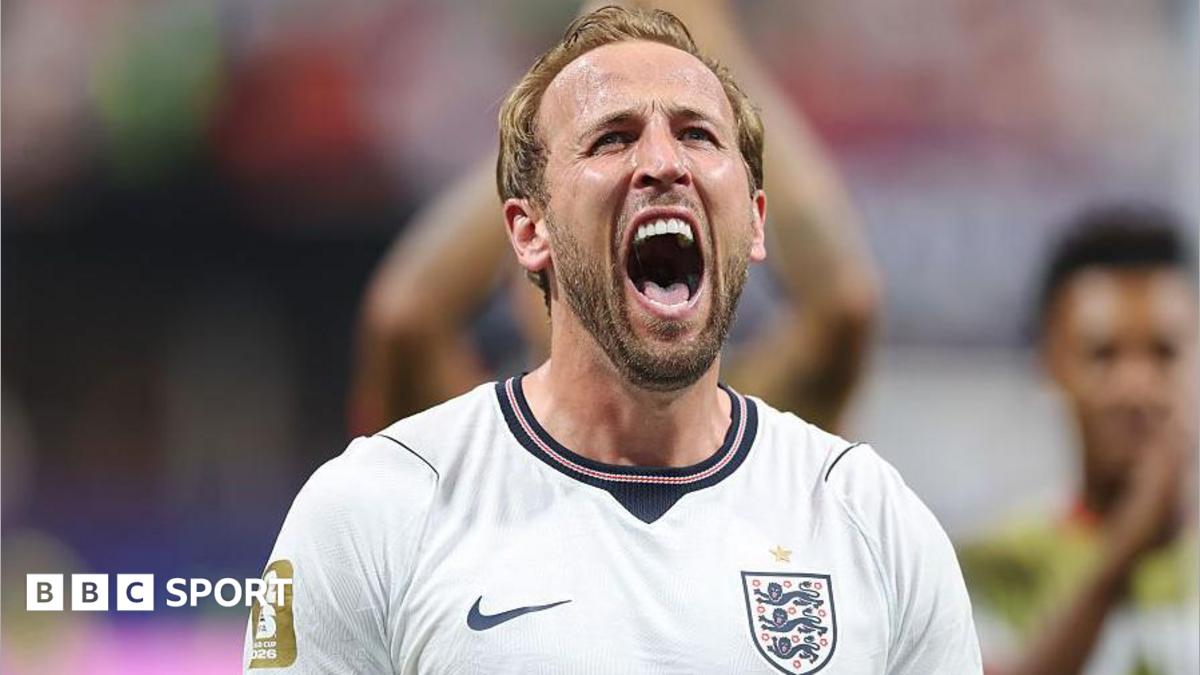
When Harry Kane raced away into a corner of Atlanta's futuristic stadium, England head coach Thomas Tuchel followed him straight onto the pitch in celebration. It was a sprint born not just of joy, but of absolute survival. Under the roof, shielded from the searing heat and stifling humidity outside, England and perhaps Tuchel's entire tenure were withering away against DR Congo until their captain took control.
For 75 minutes of a gripping last-32 tie, England looked every bit a side heading for an embarrassment on the scale of the Euro 2016 defeat to Iceland or the United States exit in 1950. Lionel Mpasi stood as a brilliant figure of defiance in goal for DR Congo, turning away waves of tentative attacks with a series of outstanding saves. Yet with only 15 minutes left on the clock, Kane powered a header past Mpasi, before delivering a trademark right-foot strike high past the helpless goalkeeper with four minutes remaining, capping a move sparked by substitute Anthony Gordon.
The Anatomy of a Rescue Mission
The statistical footprint of Kane's performance illustrates a player operating in rarefied air. With his brace in Atlanta, the 32-year-old moved above Pelé into joint-sixth on the all-time World Cup scorers list with 13 goals. His 84 international goals now put him level with legendary Hungarian Ferenc Puskas, while his 72 total goals across club and country this season—61 for Bayern Munich and 11 for England—place his current output alongside the historical peaks of Lionel Messi.
Gordon’s introduction off the bench proved pivotal. Operating on the flank, the Barcelona winger’s pace and directness altered the spatial dynamics of the match, forcing DR Congo's rigid defensive block to retreat and creating the fractional windows of separation that allowed Kane to work his magic. As Gordon noted of his captain's daily standard: Anyone can score a good goal. Anyone at this level can put the ball in the top corner, but it's the consistency with which he does it. Every day in training. Every game. It's phenomenal.
The Scenery Shifts: Into the Azteca Crucible
The relief felt by Tuchel and the Football Association will be short-lived. The tournament schedule now drags England from the enclosed, climate-controlled stadia of Dallas and Atlanta into the high-altitude hothouse of Mexico City's iconic Azteca Stadium for a last-16 clash against co-hosts Mexico.
The tactical parameters of this next fixture present an entirely different set of stress tests:
- Altitude: Moving from sea-level or enclosed arenas to an altitude exceeding 7,000 feet will test aerobic recovery cycles and high-intensity running thresholds.
- Historical Precedent: Mexico has lost only two of its past 89 competitive matches at home, going 10 World Cup matches unbeaten in the arena with 70 victories.
- Atmosphere: England will encounter a hostile, fanatical environment where local expectation has reached fever pitch.
England arrived in North America with the sole mission of lifting the trophy under Tuchel, but their progression depends heavily on whether their talisman can continue to bend matches to his will when structural fluidity fails. Where there is Kane, there is hope—but in the thin air of Mexico City, structural coordination and tactical discipline must match individual brilliance if England are to avoid another historic stumble.
Sources
These sources formed the evidence pack for this article. Links open the original publisher; inclusion does not imply endorsement.
- bbc.com original
- dailymail.com original
- latimes.com original