Related coverage
When the whistle blows at the New York New Jersey Stadium this Sunday, the 2026 World Cup will reach its natural, if heavyweight, conclusion. Spain and Argentina represent the two most consistent, effective teams in a tournament that has been defined by its sheer scale, but now narrows down to a battle of fundamental philosophies. On one side, La Roja, an evolution of the tiki-taka heritage that has found a more fluid, collective rhythm. On the other, the defending champions, an Albiceleste side that balances defensive structure with the singular, lethal interventions of Lionel Messi.
The Tactical Divide
The tactical trajectories of both teams reflect different ways of solving the puzzle of high-stakes international football. Luis de la Fuente’s Spain has moved past the era of suffocating possession, favoring a "one for all" collective intelligence. Their journey through the bracket, including a decisive 2-0 victory over France, was built on the constant movement of players like Rodri and Fabián Ruiz. The Spanish game plan focuses on forcing opponents to chase the ball without falling into the trap of aimless passing, creating spaces for players like Lamine Yamal to exploit.
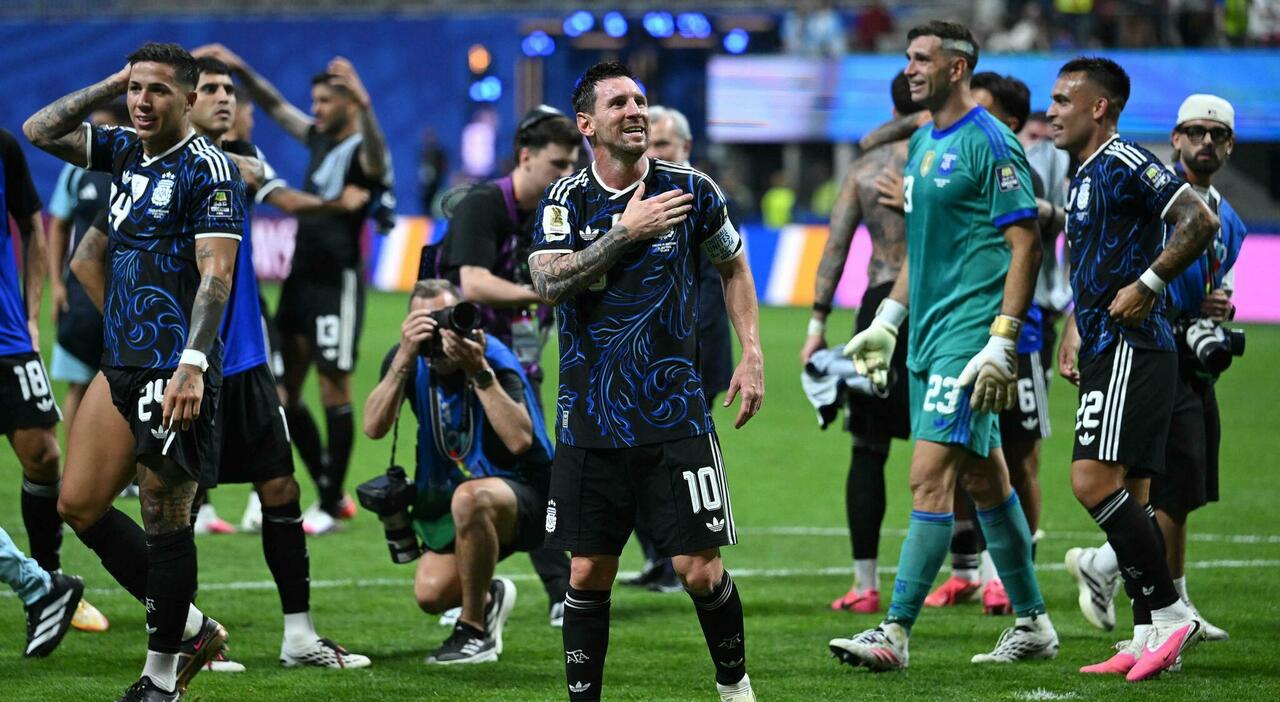
Argentina’s path, by contrast, has been characterized by "all for one" pragmatism. Under Lionel Scaloni, they have demonstrated an ability to absorb immense pressure and pivot into attack. Their recent 2-1 comeback win against England—featuring decisive goals from Enzo Fernandez and Lautaro Martinez—showcased a team that remains dangerous even when they are not controlling the flow of the game. Argentina operates with a compact defensive core, primarily anchored by Cristian Romero and Lisandro Martinez, which allows Messi the freedom to act as the lethal blade that finishes sequences sparked by his teammates.
Defining the Stakes
The significance of this final transcends the trophy itself. For Spain, the match offers a chance to secure their second world title, sixteen years after their historic 2010 triumph in South Africa. For Argentina, the incentive is historical: a win would mark a consecutive World Cup victory, an achievement that has remained exclusive to the Italy of the 1930s and the Brazil of the 1960s.
Bookmakers currently view the final as a balanced affair, though Spain enters with a slight edge in probability—estimated at 41% for a regulation-time victory. The 31% probability assigned to a draw leading into extra time or penalties reflects the expectation of a tight, cagey match where neither side will risk defensive stability for early aggression.
The Generational Intersection
Much has been made of the duel between 39-year-old Lionel Messi and the 17-year-old rising star Lamine Yamal. While media narratives often lean toward the symbolic "passing of the torch," the match itself will likely be decided in the midfield and by the adaptability of the two managers. Both De la Fuente and Scaloni have proven themselves adept at in-game adjustments, whether it is shifting formation to shut down vertical threats or utilizing substitutes like Lautaro Martinez to force the issue during periods of stagnation.
The stage is set for a clash that is as much about psychological resilience as it is about technical quality. Whether it is the rhythmic control of the Spanish machine or the desperate, high-stakes efficiency of the Argentine defense, the final at MetLife Stadium promises to be the definitive chapter of the 2026 tournament. With the official ceremony scheduled hours before the 21:00 (Italian time) kickoff, the world watches to see if Messi can cement his ultimate legacy or if Spain will redefine the modern standard of collective football.
Sources
These sources formed the evidence pack for this article. Links open the original publisher; inclusion does not imply endorsement.
- Sky Sport original
- Nicola Scuderi original
- zazoom.it original
- gazzetta.it original
- ilmattino.it original
- citynotizie.it original
- AdnKronos original