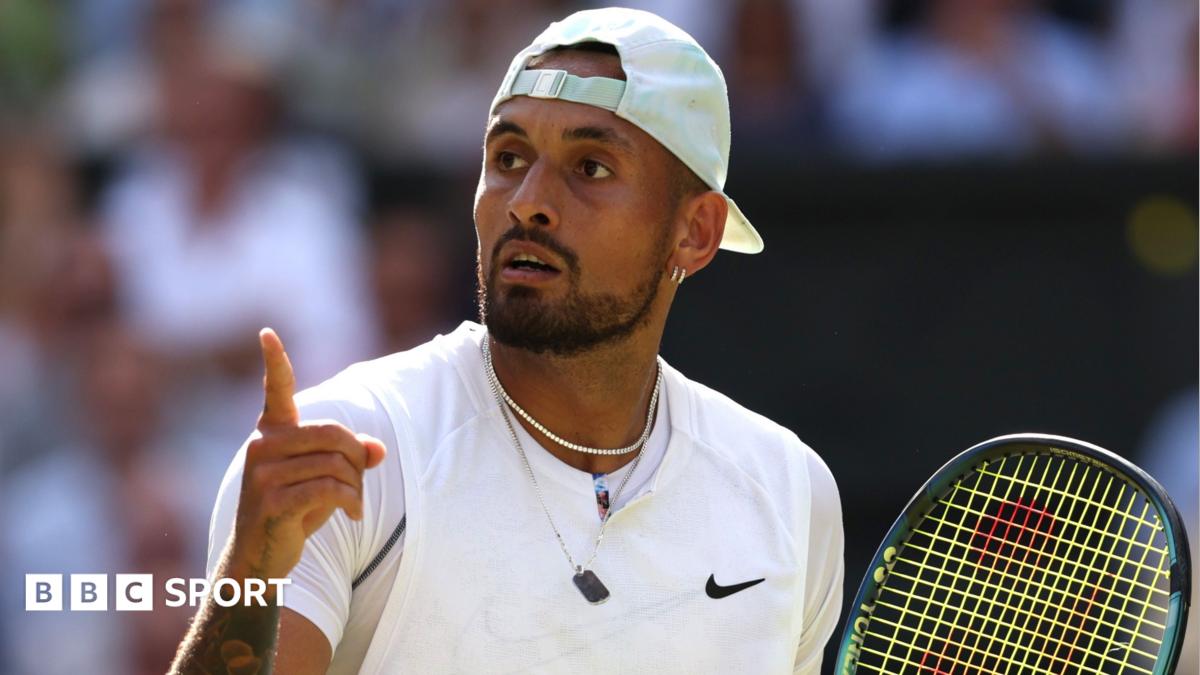
The arc of professional sports punishment rarely moves with clinical speed, yet the resolution of Nick Kyrgios’s anti-doping case has unfolded with distinct procedural velocity. The International Tennis Integrity Agency (ITIA) confirmed that the 31-year-old Australian accepted a one-month suspension after providing a sample at the Mallorca Championships on June 22 that contained benzoylecgonine, a metabolite of cocaine.
Because the substance is classified as a stimulant and a substance of abuse under the World Anti-Doping Agency Prohibited List, a provisional suspension had been mandatory since August 4. Yet unlike past high-profile cocaine cases in men's tennis—such as Dan Evans's one-year ban in 2017 or Richard Gasquet's 2009 ordeal—Kyrgios avoided a prolonged exile. The decisive mechanism lay in the timeline of ingestion. Kyrgios explained to the ITIA that his use occurred socially during a night out before the tournament began, an account corroborated by an expert from a WADA-accredited laboratory who verified that the concentration levels matched out-of-competition consumption.
Under current anti-doping regulations, which were updated in 2021 to apply reduced sanctions for substances of abuse taken out of competition, the classification fundamentally altered the penalty landscape. Because the ITIA accepted that the consumption took place outside of active competition, the violation triggered a lighter penalty framework. Kyrgios surrendered his ranking points and prize money from the Mallorca event—where he lost his opening singles match in straight sets to compatriot Adam Walton—and entered a treatment programme.
With the completion of that programme, his suspension officially concluded on September 3. The swift resolution contrasts sharply with the vitriol Kyrgios previously directed at the anti-doping system. Earlier in his career, the 2022 Wimbledon finalist vocally attacked tennis authorities over the handling of contamination cases involving Jannik Sinner and Iga Świątek, calling the sport's perceived lack of uniform fairness "disgusting" and arguing that fairness did not exist.

Yet his own journey back to eligibility arrives at a fragile professional crossroads. Having played just four singles matches in 2026 as he battles persistent knee and wrist injuries—including a full wrist reconstruction in September 2023—his ranking has plummeted to 919 in the world. In his initial public statement addressing the positive test, Kyrgios admitted to making a "huge mistake" and pointed to the heavy psychological toll of confronting the twilight of his career. Having stepped away from public life and social media for a 28-day reset, the door to the tour is technically unlocked, though whether his physical frame can withstand another comeback remains an entirely separate trial.
Sources
These sources formed the evidence pack for this article. Links open the original publisher; inclusion does not imply endorsement.
- dailymail.com original
- bbc.com original
- nytimes.com original
- rte.ie original