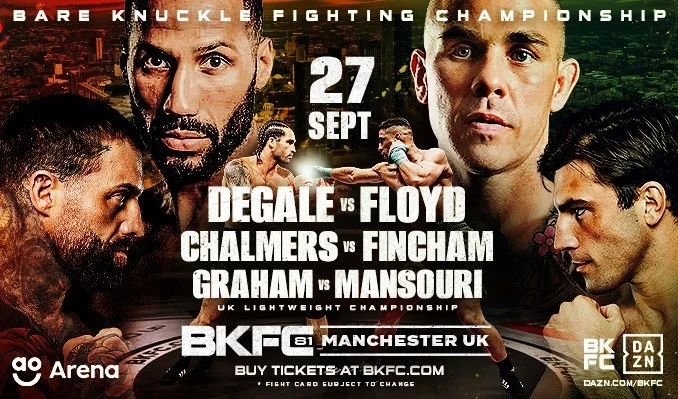
When Bare Knuckle Fighting Championship brings BKFC 94 to Manchester's AO Arena on Sept. 26, the spotlight falls squarely on a headline 180-pound collision between Darren Till and Yoel Romero. For the promotion, the card represents more than just another international arena date; it serves as a crucial showcase for Till, who joined the BKFC roster last April and has rapidly emerged as a central focal point for executive leadership during a shifting moment in bare-knuckle combat sports.
The urgency surrounding Till's spotlight performance arrives on the heels of major developments across the promotion's division hierarchy. Mike Perry, the reigning "King of Violence" champion who previously compiled a 6-0 record in BKFC with four consecutive knockouts, suffered a recent setback in Orlando at a Duel Arena event. After scheduled opponent Dillon Danis withdrew due to a late injury, Perry faced UFC veteran Brandon Jenkins as a late replacement. Perry dislocated his shoulder during the headlining fight and was ultimately stopped by technical knockout. With Perry turning 35 later this month, BKFC leadership has openly discussed how that defeat alters his immediate negotiating leverage.
Addressing Perry's standing after the Orlando stoppage, BKFC head David Feldman explained the recalibration facing the former top star. MMA Fighting reported Feldman's direct assessment of Perry's status:
We’ll see what happens with him,Feldman said.It’s a loss but do people consider he got his ass kicked? I don’t think so. I don’t think it has that much effect on it. It definitely, probably decreases his value a little bit, and we’re going to have to talk about it. Who’s knocking on his door? It really depends. The whole negotiation’s going to go around who else is knocking on his door.
Feldman's promotional focus has visibly shifted toward Till's potential to drive upcoming major events. Setting the stakes for the Manchester appearance, Feldman outlined what a convincing victory by Till could unlock for future match making:
I think with a good Darren Till performance, we can get the world very [excited],Feldman continued.Here’s what [Mike Perry] has to do: ‘I’m back where I belong. I’m not doing it anymore. My MMA career was good, but it wasn’t great. I’m back where I’m the f*cking king. Let me be the king.’ Then if something like that happens, I think we can promote that fight.
Operational Rules, Venue Mechanics, and Arena Access
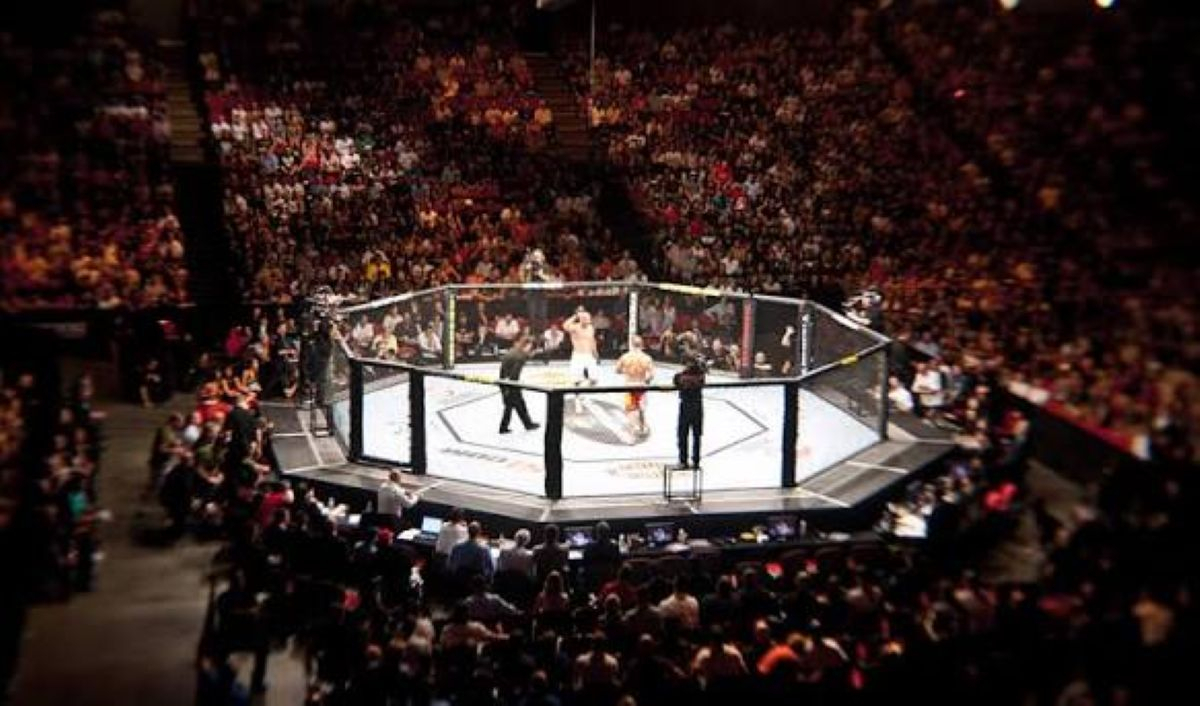
The tactical environment waiting for Till and Romero at the AO Arena features specific mechanics distinct to bare-knuckle boxing. Contested inside a circular "Squared Circle" ring, fighters begin each round by "toeing the line" at center ring. Bouts consist of two-minute rounds with bare knuckles exposed and limited wrist wraps. The condensed round duration forces immediate action, while the circular perimeter eliminates flat corners and keeps fighters constantly within striking range.
A critical technical element of BKFC rules is the active clinch. Unlike traditional boxing, where referees rapidly break up inside ties, bare-knuckle rules allow fighters to trade short-range punches while maintaining body control or a collar tie. This design rewards inside work and tight control, often creating rapid momentum swings and quick knockdowns.
For fans attending the Manchester event in person, doors at the AO Arena typically open one to two hours before the first scheduled fight on the undercard. Across BKFC dates, ticket prices generally start around $71, with average prices sitting at $162 depending on seating section—ranging from upper and lower-bowl options to floor, ringside, and VIP packages. Verified secondary platforms like Vivid Seats back purchases with a 100% Buyer Guarantee covering valid entry and full refunds if an event is canceled.
Evidence-Led Forecast: Tactical Pathways at 180 Pounds
Likely Strategic Pattern: Given the structure of two-minute rounds inside the circular enclosure, the dynamic directly after toeing the line will set the pace. Till's baseline strategy at 180 pounds centers on long-range linear striking, using jab distance to keep Romero from advancing cleanly into center ring. Because bare-knuckle rules permit only minimal wraps, clean long-range connections carry massive stoppage potential before an opponent can establish a clinch.
Decisive Matchup Factors: The defining physical conflict will take place at the boundary between long range and the active clinch. Romero's explosive closing speed presents a direct threat to Till's lateral movement. If Romero forces Till against the circular boundary, his ability to capitalize on the active clinch rule—landing clean short punches with knuckles exposed—will test Till's inside hand defense. Conversely, if Till controls the center ring after the opening whistle, his straight left and range control can keep Romero on the perimeter where short two-minute windows work against physical burst fighters.
Strongest Counter-Case and Reading Shift: The counter-case to a controlled, range-striking victory for Till relies on early line-toe aggression from Romero. If Romero breaches Till's reach in the opening minute of Round 1 and secures an early knockdown in close quarters, the rapid momentum swings inherent to bare-knuckle fighting could bypass distance tactics entirely. What would alter this analytical read during live action is an early hand injury—common with limited wraps—or an immediate knockdown within the first 30 seconds that turns the contest into an unstructured exchange.
Sources
These sources formed the evidence pack for this article. Links open the original publisher; inclusion does not imply endorsement.
- apps.apple.com original
- vividseats.com original
- mmamania.com original
- lowkickmma.com original