Midway through the 2026 season, the most intense administrative and political crosswinds in professional basketball are not centered on postseason seeding or offensive rating, but on a single line inside the Women’s National Basketball Association’s collective bargaining agreement. While the league’s top teams push through the regular-season grind, headline focus has shifted radically toward the 2027 WNBA Draft. The catalyst: high-profile public declarations from former NBA players intending to enter the selection pool, paired with escalating debate among active roster members regarding eligibility guidelines for transgender women in professional sports.
Despite the high-volume public discourse, no openly transgender woman has ever played or is currently scheduled to play in the WNBA. Yet, the ambiguity surrounding the league’s foundational entry requirements has blown open a governance void that commissioner Cathy Engelbert and team executives must now navigate amid national scrutiny.
The Bargaining Gap: How a Single CBA Line Opened an Administrative Void
The core of the dispute stems from the language enshrined in the WNBA’s collective bargaining agreement (CBA), the governing document negotiated between the league and the Women’s National Basketball Players’ Association (WNBPA). Regarding who may step onto a WNBA floor, the document states plainly: Only players who are women are eligible to play in the WNBA.
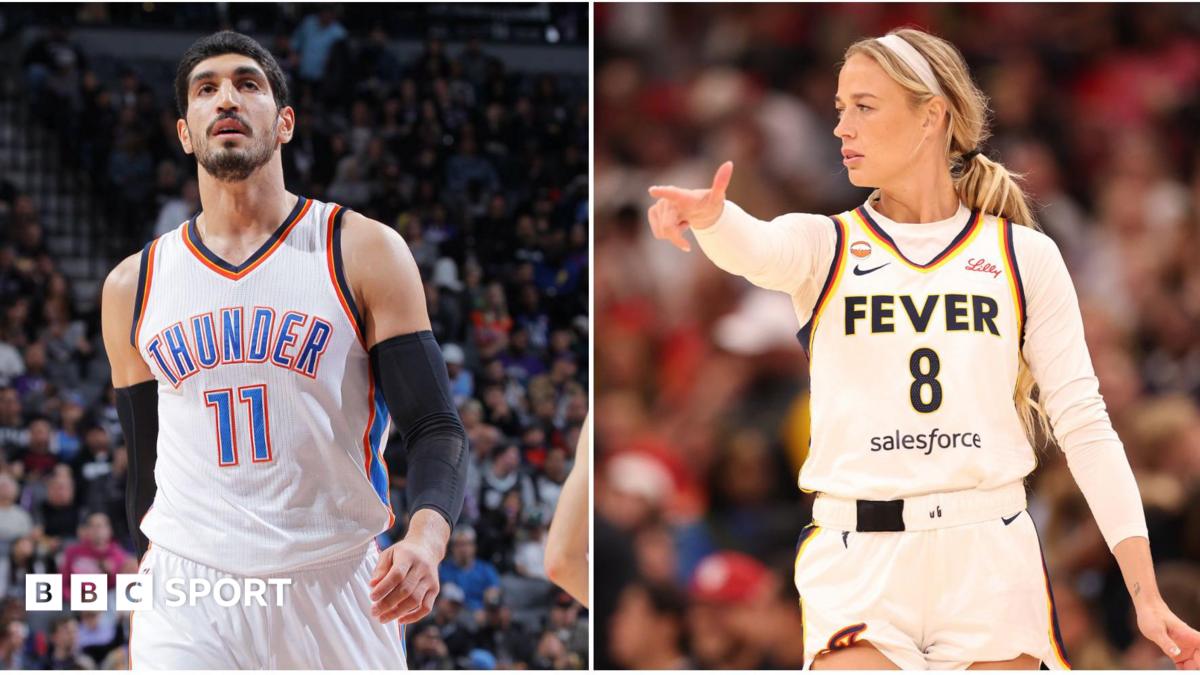
Unlike international Olympic governing bodies or domestic high school athletic associations, the WNBA’s policy lacks specific biomedical metrics, testosterone thresholds, or precise criteria defining gender qualification. That lack of detailed specificity prompted former Boston Celtics center Enes Kanter Freedom, who logged 11 seasons in the NBA before last playing in 2022, to publicly declare his intent to enter the WNBA draft pool.
Writing on social media, Freedom directly challenged the text: If simply declaring who you are is all that's required, then I meet every single requirement necessary to compete in the WNBA.
Freedom insisted he was not seeking to mock any community, adding, I'm simply asking that the current rules be applied equally to everyone — the rules that represent the very values many WNBA players and coaches have publicly advocated for.
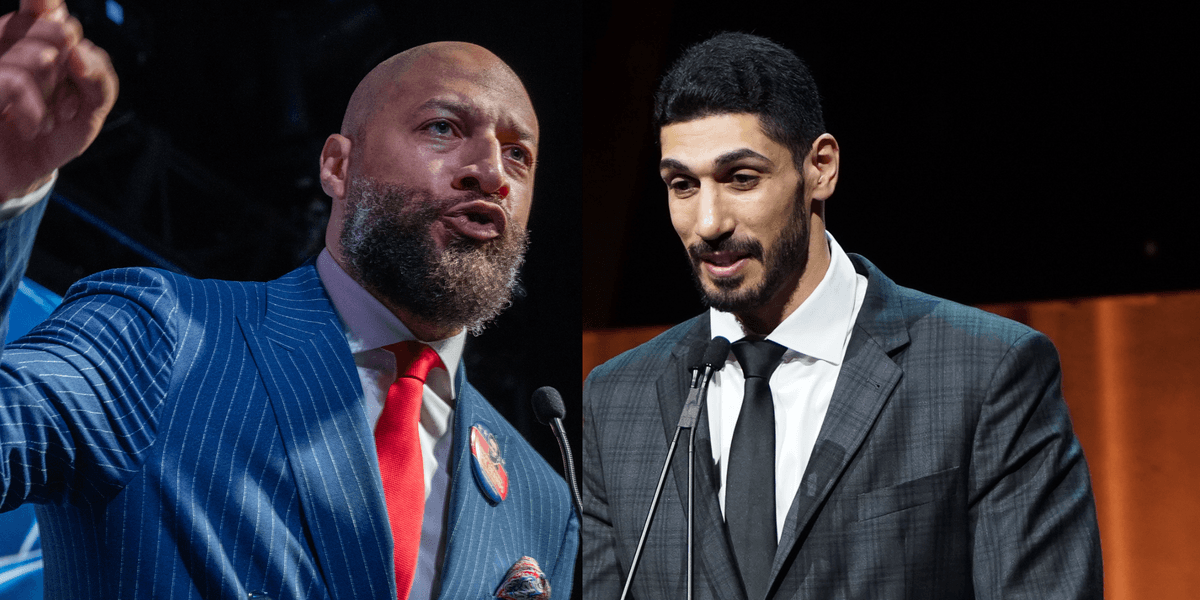
Hours later, former Iowa State star and short-tenured NBA player Royce White—who led Iowa State in all five major statistical categories before making three NBA appearances and later launching a Republican U.S. Senate campaign in Minnesota—announced his own intention to declare for the 2027 draft. White told Fox News that he identifies as sometimes identifying as a woman for purpose of basketball,
while openly raising the prospect of legal action against the league if denied entry. We’re gonna have to have a huge legal battle about discrimination if I can’t play,
White declared.
The draft declarations transformed a theoretical policy discussion into an urgent labor priority. Commissioner Engelbert addressed team executives in a Friday memo, confirming that a task force comprised of team presidents and general managers would formally add gender eligibility criteria to their agenda. Engelbert stressed that WNBA eligibility rules, unlike the eligibility rules of some other leagues and governing bodies, are collectively bargained,
asserting that preserving the integrity of our game and ensuring fair competition will always remain among the league's highest priorities.
From Locker Rooms to Hardwood: On-Court Friction and Roster Realities
The administrative scramble follows weeks of public friction initiated when Indiana Fever guard Sophie Cunningham addressed the topic in an ESPN profile. The 29-year-old guard stated that she wanted to protect young girls in sports who shouldn't have to go against biological men,
later reiterating that barring transgender athletes from female categories was common sense.
Cunningham’s comments quickly drew public support from political figures, including President Donald Trump and Vice President JD Vance, while prompting protest rallies outside Indiana venues. Within the league, reactions reflected deep ideological divisions across franchise personnel:
- Cheryl Reeve (Head Coach & President, Minnesota Lynx): Wore a
Trans Kids Belong
shirt during pregame activities against Indiana and met directly with Cunningham on court. Reeve remarked,I come from a space of inclusion. The narrative that I think is problematic is to suggest that transgender athletes are the biggest problem in women's sports.
- Gabby Williams (Forward, Golden State Valkyries): Stated unequivocally that she would
welcome a trans athlete on my team or against my team, any time.
- WNBPA Union Leadership: Issued a statement denouncing
hate, abuse, and demonization of the transgender community,
while emphasizing that playerswill not be used as political pawns.
- Celeste Keaton (Co-owner, Seattle Storm): Received a five-game home suspension from the WNBA after an argument with teenage courtside fans carrying pro-Cunningham signage.
The tension spilled directly onto the hardwood during Indiana’s 90-86 victory over the Chicago Sky. In a fast-break possession, Sky guard-forward DiJonai Carrington committed a heavy hard foul on Cunningham’s layup attempt, striking her across the face and knocking her to the floor. Officials assessed a flagrant two foul on Carrington, sparking heated pushback on the floor and leading to Carrington posting WHITE PRIVILEGE
on Instagram Threads while tagging the Fever organization. Cunningham responded by arguing Carrington has some pent-up stuff
and wants attention.
However, tactical breakdown by league broadcast analysts cautioned against reading macro-political motives into every physical encounter. On WNBA Countdown, analyst Andraya Carter demonstrated that Carrington was trailing the play and attempted a contest similar to clean rim-protection plays throughout her career, asserting that the hard foul was not driven by off-court rhetoric.
Strategic Forecast: The Task Force Deliberations and CBA Friction
With the task force of general managers and team presidents convening, the WNBA faces a tightly constrained operational pathway. The league’s response will determine how domestic professional sports handle the intersection of labor agreements, biological definitions, and political pressures.
Likely Policy Pattern
Expect league governance to move toward formalizing specific biological or physiological criteria aligned with broader elite athletic frameworks. Rather than relying on simple self-identification or informal interpretations, the league office will likely seek to negotiate explicit amendments to the CBA alongside the WNBPA. Given that global federations in athletics, cycling, and aquatics have implemented strict biological female classifications—and the International Olympic Committee has slated sex testing for the 2028 Los Angeles Games—the WNBA task force will likely draft language that restricts entry to athletes based on biological sex or specific puberty-related benchmarks.
The Decisive Matchup: CBA Mandates vs. Legal Threats
The primary point of friction exists between union consensus and external legal exposure. Because the CBA requires mutual agreement between the owners and the WNBPA, commissioner Engelbert cannot unilaterally alter eligibility criteria without player union approval. If the union insists on maintaining broad inclusion principles while the league attempts to close loopholes targeted by bad-faith draft entrants, negotiations could stall. Furthermore, threats of discrimination lawsuits from individuals like White introduce potential court challenges outside sports jurisdiction.
Strongest Counter-Case
The alternative scenario relies on the league keeping the CBA text minimal to avoid drawn-out labor fights, opting instead to handle non-traditional draft entrants on a case-by-case basis through standard athletic vetting. Under this approach, team general managers simply elect not to draft or sign players who fail to meet competitive roster standards, neutralizing media stunts without altering union contracts.
What Would Change the Read
If the WNBPA takes a rigid legal stance rejecting any modification to the existing players who are women
text, or if external legal filings force expedited court injunctions prior to the 2027 Draft process, the WNBA office will be forced to take definitive unilateral action. Until the task force produces concrete contractual language, Cunningham and her peers will continue navigating a baseline environment where every hard foul, pregame outfit, and media session is filtered through an intense national spotlight.
Sources
These sources formed the evidence pack for this article. Links open the original publisher; inclusion does not imply endorsement.
- bbc.co.uk original
- advocate.com original
- them.us original
- sportshard.com original