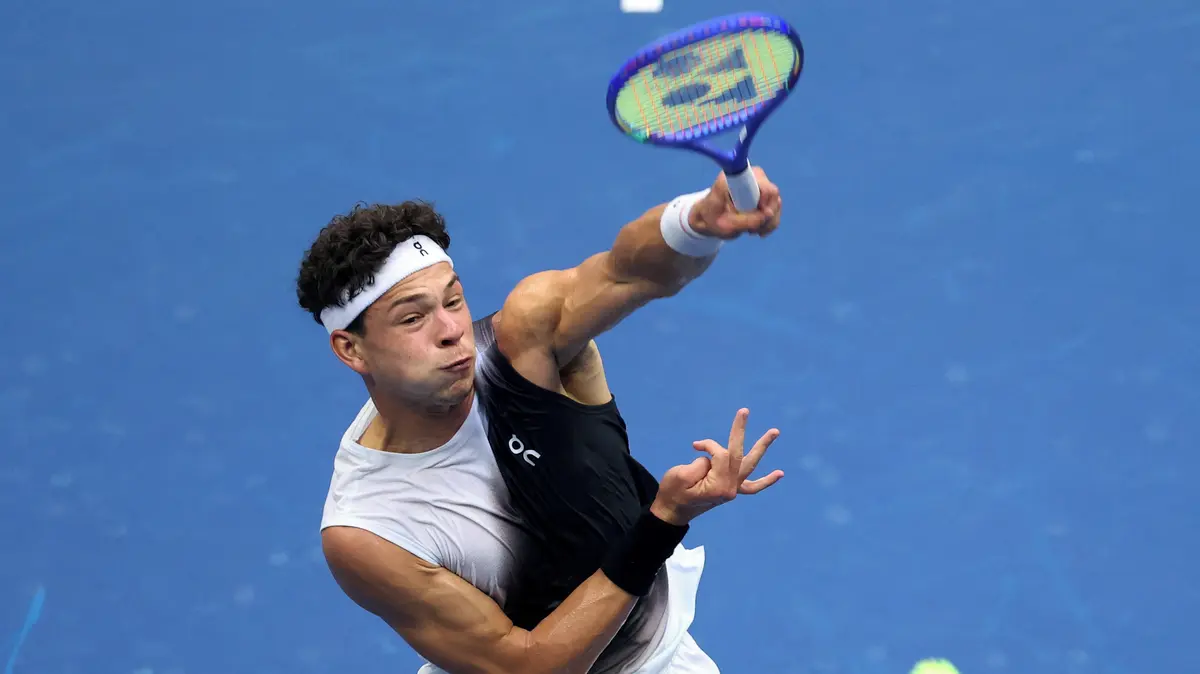
Few figures in modern tennis history have redefined elite big-match performance quite like Stan Wawrinka. When the stakes reached their absolute zenith, the Swiss star transformed from a volatile performer into an unstoppable juggernaut. Nowhere was that metamorphosis more striking than during his triumph at the 2016 US Open, where he systematically unseated top-seeded Novak Djokovic 6-7, 6-4, 7-5, 6-3 in a grueling three-hour and 54-minute final. The victory preserved Wawrinka's immaculate 100 percent record in Grand Slam finals, securing his third major trophy in three appearances following earlier crowns at the 2014 Australian Open and 2015 French Open.
Wawrinka's championship run in New York encapsulated his career paradox: a player capable of battling through mid-tournament survival acts before elevating his game to out-muscle the formidable world number one. Facing the game's elite on the biggest stages, Wawrinka became the definitive wrench in Djokovic's dominance, extending an extraordinary record where every single time Wawrinka defeated Djokovic at a major, he went on to lift the trophy.
The Momentum Shift in Flushing Meadows
The 2016 final at Flushing Meadows in New York opened under intense pressure for Wawrinka. Djokovic bolted out to an immediate 3-0 lead, establishing a suffocating defensive rhythm and earning two set points at 5-2. Yet even while trailing, Wawrinka began asserting his heavy baseline strokes, wiping away both set points and forcing a tie-break. Although Djokovic claimed the opening set—extending Wawrinka's tie-break record against the Serb to nine losses in ten attempts—the momentum had irrevocably shifted.
Even though I lost the first set, from the moment I tied it at 5-5, I started to believe and dictate play more,reflected Stan Wawrinka.
From that pivotal juncture, Wawrinka's ferocious forehand and heavy one-handed backhand dictated the terms of engagement. He relentlessly targeted Djokovic's perimeter defense, maintaining a blistering level of aggression even as physical exhaustion settled over both men. Despite entering the final having logged twice as much court time as Djokovic—who had advanced through three separate mid-tournament retirements or walkovers—the 31-year-old Swiss appeared the sharper, more resilient competitor throughout the final three sets.
Forged in the Crucible
Wawrinka's path to the championship was paved with sheer grit. In the third round, he hovered on the brink of elimination, facing match point against Daniel Evans. Wawrinka survived that critical moment, using the escape as psychological fuel to navigate a series of punishing four-set battles against Juan Martín del Potro in the quarterfinals and Kei Nishikori in the semifinals.
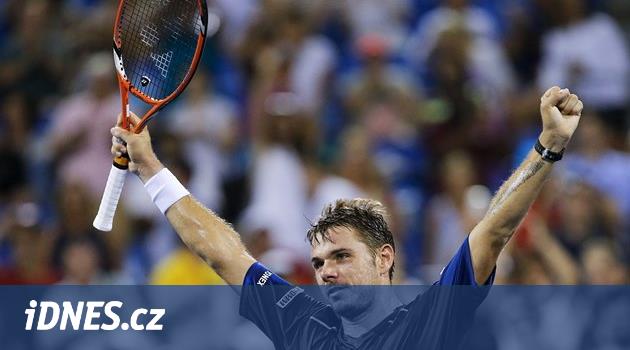
By the time Wawrinka stood across the net from Djokovic, his cumulative fatigue was immense. However, his physical endurance and tactical clarity proved unflappable, even when Djokovic required late medical treatment for wrist and arm issues during the third set.
It was hard for me to keep my operating temperature up so that I wouldn't freeze and develop physical issues myself,explained Stan Wawrinka.I was afraid of getting cramps or something similar because I was in a good rhythm.
Wawrinka's ability to maintain composure during mid-set stoppages illustrated his matured mental resolve. He pushed through complete physical depletion to cross the finish line, claiming the $3.5 million winner's check—equal to women's champion Angelique Kerber—and cementing his place among tennis legends.
The Margin of Error
The technical storyline of the 2016 final hinged entirely on break-point conversion and high-leverage point management. Over nearly four hours of play, Wawrinka won exactly one more point than Djokovic—a razor-thin margin that defined the match. The difference was Wawrinka's ruthless efficiency when defending his own serve.
Djokovic created 17 break point opportunities across four sets but managed to convert only three. Wawrinka erased 14 of those threats, repeatedly finding big first serves or unreturnable forehands when backed against the wall. Djokovic candidly identified those missed chances as the decisive factor in his defeat.
I have to congratulate Stan on his performance, he was better in the decisive moments of the match,admitted Novak Djokovic.My break point conversion rate was terrible. And when you don't convert so many opportunities against players like Stan, you have no chance to win.
A Statistical Anomaly
Wawrinka's New York victory placed his career in rare historical context. While the Big Four—Federer, Nadal, Djokovic, and Murray—dominated Masters 1000 events, Wawrinka operated under a unique dynamic: a rare 3-to-1 ratio of Grand Slam titles to Masters 1000 titles. Furthermore, Wawrinka accumulated more Grand Slam titles after turning 29 years old than either Roger Federer or Pete Sampras achieved in their respective late-career stages.
His mastery over Djokovic in major finals stands as one of the most distinctive head-to-head dynamics in modern tennis. Across Djokovic's eight Grand Slam finals during that stretch of his career, the Serbian superstar compiled a 6-0 record against all other opponents—yet went 0-2 when facing Wawrinka. His reverence and camaraderie within Swiss tennis remained equally memorable, exemplified when he congratulated countryman Roger Federer on reaching his 20th major crown with an affectionate tweet: Incroyable papy !!!!!!
Sources
These sources formed the evidence pack for this article. Links open the original publisher; inclusion does not imply endorsement.
- aktualne.cz original
- tenisportal.cz original
- idnes.cz original
- sport.cz original