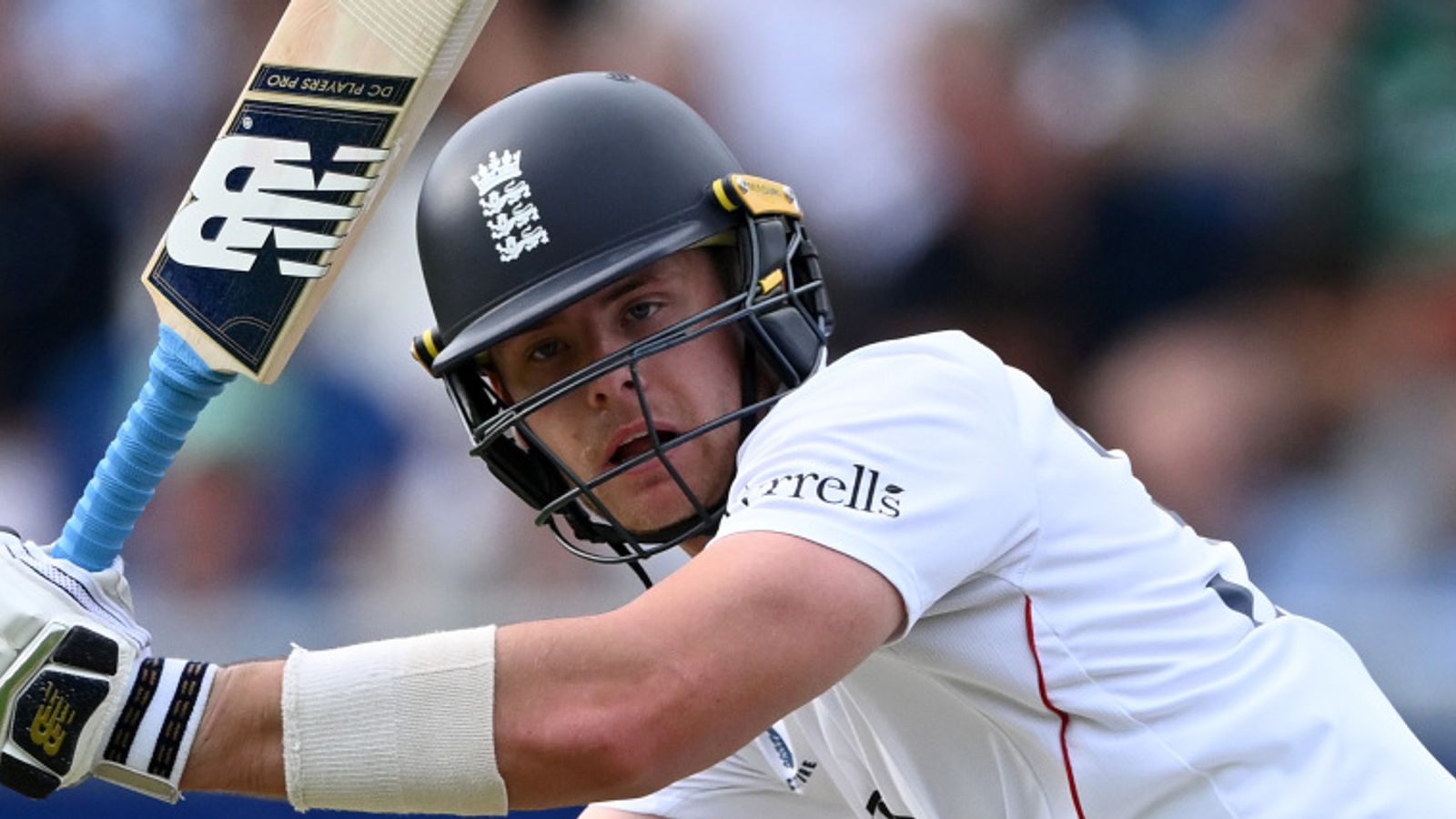
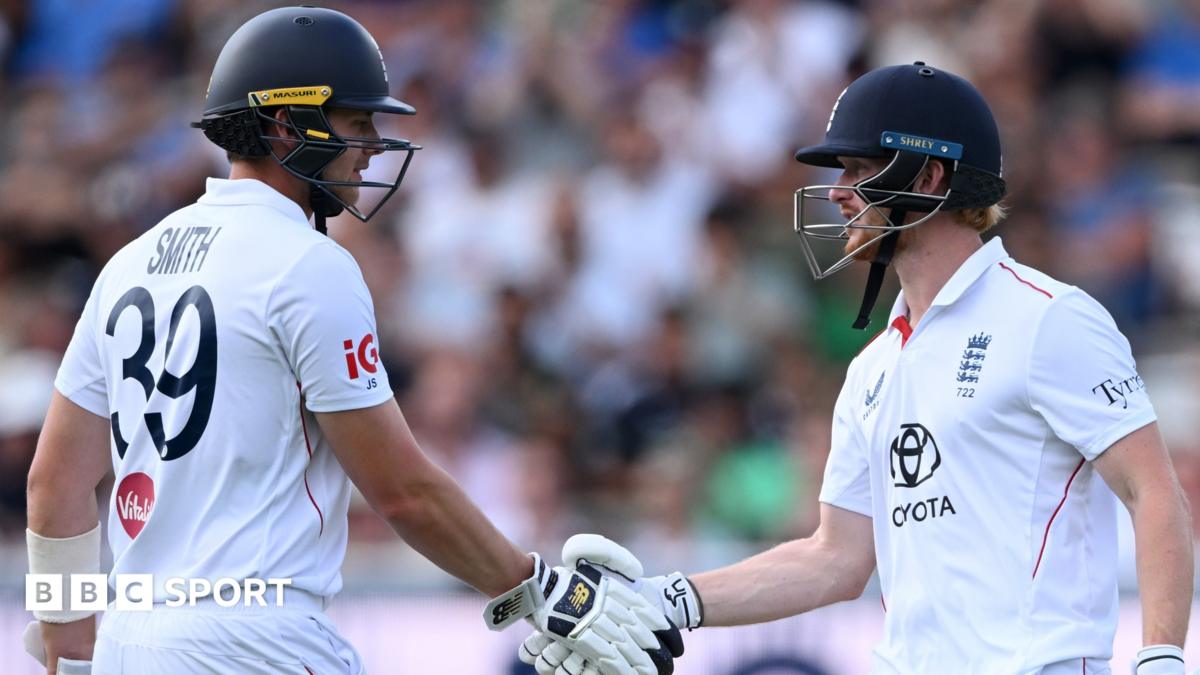
Under the heavy, damp skies of Lord's, where the gloom often swallows the intent of the world's best batsmen, Jamie Smith found something more vital than just a way to the middle: he found his rhythm. On a day of rain delays and curtailed light, Smith’s 61 was not merely a top-score for England’s 248-9; it was a calculated defiance against a summer that has, until now, threatened to derail his ascent.
For the 26-year-old wicketkeeper-batsman, the innings felt different. It was a departure from the frantic, often reckless aggression that has both defined and doomed his recent outings. "I felt I scratched around at the start but once I found the middle of the bat, it was slightly different to how I usually play," Smith admitted, noting that the restrictive nature of the Lord's surface forced him out of his typical top-tempo approach.
The Anatomy of a Slump
To understand the weight of Smith’s 61, one must look back to the wreckage of the winter Ashes. It was a period that saw his clinical brilliance replaced by a sense of disjointed struggle. The statistics tell a bruising story: after a stellar July 2025 at Edgbaston, where he posted 184 not out and 88 against India to push his Test average to 58.64, the decline was precipitous. He exited the Ashes averaging just 23.44 across ten innings.
The nadir came in the final Test at Sydney. A "witless" dismissal to the part-time medium-pace of Marnus Labuschagne became the visual shorthand for a player losing his bearings. The psychological toll was evident. "When you're not playing well, it's quite disheartening," Smith reflected, describing the sensation of watching his average slide with every walk to the crease.
"When he first came in, everything seemed to come to him easily, he played brilliantly... But then all of the things we were applauding him for, he then got hit by when it wasn't going so well." Nasser Hussain, Sky Sports Cricket
The scrutiny wasn't limited to the scorecard. As his runs dried up, his body language became a focal point for critics, questioning whether the calmness that initially defined his entry into Test cricket had evaporated under the pressure of the international spotlight.
The Technical Fix
The struggle wasn't merely mental; it was deeply technical. Smith identified a significant flaw that emerged during the Australian tour: his front foot was crossing over, a mechanical error that left him "blocked off" and vulnerable. The remedy required a return to basics. By playing a concentrated block of red-ball cricket with Surrey, Smith worked to rectify the movement, eventually testing the adjustment by batting higher up the order at number three before transitioning back to his role at number seven.
Behind the Stumps: The Weight of the Gloves
While his batting has undergone a metamorphosis, Smith’s wicketkeeping remains a battlefield of public opinion. The transition has been anything but smooth. During the Ashes, former England keeper Matt Prior criticized Smith's demeanor, suggesting he was too quiet behind the stumps. This sentiment has been amplified by the relentless cycle of social media, where every error is met with comparisons to Ben Foakes.

The tactical challenges are equally real. Following New Zealand's Tom Blundell’s masterclass in standing up to the stumps to stifle batters like Joe Root and Harry Brook, Smith found himself pushed out of his comfort zone. Without the extra pace of Ollie Robinson in the attack, Smith struggled to mirror those high-pressure tactics. However, he is not navigating this alone. The presence of Sarah Taylor in the coaching setup has been a vital stabilizing force. "She brings a lot of energy to the group... she's always willing to work at things and chat them through," Smith said, acknowledging the frustration of errors being amplified by digital scrutiny.
A Statistical Snapshot: The Striker's Paradox
Despite the recent volatility, Smith remains one of the most formidable strikers in the English game. His ability to find the boundary is backed by elite strike rates, even if his consistency has wavered.
| Format | Strike Rate |
|---|---|
| Tests | 73 |
| ODIs | 112 |
| T20Is | 194 |
A Summer of Uncertainty
Smith’s personal battle for form is unfolding against a backdrop of institutional flux. England cricket is currently a landscape of transitions. Brendon McCullum, the architect of the aggressive era, has moved to lead the white-ball side, while incoming head coach Stephen Fleming prepares to take the reins next month. The interim period, featuring caretaker coach Marcus Trescothick and the arrival of Michael Yardy, has been characterized by both tactical experimentation and off-field distractions.
The squad has been unsettled by the recent removal of Brydon Carse following an investigation into an alleged assault in Derby, adding a layer of tension to a week already dominated by the intensity of the Pakistan series. Amidst this, Smith's focus remains singular: reclaiming the standards he set upon his debut.
Evidence-Led Forecast: As the second Test enters its decisive stages, the outcome hinges on whether Pakistan's seam trio, led by Muhammad Abbas and Mohammad Ali, can exploit the Lord's slope to bypass England's middle order. While Smith and Jordan Cox provided a much-needed platform, England’s 248-9 leaves them vulnerable. The tactical matchup to watch will be the Pakistan seamers versus the English lower order; if Smith can translate his Day 1 rhythm into a significant partnership, England may escape with a workable total. However, if the recent pattern of England's middle-order collapses continues, Pakistan is well-positioned to seize control of the series.
Sources
These sources formed the evidence pack for this article. Links open the original publisher; inclusion does not imply endorsement.
- dailymail.com original
- bbc.co.uk original
- skysports.com original
- uk.sports.yahoo.com original