
When Pierre LeBrun of The Athletic first signaled that a contract stalemate in Texas and a trade request in Motown might be on a collision course, the hockey world scoffed at the premise. The Dallas Stars and the Detroit Red Wings looked like awkward dance partners on paper. Yet as the summer of 2026 unfolds, the friction points around Jason Robertson and Dylan Larkin have turned speculative whispers into the league's most compelling chess match.
The mechanics of a direct swap have always faced a stubborn structural hurdle. Dylan Larkin holds a no-trade clause and originally submitted a tight three-team list consisting of the Minnesota Wild, Vegas Golden Knights, and Florida Panthers. To give Red Wings general manager Steve Yzerman the leverage required to construct a proper return package, agent Pat Brisson worked with Larkin to expand that list, adding the Dallas Stars. For Dallas general manager Jim Nill—who spent fifteen years in the Detroit front office from 1998 through 2013—the historical trust with Yzerman offers a frictionless communication channel.
Yet moving pieces directly between Dallas and Detroit quickly hits a wall of conflicting organizational needs. According to reports from SwissHabs citing Ansar Khan of MLive, Detroit initially demanded young center Wyatt Johnston in exchange for their captain. Dallas slammed the door shut on that proposal, refusing to sacrifice a core piece of their forward group. Instead, the Stars tabled the rights to Jason Robertson, who is a restricted free agent with arbitration rights coming off a campaign where he notched 45 goals and 51 assists for 96 points in 82 games, but whose soaring contract demands—seeking a massive long-term payday projected well past $10 million annually—do not neatly align with Detroit's current financial appetite.

The Multi-Team Solution and the Pittsburgh Factor
Because the Red Wings require a player capable of maintaining stability down the middle rather than absorbing a winger seeking a max-scale extension, a strict two-team transaction between Dallas and Detroit breaks down analytically. This is precisely why hockey analysts like Matt Meagher have increasingly pointed toward a three-team framework.
Enter the Pittsburgh Penguins. Reports indicate that Pittsburgh maintains a strong appetite for Jason Robertson's services. A multi-team resolution begins to take shape when examining the intersecting desires:
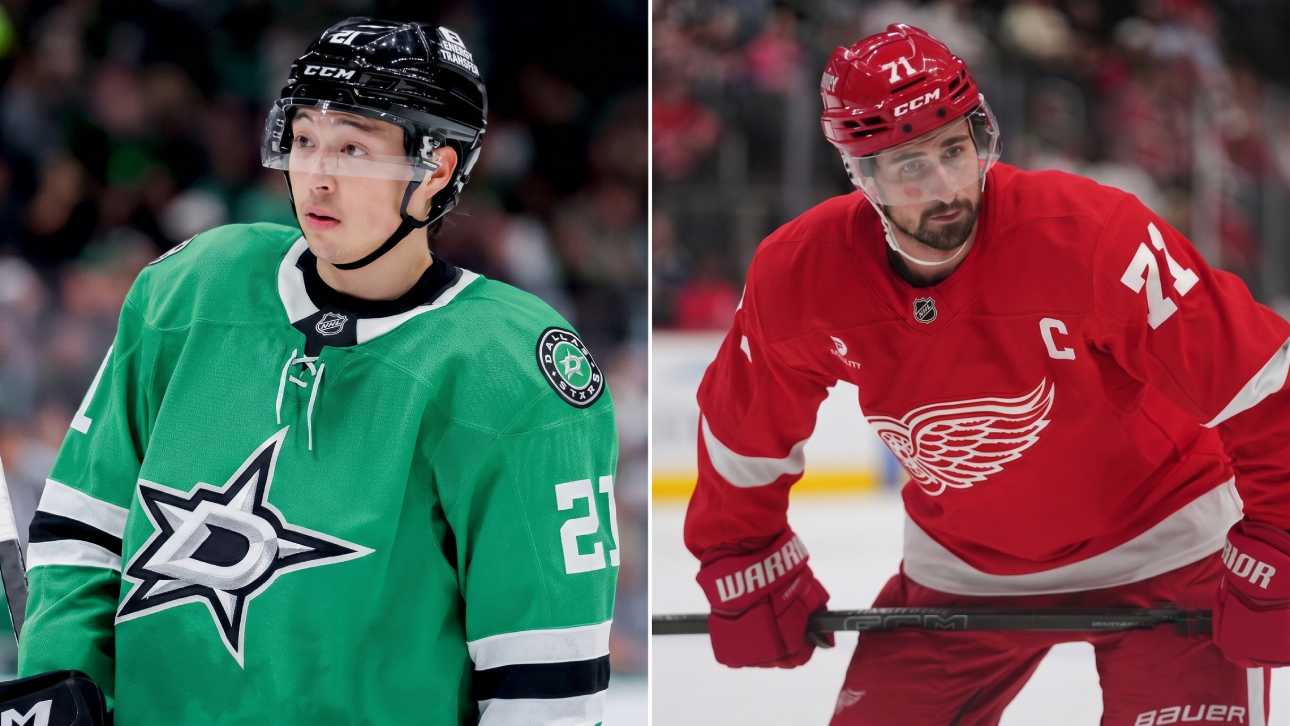
- Dallas Stars: Acquire Dylan Larkin to inject elite two-way speed down the middle alongside Roope Hintz, solving a team speed deficit and fortifying top-six depth.
- Detroit Red Wings: Receive draft capital, prospects, or secondary assets routed from Pittsburgh and Dallas to compensate for losing their foundational center.
- Pittsburgh Penguins: Land Jason Robertson to anchor their top-six scoring wing, utilizing trade assets to bypass the restricted free agency standoff.
As TSN's Darren Dreger noted regarding Robertson's future, it is increasingly likely that the Stars move their premier winger rather than risk the mounting threat of an offer sheet or losing him for nothing before unrestricted free agency arrives. Fourth Period insider Dave Pagnotta reinforced that threat, pointing out that if a deal isn't struck by July 1, rival clubs are fully prepared to test Dallas with an offer sheet.
Tactical Fit and Forward Implications
Evaluating the tactical exchange reveals why both front offices are willing to endure the turbulence. Dallas ranked among the slower teams in the league last season. Inserting Larkin—a proven 200-foot center who handles top-line minutes, power-play deployment, and penalty-killing responsibilities—transforms the Western Conference club's spine. Larkin brings a veteran pedigree despite having played just one playoff series across 12 NHL seasons, driven largely by Detroit's long playoff drought.
Conversely, Detroit secures a true elite goal-scorer in his prime to pair with their young core, provided they successfully navigate the secondary trades necessary to replace Larkin's void at center. Whether this deal finalizes as a direct pivot or requires Pittsburgh to act as the financial and asset-laundering valve, the baseline reality remains unchanged: the dominoes are wobbling, and both franchises are positioning themselves for radical roster surgery before the puck drops on the 2026-27 campaign.
Sources
These sources formed the evidence pack for this article. Links open the original publisher; inclusion does not imply endorsement.
- Bill Scott original
- thehockeynews.com original
- Trevor Connors Tue, July 14, 2026 at 5:29 PM UTC · 3 min read original
- www.sportingnews.com original
- www.swisshabs.ch original


