The record books in women's tennis have been waiting for a moment like this since 2019. In the heat of Memphis, a 16-year-old Russian sensation has done more than just navigate a draw; she has shattered a seven-year ceiling of teenage precocity.
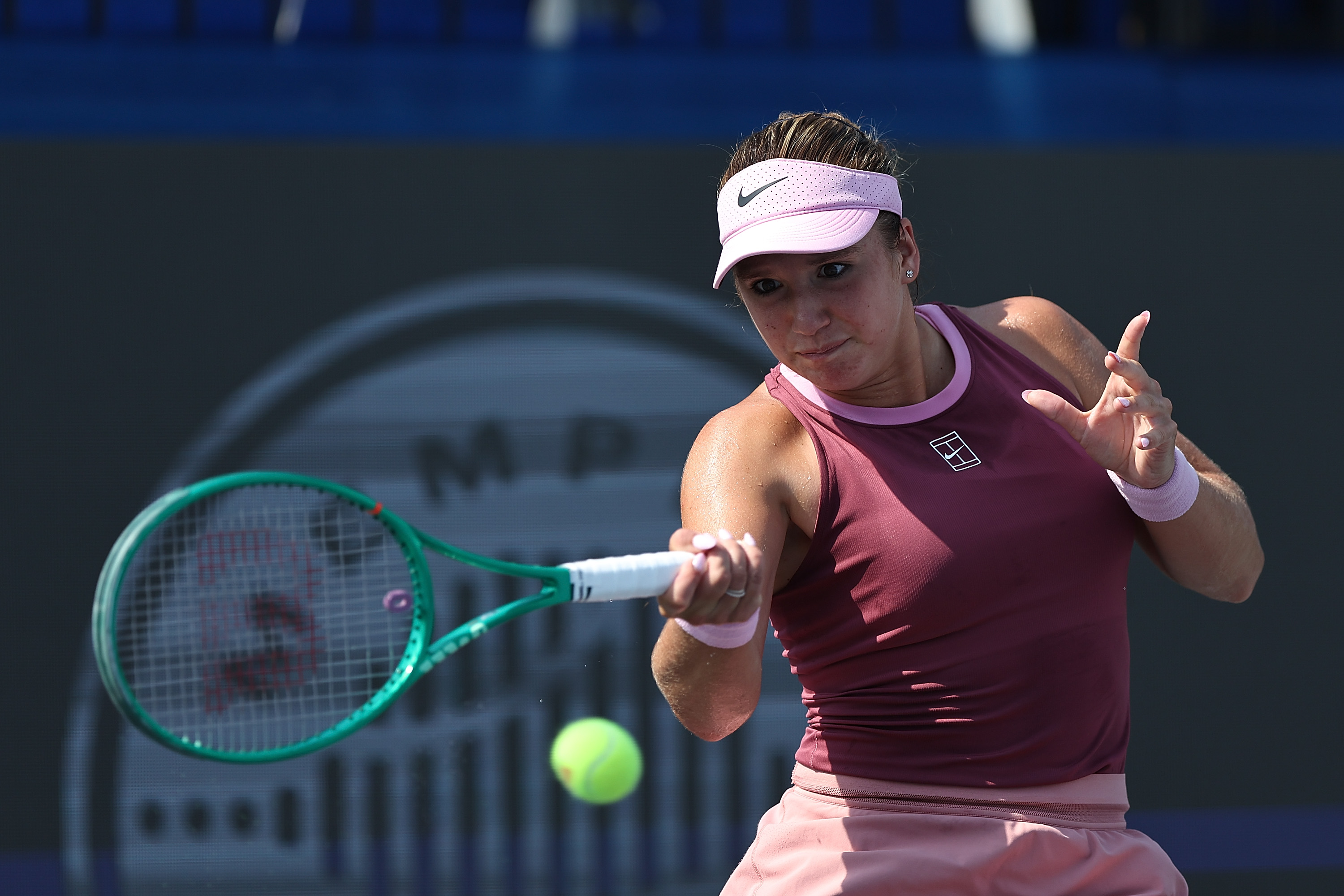
Kristina Liutova, a player whose birth certificate marks her as a member of the 2010 generation, has officially stormed into the final of the WTA 250 in Memphis. By securing her place in the championship match on Saturday, August 1, Liutova has achieved something that has eluded the tour’s most promising teenagers for years: she has become the youngest player to reach a WTA final since Coco Gauff’s historic run in Linz, Austria, back in 2019.
The Gauff Benchmark and the 2010 Cohort
For the last several seasons, the gap between junior stardom and WTA final appearances has felt increasingly wide. Liutova’s ascent suggests that the gap is closing. Her journey is part of a burgeoning trend of extreme youth surfacing on the professional circuit. She is only the second player born in 2010 to claim a WTA match victory, following the path recently blazed by Brazil’s Naná Silva.
Liutova’s arrival is not merely a product of luck or a soft draw. It is a calculated disruption. Before she even reached the semifinals in Memphis, she sent a shockwave through the tournament by defeating the top seed, Ekaterina Alexandrova, in the opening round. For a player currently ranked 229th in the world, removing the tournament's N.1 seed is a statement of intent that transcends mere "upset" territory.

Clinical Efficiency in the Semifinals
While the victory over Alexandrova provided the drama, her semifinal performance provided the proof of concept. Facing Elvina Kalieva, the 132nd-ranked American, Liutova transitioned from a giant-killer to a clinical closer. The match lasted a mere 1 hour and 39 minutes, with Liutova dominating the contest 7-5, 6-1.
The straight-sets victory showcased a level of composure that belies her age. After a competitive opening set, Liutova tightened her grip, allowing Kalieva almost no room to breathe in the second set. This efficiency is the hallmark of a player who is not just participating in the WTA circuit, but actively imposing her will upon it.
She now moves into the final to face Darja Vidmanova. The Czech player, ranked 114th, arrives in the championship match after a controlled 6-3, 6-3 victory over Mexico's Renata Zarazua (#83). The contrast in their paths is stark: Liutova has been the high-variance disruptor, while Vidmanova has been the steady stabilizer.
Evidence-Led Forecast: The Vidmanova Variable
The final in Memphis presents a fascinating tactical collision between momentum and experience. The likely pattern will see Liutova attempting to maintain the aggressive, high-risk tempo that dismantled Alexandrova and Kalieva. Her ability to play without fear is her greatest weapon, but it also exposes her to volatility.
The decisive matchup will be Liutova’s ability to handle Vidmanova’s consistency. Vidmanova enters the final on the back of a straight-sets win that suggests she is finding her rhythm at the right moment. The strongest counter-case to a Liutova victory lies in the tactical discipline of the Czech; if Vidmanova can absorb the teenager's power and extend the rallies, the 16-year-old may find herself struggling with the physical and mental toll of extended exchanges.
What would change this read is a repeat of the first-set tension Liutova experienced against Kalieva. If Liutova can secure an early break, her momentum could become an avalanche; if she falters early, she will be testing whether a 16-year-old can maintain focus when the "fairytale" narrative meets the cold reality of a WTA trophy presentation.
Sources
These sources formed the evidence pack for this article. Links open the original publisher; inclusion does not imply endorsement.
- ouest-france.fr original
- lequipe.fr original
- eurosport.fr original
- Par Le Parisien avec AFP Le 7 août 2025 à 12h08 original
- ici.fr original
- La rédaction avec AFP original
- La rédaction avec AFP original