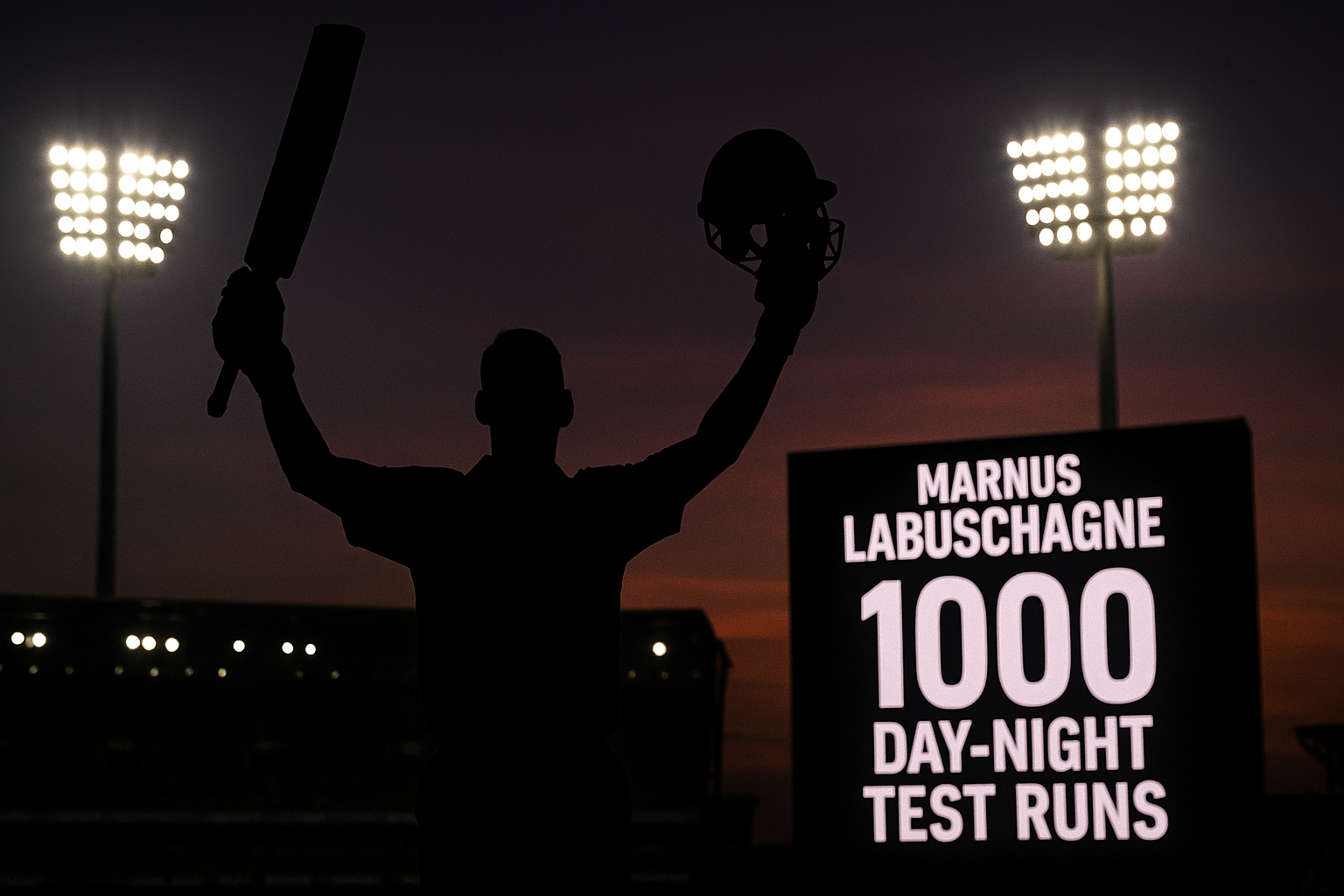
There is a profound dissonance in the current state of Marnus Labuschagne’s career. On one hand, you have a man who has rewritten the history books of Day-Night Test cricket, becoming the first player to ever cross the 1,000-run threshold under the pink ball. On the other, you have a batsman struggling to find a reliable rhythm in the high-velocity, high-stakes arena of One Day Internationals.
As Australia prepares to travel to the UK for a six-game series against England—starting with T20s at Southampton’s Rose Bowl on September 4—the scrutiny on Labuschagne has reached a fever pitch. While he has secured his place in the 21-man touring party, the shadow of his recent white-ball form looms large over his inclusion.
The Weight of Recent Failure
The numbers tell a story of a specialist struggling to adapt. In Australia's recent ODI series against Pakistan, a campaign that saw the visitors clinch a 2-1 victory, Labuschagne was a peripheral figure. In the decisive third match in Lahore, he managed just 19 runs, failing to provide the stability required as Australia’s innings collapsed, losing their final seven wickets for a mere 38 runs.
This lack of white-ball impact is precisely why the pressure is mounting. National Selection Panel chair Trevor Hohns has touted a squad with "great depth and a sprinkle of some exceptional young players," including Big Bash stars like Josh Philippe, Daniel Sams, and Riley Meredith. When a selection panel begins emphasizing youth and "role-playing" capabilities, the luxury of a specialist who is struggling to find form begins to evaporate.
The Pursuit of Simplicity
In response to the criticism, Labuschagne appears to be undergoing a psychological and technical recalibration. Following a recent century for the Queensland Bulls—his third of the summer across all cricket—he has claimed to have stripped away the very complexities that once defined his game.
“I believe I have really simplified things,” Labuschagne said following his hundred. “Not overthinking, just what I should make runs.”
For a player known for an almost obsessive level of detail, this pivot toward simplicity is significant. Historically, Labuschagne’s greatness was built on a capacity for intense, almost meditative concentration; during his early career, he was known to visualize every delivery while in a meditative state. However, that same intensity may have become a liability, leading to a period where he seemed to lose his sense of where the off-stump resided.
Whether this "simplified" approach is a genuine evolution or merely a temporary patch is the question that will define his tour of England. If he can channel the same technical precision that allowed him to dominate the twilight hours of Day-Night Tests, he may yet justify his place. If not, the "exceptional young players" waiting in the wings may soon see him replaced.
A Tale of Two Formats
The statistical divide in Labuschagne’s game is one of the most striking in modern cricket. His ability to judge length under lights and manage the extra swing of the pink ball makes him a cornerstone of Australia's Test identity. He has turned the most difficult conditions into a personal playground, setting a benchmark in Day-Night cricket that many analysts believe may become unbreakable.
Yet, the ODI format demands a different kind of mental gear—one that favors rapid accumulation and structural adaptability. The current Australian squad, which features a return of veterans like Glenn Maxwell and Marcus Stoinis, is looking for players who can complement the leadership of Aaron Finch and Pat Cummins. Labuschagne’s role in this transition is precarious; he is a Test mainstay who must prove he is not a liability in the limited-overs era of the ICC's new ODI Super League.
Squad Composition and Selection Context
As the team prepares to enter England's biosecure bubble, the squad structure reveals much about the current philosophy of Cricket Australia:
- The Veterans: Returns for Glenn Maxwell (following mental health leave and elbow surgery), Marcus Stoinis (his first appearance since last year's World Cup), and Nathan Lyon.
- The New Blood: Debuts for Josh Philippe, Daniel Sams, and Riley Meredith.
- The Leadership: A return to the traditional one-captain, one-vice-captain model with Pat Cummins serving as the sole deputy to Aaron Finch.
With the intense scrutiny of the England series approaching, Labuschagne is no longer just playing against the opposition; he is playing against the very definition of his own career.
Evidence-Led Forecast
Likely Tactical Pattern: Expect Labuschagne to play a more conservative, anchor-based role in the ODI matches at Old Trafford. His recent focus on "simplicity" suggests an attempt to minimize risk and stabilize the middle order rather than attempting high-strike-rate cameos.
Decisive Matchup: The battle between Labuschagne and England’s premier white-ball bowlers. If he cannot navigate the early swing, the pressure from the younger players in the Australian camp will become untenable.
Strongest Counter-Case: His historical mastery of difficult conditions. If the English conditions mirror the challenging twilight environments where he has scored 1,000 Day-Night Test runs, his technical superiority may override his recent white-ball slump.
The Variable: A failure to reach double figures in the opening ODI on September 11 would likely trigger a conversation about his permanent transition away from the limited-overs format to protect his Test longevity.
Sources
These sources formed the evidence pack for this article. Links open the original publisher; inclusion does not imply endorsement.
- cricket.com.au original
- corestormz.com original
- cric2day.com original
- novacssacademy.com original