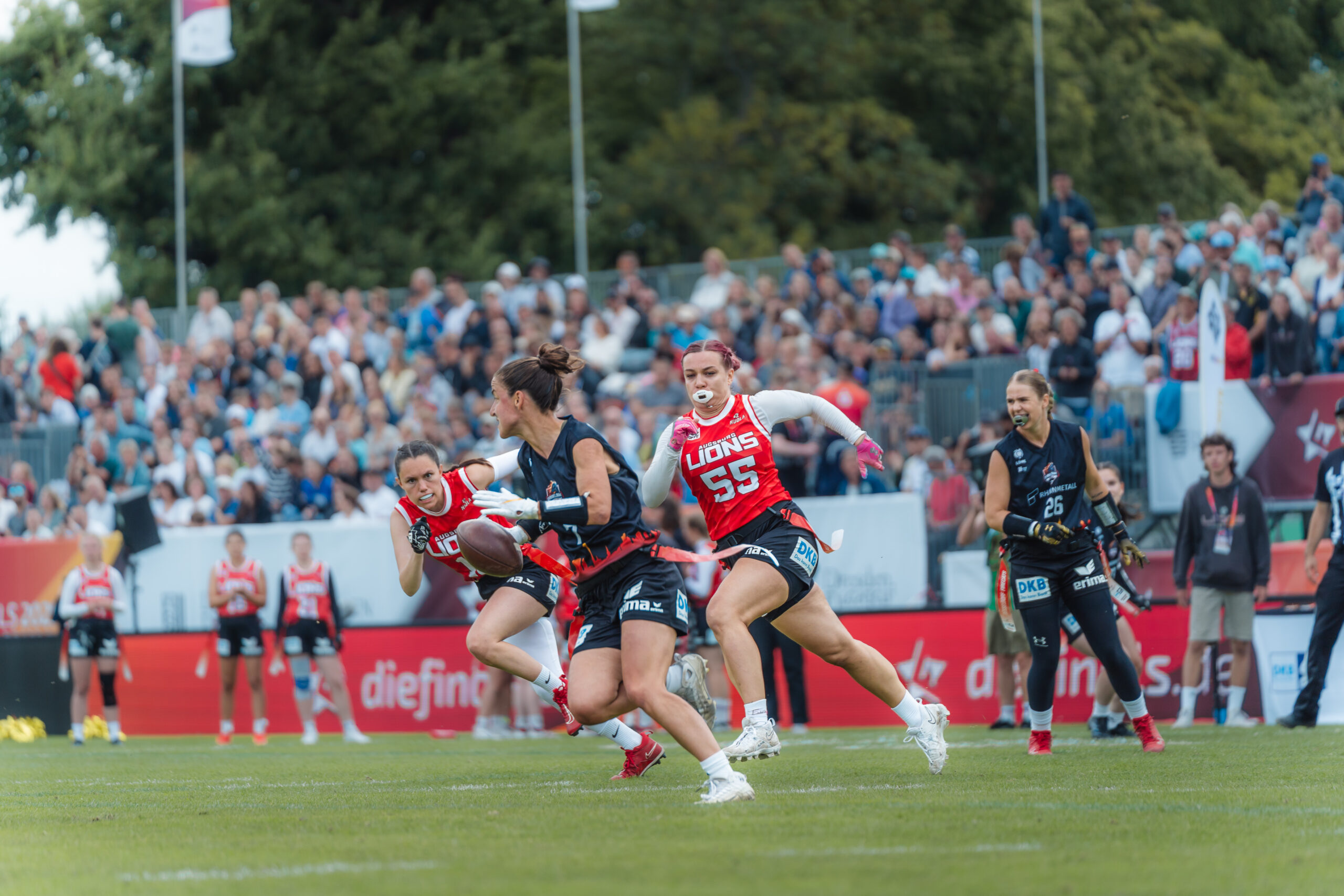
As German flag football accelerates its preparation for the sport's historic Olympic debut at the Los Angeles 2028 Summer Games, the national program's competitive pipeline remains anchored in a uniquely concentrated hub. While school grassroots initiatives powered by NFL Flag reach tens of thousands of pupils nationwide, the tactical identity and roster foundation of the German national team trace their origins directly to Kelkheim and its pioneering club, the Kelkheim Lizzards.
The concentration of national-tier talent emerging from Kelkheim is neither a statistical anomaly nor an overnight phenomenon. It is the result of a two-decade evolution during which a single club stepped up to preserve Germany's international presence during a pivotal transition phase for the sport.
A Pivotal Bridge: How Kelkheim Preserved National Continuity
The German Men's Flag Football National Team, formally established under the American Football Verband Deutschland (AFVD) in 2000, enjoyed immediate competitive success on the continental stage. At the European Championships in 2002 and 2004, Germany captured gold and silver medals across the 5on5 and 7on7 formats. However, as administrative and organizational structures evolved in the years that followed, maintaining a centralized national team setup presented complex logistical challenges.
During this critical period, the Kelkheim Lizzards stepped into the void, serving as the core squad representing Germany in international competition. By supplying the predominant roster base and tactical framework, the Lizzards kept the national team active on the international gridiron until the AFVD reassumed full direct control of the national selection in 2011. That legacy of club-driven international excellence established a culture of high-performance flag football in Kelkheim that continues to feed the national selection process today.
Elite Turnaround: From Six-Year Absence to Continental Honors
Between 2015 and 2021, financial constraints and association policy shifts forced a complete hiatus for German national flag football teams at World and European Championship tournaments. Re-emerging from that six-year international absence required a systemic overhaul. The national teams made their return at the 2021 World Championship, with the men finishing eighth and the women securing tenth place—crucial steps in re-establishing Germany's international footprint.
That rebuilding phase paid monumental dividends in 2023. The German men's national team reached the pinnacle of European flag football by capturing the 2023 European Championship title. Simultaneously, the women's national team—originally founded in 2009—achieved one of its finest international milestones by claiming the bronze medal at the 2023 European Championship in Ireland, reinforcing Germany's standing among the continent's elite programs.
Cascading Talent Pipeline: Dual Gold in U15 and Record Silver in U17
Germany's international resurgence rests on a highly structured educational and coaching framework maintained by the AFVD. The association operates a tiered licensing system spanning C-, B-, and A-level coaching credentials tailored specifically to the nuances of flag football. The deployment of newly trained C-licensed coaches, particularly in youth programs, directly drove a doubling of youth teams across the country, creating a broader scouting pool for elite selection.
This structured pathway has delivered immediate results across youth age divisions:
- U15 Mixed Selection: Captured the European Championship in 2024 and successfully defended their continental title in 2025, demonstrating elite co-ed tactical integration.
- U17 Squads: Both the U17 boys and U17 girls secured fifth-place finishes at the 2024 European Championships. In 2025, the U17 girls surged to a historic silver medal, marking the highest-ever European finish for a German U17 national team.
- Grassroots Integration: Over 40,000 pupils across more than 350 schools participate in flag football through the NFL Flag program in partnership with SPORTFIVE and the AFVD, supported by over 500 certified physical education teachers.
Key figures have bridged the gap between elite competition and public visibility. Mona Stevens, the quarterback for the German women's national team, serves as an official NFL Flag Ambassador and prominent expert on RTL broadcasts. Alongside fellow NFL Flag Ambassador Benjamin Klever, Stevens has raised the sport's profile while validating the athletic pathway from domestic clubs to global stages.
Tactical Integration and Roster Competition Ahead of LA28
With flag football officially included in the Olympic program for Los Angeles 2028, the battle for national team roster spots will intensify significantly over the coming quadrennial. The anticipated availability of active NFL professionals for the LA28 Games presents both tactical opportunities and roster pressure for established European nations.
Likely Tactical Pattern: Expect Germany to rely heavily on its established 5on5 speed schemes and crisp route distribution refined through domestic league structures and European championship play. Established core pairings—many originating from proven club hubs like Kelkheim—will retain an early leverage advantage in defensive communications and pre-snap read calls over hybrid rosters put together on short notice.
Decisive Matchup: The key battleground will be the transition speed between flag-pulling efficiency and short-area pass coverage. German defensive schemes, anchored by veteran international experience, must neutralize high-velocity downfield passing without relying on physical contact or tackling.
Strongest Counter-Case: If North American and tier-one international programs integrate high-end athletic talent with specialized flag mechanics early in the quadrennial cycle, European technical schemes may face raw athletic deficits, particularly in single-coverage scenarios on wide field margins.
What Would Change the Read: A rapid acceleration in the AFVD's B- and A-license coaching output combined with early joint training camps featuring prospective Olympic rosters would elevate Germany's ceiling from a top-tier European contender to a genuine Olympic medal candidate in 2028.
Sources
These sources formed the evidence pack for this article. Links open the original publisher; inclusion does not imply endorsement.
- afvd.de original
- founders-magazin.de original
- variovila.cz original