
Related coverage
View the Instagram post
There is a specific, heavy kind of weight that accompanies a franchise trying to stitch its identity back together after a structural fracture. For the Los Angeles Sparks, the journey back to relevance just gained a massive gravitational pull. Nneka Ogwumike—a 10-time WNBA All-Star, league MVP, and foundational architect of the franchise's 2016 title—is returning to the organization where she spent the first 12 seasons of her career. Her departure two seasons ago to the Seattle Storm mapped a painful phase of transition, but her homecoming signals a clear signal of intent for a front office that has broken ground on a new $150-million practice facility in El Segundo and transitioned under head coach Lynne Roberts.
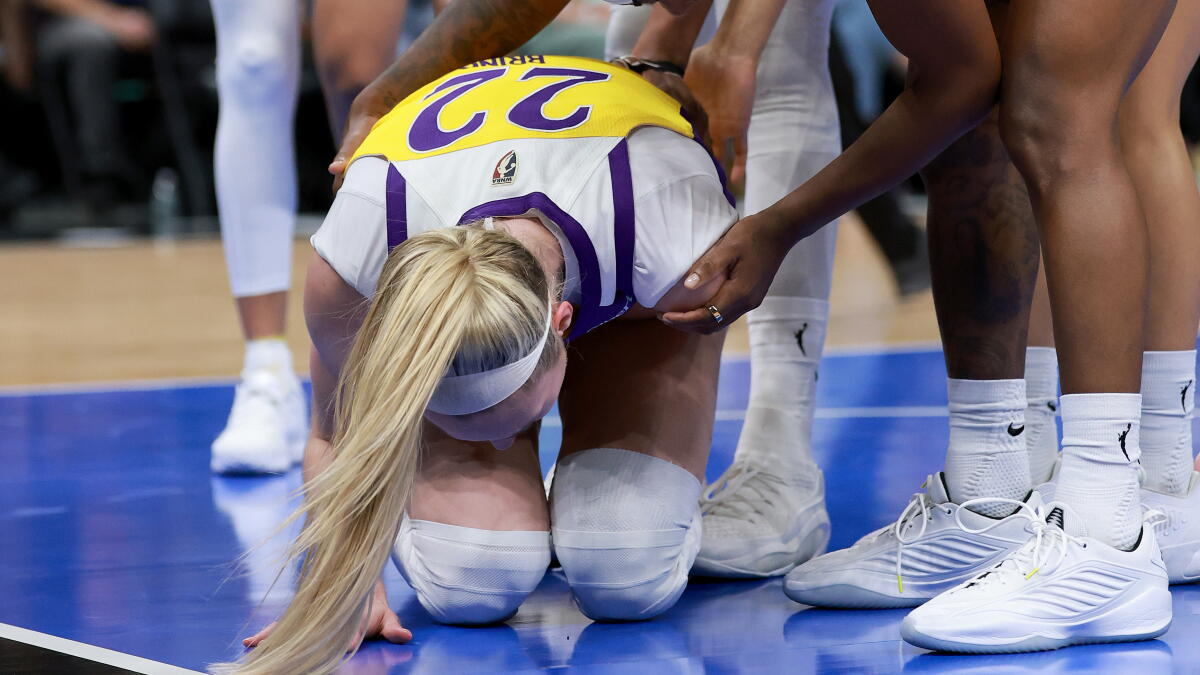
Ogwumike’s arrival alters the mathematical and tactical ceiling of the Sparks' frontcourt, most notably for high-upside young forward Cameron Brink. While Brink has flashed elite rim protection—recording a pair of blocks and anchoring the paint during stretches—her development has been tested by injuries that limited her to 34 games across her first two seasons, alongside foul trouble that saw her pick up four fouls in recent outings. Pairing Brink alongside a veteran of Ogwumike’s caliber creates a potent interior combination. It gives the Sparks a dependable anchor who averaged 18.3 points, 7.0 rebounds, 2.3 assists, and 1.1 steals last season in Seattle, allowing younger pieces the structural cover to grow without carrying the total burden of execution.
The supporting cast around this veteran-youth axis continues to churn through high-stakes adjustments. The franchise traded Kelsey Plum to the Mercury for Monique Akoa Makani, a 2027 first-round pick, and a 2028 second-round pick, signaling a dual-track focus on immediate competitiveness and future asset collection. Meanwhile, reports indicate the Sparks are trading 2024 first-round pick Rickea Jackson to Chicago for guard Ariel Atkins—a two-time All-Star and five-time all-defensive player whose perimeter defensive presence directly addresses a glaring flaw for a squad that surrendered a league-high 88.2 points per game last season. With veterans like Rae Burrell, Sania Feagin, and rookie guard Gray absorbing valuable backcourt minutes following Plum's departure, Roberts faces a delicate pacing puzzle: balancing the competitive urgency demanded by a returning veteran core against the necessary developmental minutes for a re-engineered roster.
Tactical Realities and the Defensive Turn
The defensive metrics from the previous campaign told a bruising story. Giving up 88.2 points per game anchored the Sparks near the bottom of the league's defensive efficiency matrix, and early-season struggles—such as a 105-78 home rout against the Las Vegas Aces where the team failed to match defensive rotations—underscored the gap between aspiration and execution. Ogwumike’s defensive intelligence, combined with the expected integration of Atkins into the perimeter stopper role, aims to staunch the bleeding.
Offensively, the floor geometry changes completely. During her standout performances, such as her 22-point, 10-rebound masterclass against the Fire where she poured in 20 points in the second half, Ogwumike demonstrated the clutch shot-making and spacing necessary to punish collapsing defenses. For Brink, who has shown an uptick in 3-point attempts alongside her interior work, sharing the floor with Ogwumike means fewer double-teams and clearer lanes to establish low-post position without forcing contested jumpers.

Evidence-Led Forecast: Frontcourt Chemistry and the Playoffs Push
When projecting how this roster configuration will hold up against the upper tier of the WNBA, the tactical pattern points toward a heavy reliance on high-low passing sequences between Ogwumike and Brink, interspersed with Atkins spacing the floor from beyond the arc. The decisive matchup for the Sparks will not be their offensive output—which features proven volume scorers—but whether their revamped perimeter defense can limit transition opportunities and keep primary scorers out of foul trouble.
The strongest counter-case against an immediate leap back into championship contention lies in the sheer youth of the supporting rotation and the defensive communication required to fix a unit that leaked points last season. If injuries re-emerge or if the backcourt rotation fails to stabilize the point guard position left vacant by Julie Allemand's departure to Toronto, the Sparks could find themselves trapped between the pressures of a veteran win-now timeline and a multi-year rebuild. What would change this read entirely is a sustained defensive rating surge inside the top five of the league—a metric driven entirely by whether Brink can stay on the floor for 30-plus minutes without accumulating quick fouls.
Ogwumike’s return proves that the front office’s pitch resonated, but the floorboards of Crypto.com Arena demand more than sentimentality. The infrastructure is rising in El Segundo, the draft capital is banked for tomorrow, and the blueprint is set. Now, the execution belongs to the floor.
Sources
These sources formed the evidence pack for this article. Links open the original publisher; inclusion does not imply endorsement.
- latimes.com original
- silverscreenandroll.com original
- beyondthew.com original
- dribul.com original

