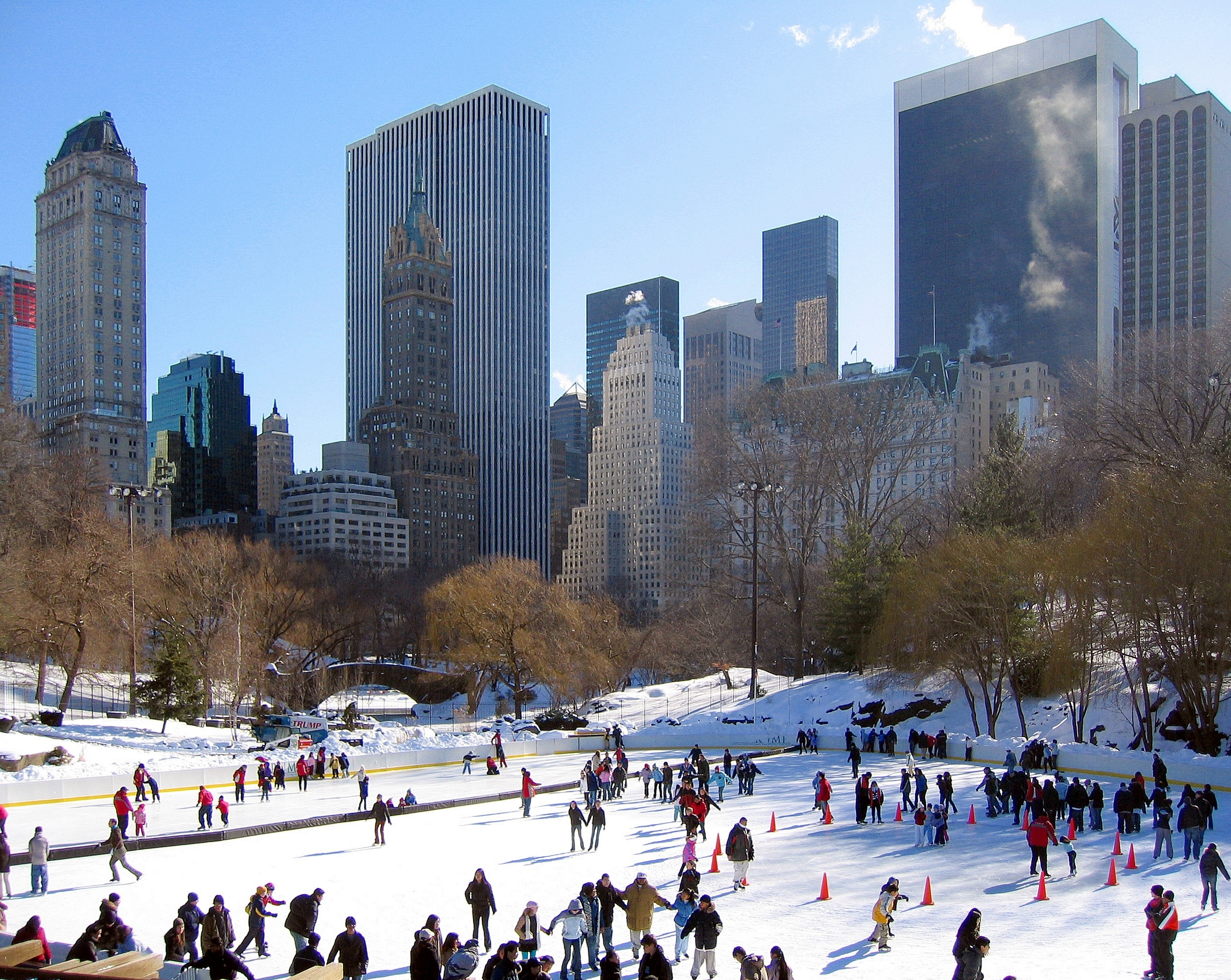
The experience of ice skating is rarely defined by the blades alone; it is dictated by the architecture of the surface beneath them. From the manicured social circles of a metropolitan park to the massive, unyielding sheets of natural Alpine ice, the environment transforms the act of gliding from a simple pastime into a specialized discipline. To understand the spectrum of the sport, one must look at the distinct tactical and social ecosystems of New York, Carinthia, and Alaska.
The Urban Institution: Central Park’s Managed Landscapes
In the heart of Manhattan, ice skating is an exercise in tradition and atmospheric curation. The Central Park rinks offer two distinct modalities of the sport, separated by geography and intent. At the east side, between 62nd and 63rd Streets, sits Wollman Rink. Established in 1949 through a $600,000 donation from Kate Wollman, the rink has transitioned from a mid-century landmark into a modern-day pillar of New York winter life. Since being renovated in the 1980s, it has become a high-volume venue, once hosting over 300,000 skaters in its inaugural year.
Wollman offers a specific aesthetic: a picturesque, star-lit glide that contrasts with the "overwhelming confines" of more enclosed venues like Rockefeller Center. However, the rink is not merely a social stage; it carries a heavy musical legacy. From 1967 through the early 1970s, the F & M Schaefer Brewing Co. sponsored a concert series at the rink, bringing legendary acts such as Bruce Springsteen, Billy Joel, and The Byrds to the ice. Today, that social element persists, though the venue's seasonal utility extends into the summer months with in-line skating and the Victorian Gardens amusement park.
For those seeking a more structured progression, Lasker Rink, located mid-Park between 106th and 108th Streets, provides a different service model. Unlike the social sprawl of Wollman, Lasker focuses on instruction, offering a full complement of lessons led by certified instructors. This distinction creates a clear dichotomy within the park: one rink for the picturesque social glide, and another for the technical development of the skater.
The Natural Titan: Lake Weissensee’s Scale and Strength
If Manhattan represents the controlled urban environment, Lake Weissensee in Carinthia represents the raw scale of the sport. Boasting a natural sheet of ice exceeding 6.5 km², it stands as the largest natural ice surface in Europe. Here, the discipline shifts from the social to the endurance-based and the heavy-duty.
The technical requirements for maintaining such a vast natural expanse are immense. The Regitnig 4* Hotel & Chalets employs a dedicated team of "ice masters" who perform daily checks to ensure the surface remains firm and snow-free. The sheer density of the ice at Weissensee is a matter of survival and utility; thicknesses exceeding 30 cm are common, providing enough structural integrity to support not just skaters, but horses, cars, and even tractors.
This massive expanse facilitates specialized competitive formats that urban rinks cannot replicate:
- Ice Speed Skating: Large-scale racing across the natural sheet.
- The 11-Towns Tour: An annual event that draws massive crowds and features the legendary "de tent" party atmosphere.
- Ice Stock Curling: Utilising designated lanes for specialized precision play.
- Groomed Hockey: A separate, dedicated rink designed to accommodate the physical demands of the sport.
The Performance Hub: Anchorage’s Technical Diversity
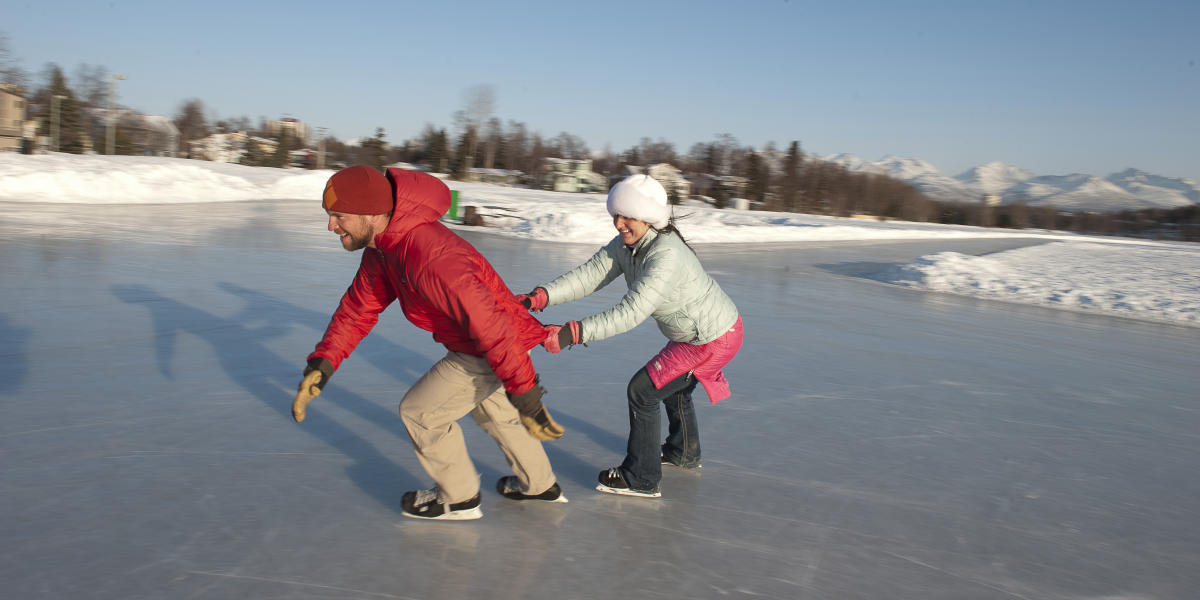
In Anchorage, the ice landscape is characterized by its functional variety, catering to everything from the social "Rockwell-style" skate to high-performance training. The Anchorage ecosystem is perhaps the most diverse in terms of specialized tracks and disciplines.
The social dimension is anchored at Westchester Lagoon, where families utilize warming barrels to mitigate the Alaskan chill between sessions. However, for those moving toward professional development, the landscape becomes significantly more rigorous. The city offers specialized environments for specific skills:
| Venue/Location | Primary Use/Discipline | Distinguishing Feature |
|---|---|---|
| Cuddy Family Park | Speed Skating | 400-meter outdoor oval |
| O'Malley Sports Complex | Short Track | Specialized competitive arena |
| Tikishla Park | Hockey/Skill Development | Outdoor ice where NHL hero Scott Gomez trained |
| Chanshtnu Muldoon Park | General Skating | The new "skating ribbon" |
The Anchorage model highlights a critical truth in ice sports: the surface defines the skill. Whether it is the "slapshot" on the outdoor ice at Mulcahy or Delaney parks or the technical precision required at the O'Malley Sports Complex, the geography of Anchorage allows for a direct pipeline from social skating to elite-level training.
Analytical Comparison: Environment vs. Discipline
When evaluating these three distinct landscapes, a clear pattern emerges regarding how environment dictates the sport's evolution. In urban settings (Central Park), the ice is a social commodity—a venue for leisure, music, and aesthetic enjoyment. The technical ceiling is managed through structured lessons, but the primary driver is accessibility and atmosphere.
In natural settings (Lake Weissensee), the ice is a topographical feature. The scale shifts the focus toward endurance, speed skating, and high-mass stability. The "ice masters" act as the essential bridge between raw nature and usable sport, managing a surface that is functionally more akin to a frozen highway than a recreational rink.
In technical hubs (Anchorage), the ice is a specialized tool. The existence of 400-meter ovals and short-track complexes indicates an environment designed for the refinement of specific athletic mechanics. Here, the ice is not just a place to be, but a platform to be mastered.
Sources
These sources formed the evidence pack for this article. Links open the original publisher; inclusion does not imply endorsement.
- centralpark.org original
- regitnig.com original
- anchorage.net original