There is a distinct difference between a standard summer basketball camp and a session led by someone who has navigated the highest tiers of the sport. This distinction was on full display recently at Premier Sports NY in Hauppauge, where the atmosphere shifted from mere recreation to elite skill acquisition. The catalyst was Samantha Prahalis-Holmes, a name that resonates through the annals of Long Island hoops and the Big Ten Conference alike.
The two-day clinic, held at 114 Parkway Drive South, was more than a community service project; it was a manifestation of a career coming full circle. By dividing the sessions into specific grade groups—3rd through 5th on Saturday and 6th through 8th on Sunday—the program allowed for a level of technical specificity that matches the professional standards Prahalis-Holmes has upheld since her days as a standout at Commack High School.
The Pedigree of a Point Guard
To understand the weight Prahalis-Holmes brings to a local hardwood, one must look at the trajectory of her playing career. She wasn't just a participant at the highest levels; she was a cornerstone. At Ohio State University, she established herself as a generational playmaker, setting a Big Ten career record with 901 assists. Her senior season was a masterclass in efficiency and dominance, earning her the Big Ten Player of the Year honors while she averaged 19.8 points and 6.8 assists per game.
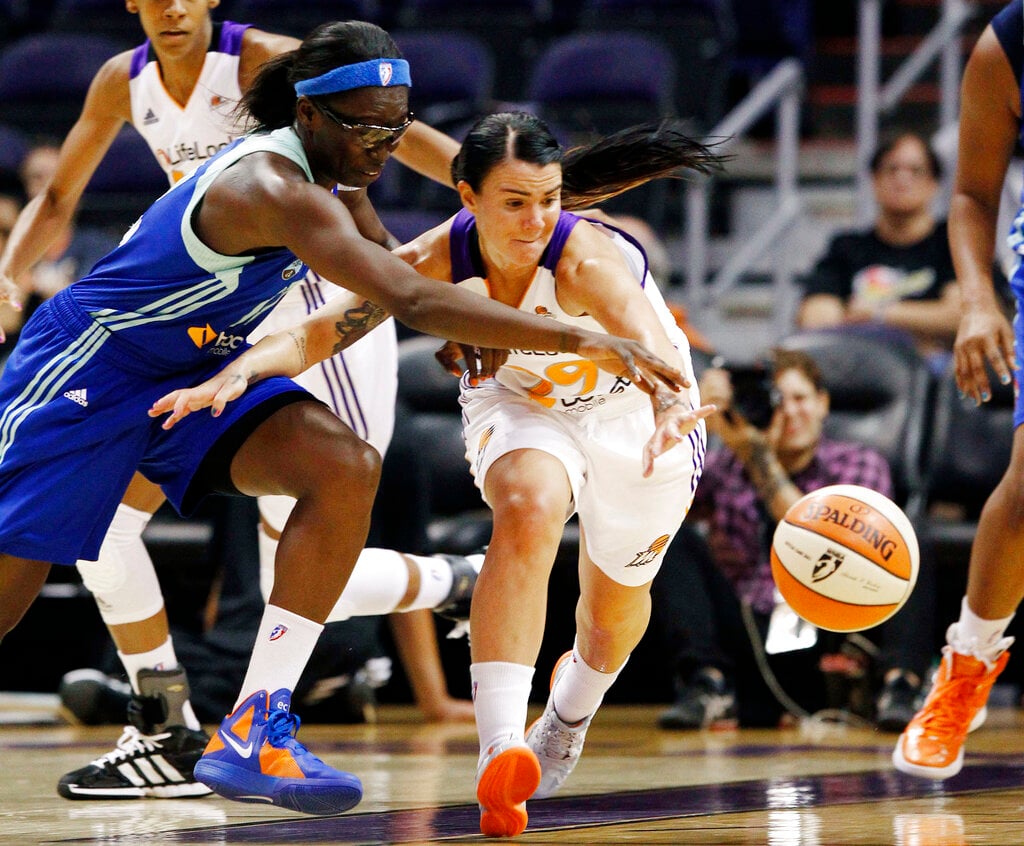
That collegiate dominance translated directly to the professional stage. Selected sixth overall in the 2012 WNBA Draft by the Phoenix Mercury, she immediately made an impact, finishing second in Rookie of the Year voting and earning a spot on the All-Rookie First Team. Her journey then took her through the international circuit, with professional stints in Romania, Russia, Turkey, Italy, and Hungary, providing her with a global perspective on the game that few local instructors can claim.

The Coaching Architect
Since hanging up her playing jersey, Prahalis-Holmes has undergone a rapid and diverse evolution in the coaching ranks. Her transition hasn't been a linear ascent but rather a deliberate immersion in various facets of the game. She has operated at the helm of high school programs, including a tenure at Ward Melville where she led the team to 20 wins and their first two County semifinal appearances, and a season at North Babylon.
However, her expertise extends far beyond the high school sidelines. She has navigated the complexities of the collegiate landscape, serving as an assistant coach and recruiting coordinator at James Madison University and later as the Director of Player Development and Advanced Scouting at St. John's University. Most recently, her move to the helm of The Stony Brook School program highlighted a new challenge: the intersection of elite basketball and private school recruiting.
This varied background creates a coaching profile that is uniquely multifaceted. She understands the grind of a volunteer assistant, the high-stakes pressure of a Division I recruiting coordinator, and the tactical requirements of a professional veteran. When she speaks to young players, she isn't just offering advice; she is offering a blueprint derived from every level of the sport.
The Defensive Mandate
While many youth clinics focus heavily on the aesthetic side of the game—shooting mechanics and flashy ball handling—Prahalis-Holmes has demonstrated a clear analytical preference for the less glamorous aspects of basketball. During her time leading Ward Melville, she shifted the team's identity, moving away from a purely offensive-minded squad toward a unit defined by defensive intensity.
This tactical shift was noted by players like senior Shannon Brazier, who observed that the emphasis on defense was already fundamentally changing the team's style of play. For Prahalis-Holmes, defense is the equalizer. Her coaching philosophy suggests that while elite shooting can win games, a disciplined, high-intensity defensive scheme is what builds champions.
- Tactical Focus: High-intensity defensive positioning and forced turnovers.
- Skill Development: Transitioning from offensive dominance to a balanced, two-way style of play.
- Mentorship: Leveraging professional experiences to bridge the gap between youth play and collegiate/professional expectations.
As she continues to build her coaching legacy, whether in the high-academic environment of Stony Brook or through community clinics in Hauppauge, the objective remains consistent: paying it forward. For the girls in Hauppauge, the clinic was a rare opportunity to learn from a player who has seen it all, from the bright lights of the WNBA to the tactical chess matches of the Big Ten.
Sources
These sources formed the evidence pack for this article. Links open the original publisher; inclusion does not imply endorsement.
- events.longisland.com original
- Desirée Keegan original
- Andrew Rappaport original
- patch.com original
- jmusports.com original
- redstormsports.com original