The Myth of Inevitability
In elite sports, a win streak is more than a statistical anomaly; it is a psychological weight that shifts the gravity of every match. For the athletes carrying them, these runs create an aura of invincibility that often settles the debate before the first point is even played. However, the mid-2026 season has served as a brutal reminder that permanence is a polite fiction. From the red clay of Paris to the manicured grass of Queen's Club and the cages of Prague, the era's most dominant runs have encountered the one force they could not outrun: the variable of the underdog.
The Heat of Roland Garros: Sinner’s Sudden Sunset
Nowhere was the shockwave more profound than in the second round of Roland Garros. Jannik Sinner, the World No. 1 and a four-time major winner, entered the tournament carrying a staggering 30-match winning streak. It was a run that suggested a period of total hegemony. That hegemony was dismantled by Juan Manuel Cerundolo in a defeat that stunned the tennis world.
While the scoreline itself was a seismic shift, the technical breakdown suggests environmental factors played a decisive role. Eurosport analysts Mats Wilander and Àlex Corretja pointed toward the stifling heat as a potential catalyst for the collapse. For a player operating at the absolute peak of physical and mental endurance, the sudden intrusion of extreme climatic pressure can turn a controlled dominance into a battle of mere survival.
Discipline Over Power: Muchova’s Tactical Dismantling
If Sinner’s loss was a matter of environmental attrition, Karolina Muchova’s victory in Brisbane was a masterclass in tactical discipline. Elena Rybakina arrived at Pat Rafter Arena riding a 13-match winning streak, but Muchova proved that even the most powerful games can be dismantled by precision.
The match functioned like a heavyweight bout, with Muchova and Rybakina trading blows for over two hours. The divergence, however, lay in the error margins. In the opening set, Muchova played a disciplined game that left Rybakina struggling for rhythm, finishing the set with just five unforced errors compared to Rybakina’s 18. Though Rybakina surged in the second set to force a decider, Muchova’s ability to generate opportunities—earning 11 break points throughout the match—allowed her to seize a 5-4 lead and serve out the 6-2, 2-6, 6-4 victory.
This win does more than just end a streak; it resets the hierarchy for the Brisbane semifinals. Muchova now prepares to face World No. 1 Aryna Sabalenka, a player she has historically managed to neutralize, leading their head-to-head 3-1. For Muchova, whose career has been frequently interrupted by injury, this resurgence is as much about availability as it is about talent.
The Grass-Court Shift: Draper’s Momentum vs. Alcaraz’s Errors
The grass-court season provided perhaps the most visceral example of momentum overriding pedigree. Jack Draper, the newly-minted British No. 1, entered his match at the cinch Championships with the wind of a recent ATP title in Stuttgart at his back. His opponent, Carlos Alcaraz, was the defending champion and a man who had previously dominated this surface.
The dismantling of Alcaraz’s 13-match grass-court winning streak was a study in efficiency versus volatility. Draper, playing at a career-high No. 31, delivered a remarkably clean performance, striking 24 winners against only 22 unforced errors. In contrast, Alcaraz—the Roland Garros champion—struggled with the fundamental requirements of grass-court tennis, committing 26 unforced errors and managing only 48% of points behind his second serve.

Draper’s ability to seize the opening set tiebreaker (7-3) fundamentally altered the match's geometry. Even as Alcaraz attempted a desperate late-match comeback, saving match points to force Draper to serve for the win, the Briton remained unmoved, using serve-and-volley tactics to close the door. The upset highlights a growing reality: momentum, when paired with low error rates, can negate even the most storied champions.
The 15-Second Collapse: Combat Sports and the Chaos Variable
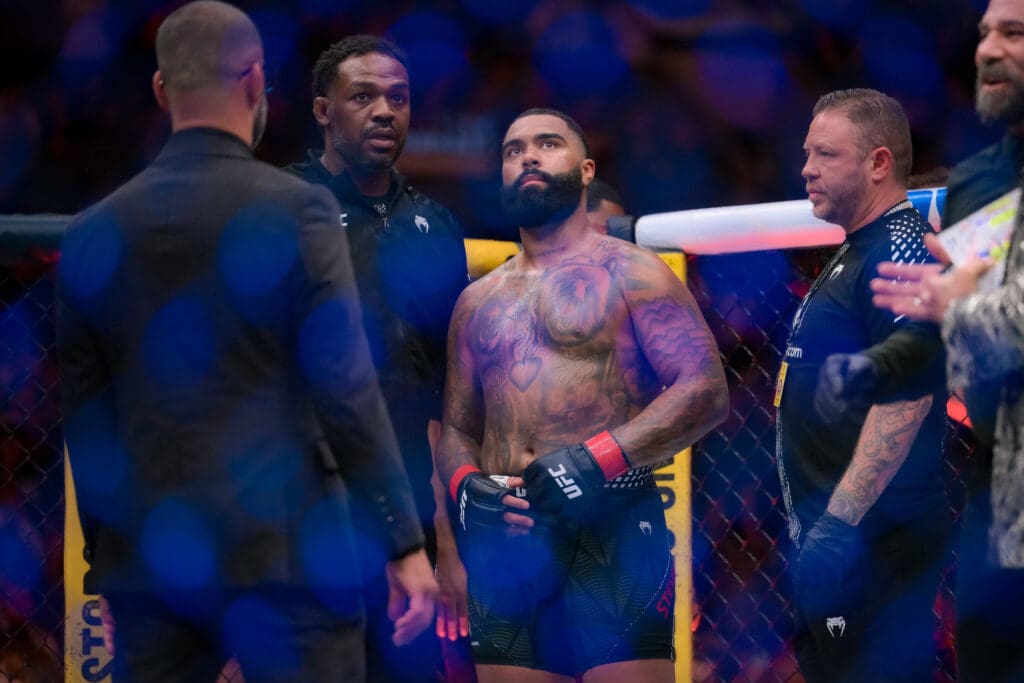
In the realm of MMA, the end of a streak is rarely a slow erosion; it is often a sudden, violent rupture. Will Fleury, the OKTAGON "champ-champ," saw his six-fight winning streak and his Light Heavyweight title vanish in the blink of an eye at OKTAGON 92.

The psychological cruelty of the loss lay in its timing. Fleury had spent the first round effectively wearing down Makhmud Muradov, even dragging him to the ground for two minutes of control. He appeared to be on the verge of a finish. Yet, just 15 seconds into the second round, Muradov landed a single right hand that sent Fleury to the canvas, ending the fight immediately. For Fleury, the post-fight reflection was a sobering assessment of the gap between dominance and experience, as the man who seemed in control was rendered unconscious before he could mount a defense.
The Pattern of the Upset
Across these disparate disciplines, a pattern emerges. Streaks do not end because the leader suddenly loses their skill; they end because the challenger finds a specific, high-leverage vulnerability—be it the heat in Paris, the unforced error in London, or the split-second lapse in Prague. For the elite, the challenge is not just maintaining greatness, but managing the escalating target on their backs.
Sources
These sources formed the evidence pack for this article. Links open the original publisher; inclusion does not imply endorsement.
- cnn.com original
- wtatennis.com original
- tennis.com original
- mmamania.com original