Related coverage
View the Instagram post
The match that crowns a World Cup is supposed to be a celebration of football. Instead, the Spain-Argentina final, scheduled for Sunday at 21:00, has spent the last 48 hours colliding with a question no marketing plan anticipated: can you play a final when the air itself is compromised?
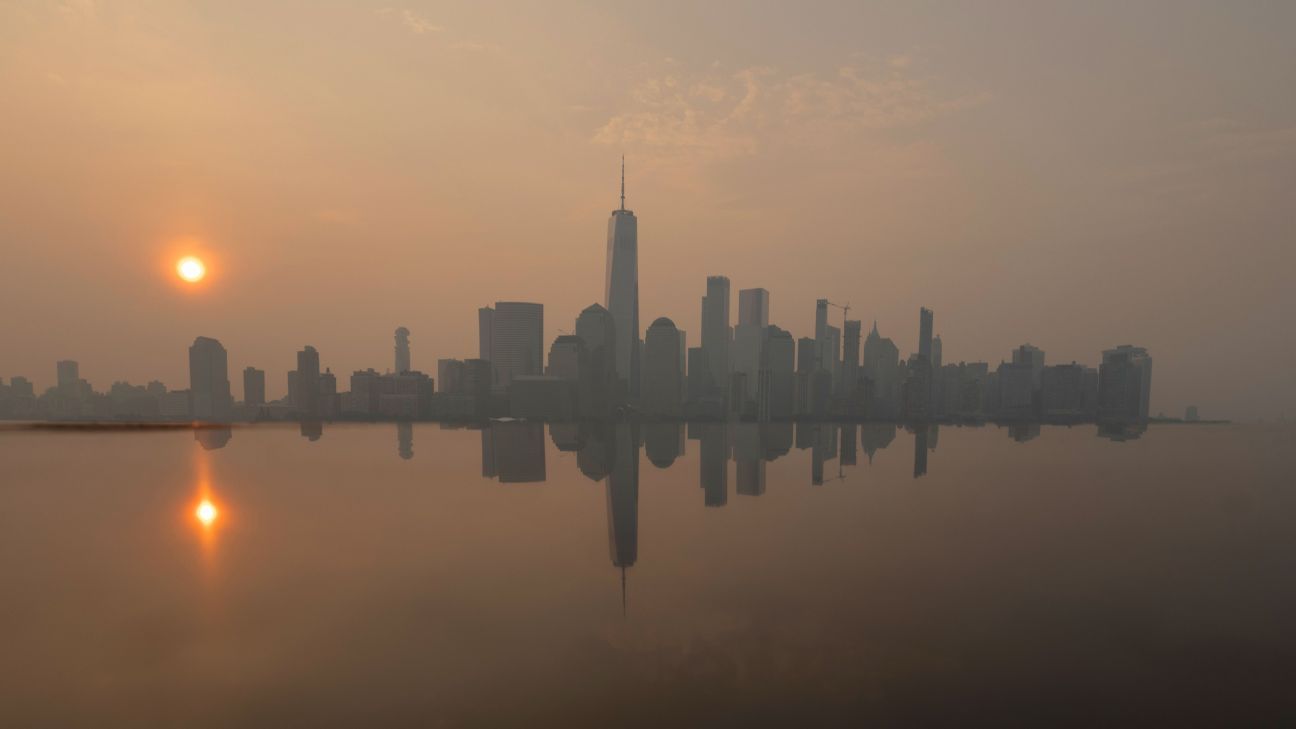
Smoke from the Canadian wildfires has drifted across the northeastern United States, settling over New York and New Jersey in a thick, orange-tinted haze. Local authorities have issued what Sports.fr called a "sérieuse" — serious — health alert, urging residents to limit physical exertion. The AirNow platform, run by the U.S. federal government, currently rates the air quality in New York as "unhealthy" and warns that certain members of the general public may experience health effects, while people in sensitive groups may experience more serious ones.

The numbers, and what they imply
On Friday morning, the Air Quality Index in the region read 184. By the afternoon, after a band of rain swept through and dispersed some of the smoke, the figure had eased to 150. Both numbers sit well above the 100 threshold at which air is considered unhealthy for sensitive groups, and the afternoon reading is, by government classification, "unhealthy" for everyone. The next benchmark matters most: if the AQI crosses 200, the general population begins to feel the consequences of saturated air. That number has not been reached, but the margin is thin.
Some experts quoted in the French and Argentine press are blunt about what elite athletes face even with a cleaner reading. Even if the visible haze dissipates before kickoff, the underlying air quality could remain, in their words, "catastrophique" for the players involved in a match of this intensity.
How the two finalists have reacted
Spain trained as normal on Thursday, ignoring the public warning about reduced physical effort. By Friday, the rain had done the atmospheric work the squad could not. The Argentine camp has not been reported as altering its preparations, and the prevailing mood in both delegations appears to be one of controlled indifference to the conditions overhead.
The media temperature in Madrid and Buenos Aires
While the players prepare as usual, the press on both sides of the Atlantic has been considerably more agitated. In Spain, AS and SPORT have openly worried about the conditions under which La Roja will try to lift the trophy. In Argentina, TyC Sports and Diario Olé have catalogued the precedents: matches cancelled outright because of dense smoke clouds hanging over stadiums. The worry is real, and it is loudest in the two countries that will actually contest the final.
The October 6 precedent
The strongest domestic parallel is recent. A Major League Soccer fixture between the Chicago Fire and Vancouver Whitecaps, originally scheduled for the MLS Matchday 15, was postponed to October 6 because of the same air quality concerns now blanketing the East Coast. That is the sort of rescheduling decision league officials can make in a day. A World Cup final is a different proposition entirely.
Why the final will almost certainly proceed
The economic gravity of a World Cup final is, at this stage of the tournament, almost impossible to reverse. The half-time show has been months in the making. The global broadcast windows, sold on the assumption of a 21:00 kickoff, treat the slot as immovable. Sponsorship activations have been built around the time zone. A postponement would not just inconvenience the 80,000 inside the stadium; it would unwind contracts worth hundreds of millions of dollars in advertising, media rights, and hospitality.
That is the calculation that has French, Spanish and Argentine outlets converging on the same conclusion: FIFA is unlikely to move the final unless the air quality crosses into territory that makes the match medically or legally impossible. The 200 threshold is the line everyone is watching. Below it, the show goes on, even if the lungs involved would rather it did not.
For Spain and Argentina, the practical effect is straightforward. The trophy will be lifted on Sunday, in conditions that are officially unhealthy for the general public, watched by a global audience of hundreds of millions who will see a clear image on their screens but will not feel what the players on the pitch are breathing. The wildcard is the weather between now and kickoff. A shift in the wind, another band of rain, or a fresh surge of smoke from the Canadian fires could yet force a decision that, on current evidence, looks improbable but not impossible.
Sources
These sources formed the evidence pack for this article. Links open the original publisher; inclusion does not imply endorsement.
- Arnold Fortin original
- Arnold Fortin original
- fr.news.yahoo.com original
- Le10Sport.com original