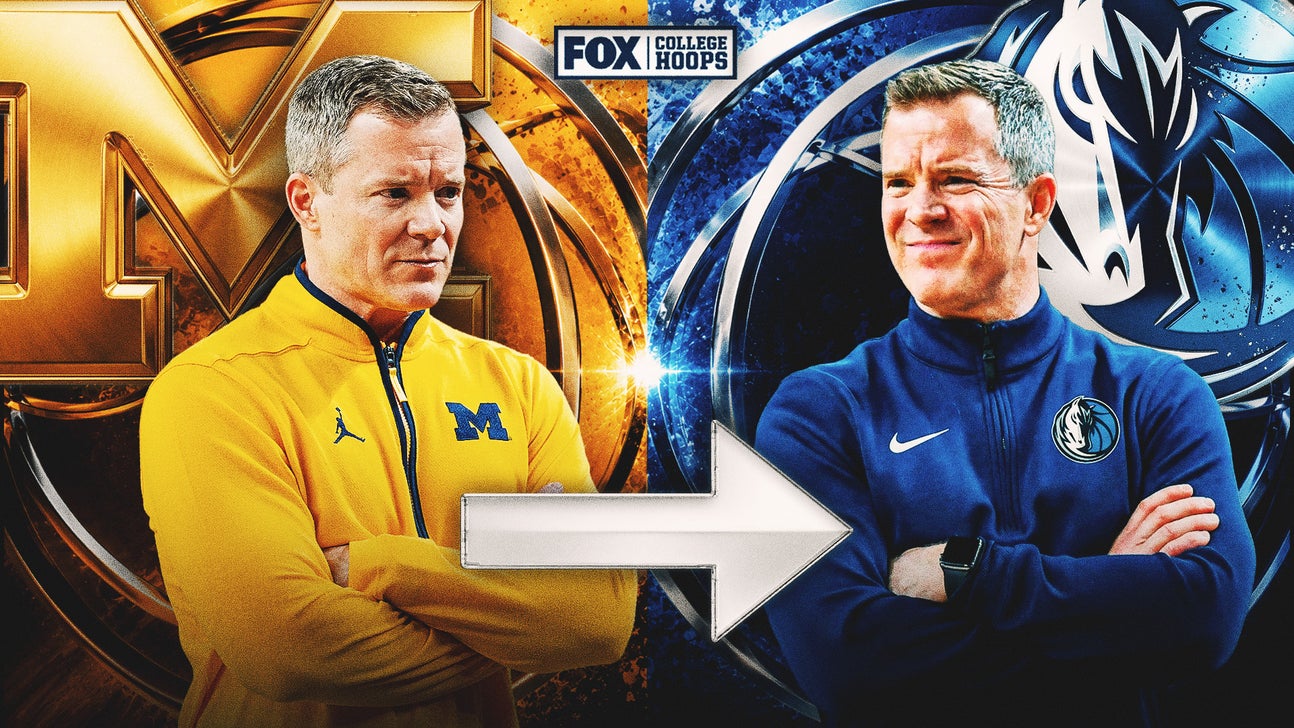
When a social media post at 5:29 p.m. on April 5 assured anxious Wolverines fans that Dusty May was not pursuing college basketball openings, it offered a masterclass in selective wording. It quieted rumors about North Carolina's vacant post by leaning on Michigan's deep March run, yet it left a glaring loophole wide open. Two months later, that omission transformed into a seismic shockwave. May finalized a deal to become head coach of the Dallas Mavericks, trading an elite collegiate juggernaut for an NBA franchise anchored by reigning Rookie of the Year Cooper Flagg.
The timing defies standard sports calendars. Executed during the third week of June—weeks after the summer practice window opened on June 1—May's departure blindsided an Ann Arbor program that had just raised a banner following a 37-win season, a Big Ten regular-season title, and a national championship conquest over UConn. It marks the first time a college coach has jumped directly to an equivalent NBA role since John Beilein left Michigan for the Cleveland Cavaliers in 2019, and the first time a sitting champion has departed for the pros since Larry Brown left Kansas in 1988.

The Mechanics of Modern Roster Turnover and Institutional Strain
May’s exit lays bare the compounding wear-and-tear of contemporary college athletics. In just two seasons, May embraced name, image, and likeness (NIL), aggressive transfer portal utilization, analytics, and NBA-style roster construction to completely overhaul a program left in a mucky mess by Juwan Howard. Yet, beneath the gloss of a 64-13 record and three first-round NBA draft picks—Yaxel Lendeborg, Aday Mara, and Morez Johnson Jr.—lies an exhausting operational reality. In an ecosystem of soaring player compensation, shifting regulations, and endless roster churning, the job description resembles a relentless turn of a hamster wheel.
As CNN Sports noted in examining the broader institutional instability, the departure mirrors a broader trend of fleeting professional loyalty—highlighted by athletic director movement across the landscape. While May enjoyed the financial backing of a massive athletic department willing to deploy millions in roster investment, his transition exposes the inherent friction of asking players for lifelong commitment when leadership pivots at a moment's notice. Under NCAA rules, May’s exit triggers a 15-day transfer window for current Wolverines players once a replacement is officially named, threatening a roster that includes high-profile incoming talent like Trey McKenney and Elliot Cadeau.
Boynton’s Defensive Blueprint and the Transition in Ann Arbor
To preserve the infrastructure built over the last two years, athletic director Warde Manuel moved swiftly. After initially tapping former Oklahoma State head coach and Michigan defensive coordinator Mike Boynton Jr. on an interim basis, the university removed the interim tag, locking in the 44-year-old as the permanent head coach. Boynton brings a proven defensive pedigree, having engineered units that ranked No. 12 and No. 1 in adjusted defensive efficiency at KenPom over his two seasons in Ann Arbor, alongside a track record of top-20 defenses during his tenure in Stillwater.

The tactical continuity is crucial. Boynton inherits a program equipped with the nation's No. 4 high school recruiting class and the No. 12 transfer haul. However, the margin for error is razor-thin as he works to retain core pieces before the transfer window triggers. The architecture of May's success—grounded in heavy transfer reliance and elite defensive structure—remains intact, but the leadership driving it has fundamentally changed.
Stepping Into the NBA Crucible
For May, the jump to the professional ranks represents both a logistical leap and a philosophical pivot. Inheriting a Mavericks squad that missed the postseason in consecutive years following the February 2025 trade of Luka Dončić to the Los Angeles Lakers, May joins a front office featuring president of basketball operations Masai Ujiri and general manager Mike Schmitz. He reunites immediately with Morez Johnson Jr., drafted No. 9 overall by Dallas, while stepping into a locker room featuring veteran champions Kyrie Irving and Klay Thompson alongside Flagg.
This is all too big of a dream. I did start preparing for this years ago, going to watch and trying to figure out if I could do this well.Dusty May
May insists that the challenges of managing modern college rosters under NIL frameworks mirror the professional game more closely than ever, bridging the gap between collegiate management and NBA asset allocation. Yet, as he begins his tenure in Dallas, the landscape he leaves behind serves as a stark reminder that in modern basketball, stability is an illusion, and even national champions are not immune to the pull of the next frontier.
Sources
These sources formed the evidence pack for this article. Links open the original publisher; inclusion does not imply endorsement.
- foxsports.com original
- cnn.com original
- nba.com original
- nypost.com original

