In a sport increasingly defined by heavy topspin, violent baseline exchanges, and the sheer physical dominance of players in their early twenties, Tatjana Maria is a walking contradiction. At 39, she is not just participating; she is unsettling the status quo. Her recent performance in round two—described by observers as a display of "nerves of steel"—is not a fluke of longevity, but the latest chapter in a career built on the refusal to follow the established blueprint.
To understand why Maria’s continued presence in the winner's circle is so disruptive, one must look at the institutional void she has navigated. While players like Angelique Kerber were elevated by massive budgets and the comprehensive support of the German Tennis Federation (DTB), Maria has existed largely outside that ecosystem. She did not pass through federal training centers or occupy a place in the classic talent cadres. Instead, she has navigated the high-stakes economy of the WTA tour on her own terms.
The Economics of Independence
Professional tennis at the WTA level is an expensive endeavor, with annual costs for travel, coaching, physiotherapy, and tournament fees estimated between $100,000 and $200,000. For an athlete without the safety net of federation funding, every match is more than a sporting contest; it is a financial necessity. A loss is not just a setback in the rankings—it is a direct hit to the resources required to keep the career alive.
Maria addressed this challenge by building a structure rooted in efficiency rather than luxury. Alongside her husband and coach, Charles-Edouard Maria, she turned her career into a streamlined, family-operated enterprise. They focus on tournament planning and travel logistics that prioritize sustainability, ensuring that even without a corporate apparatus, the machinery of her professional life remains functional. This pragmatic approach allowed her to reach a career-high ranking of world number 36 in July 2025, a feat many thought impossible for a player of her age and unconventional background.
Tatjana Maria's career is the antithesis to the institutional path prescribed by the DTB for its players.
The Geometry of Survival: Tactical Variation
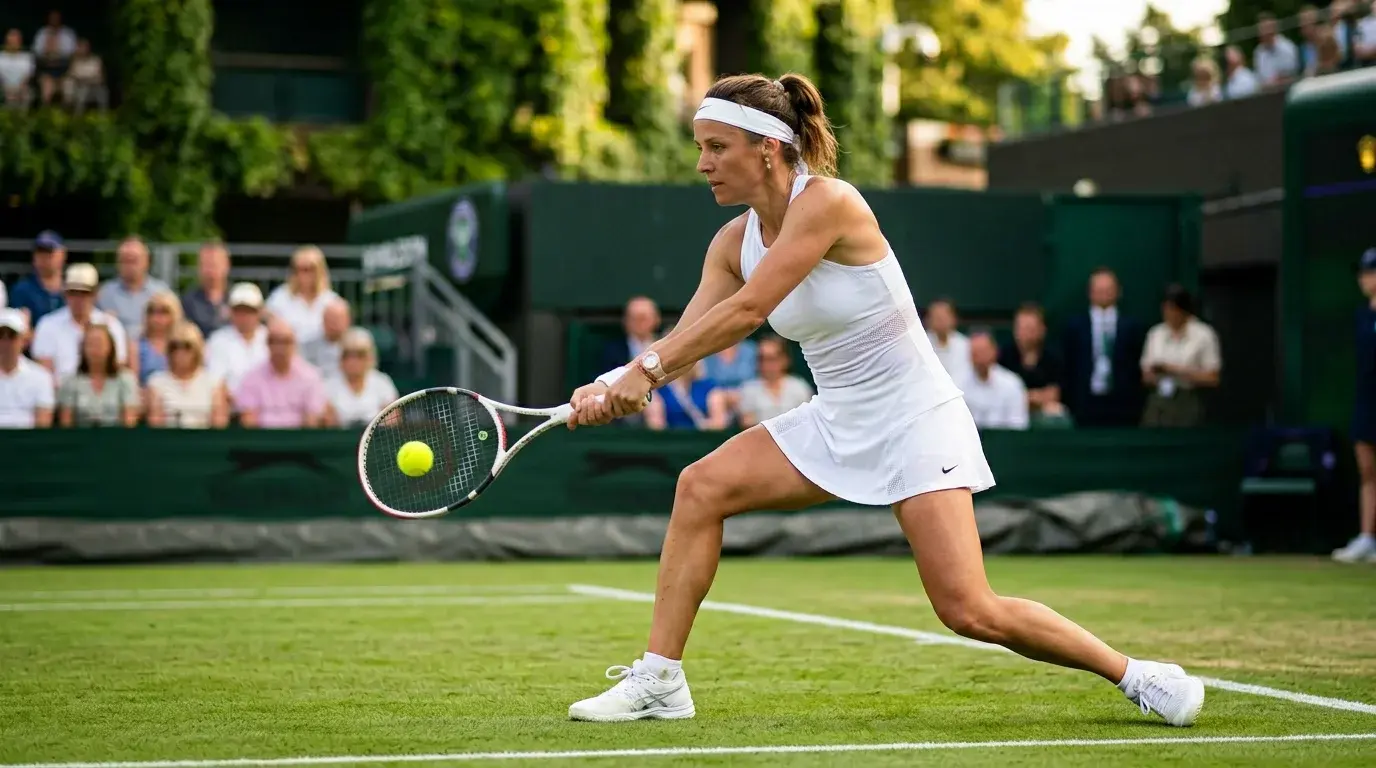
If Maria’s success were built solely on physical endurance, her age would have already forced her retirement. Instead, she survives through tactical intelligence. In an era where most players seek to overpower their opponents with high-velocity groundstrokes, Maria employs a style that is intentionally disruptive.
- The Slice: A rare weapon in the modern game, used to take speed off the ball and disrupt the rhythm of heavy hitters.
- Net Attacks: Forcing opponents out of their baseline comfort zones.
- Variation: Changing depth and length to induce errors from players accustomed to predictable, high-tempo rallies.
This was most evident during her historic run to the Wimbledon semifinals in 2022. At 34 years old, and having navigated the complexities of motherhood, she used the fast grass to turn her slice into a weapon, forcing younger, higher-ranked opponents into uncomfortable positions. She wasn't playing the same game as her peers; she was playing a game of chess while they were playing a game of power.
Resilience Beyond the Court
The psychological fortitude required to maintain a professional career is perhaps most visible in Maria’s ability to return from significant life interruptions. She has twice stepped away from the tour to give birth—in 2013 and 2021. In the WTA, there is no guaranteed safety net for maternity; rankings drop, and the climb back through the qualifying draws is grueling.
Yet, she has made these returns repeatedly. Her ability to re-establish herself in the rankings, often training in South France with her husband, speaks to a mental toughness that cannot be coached. It is a quiet, steady pragmatism that stands in stark contrast to the highly publicized, often choreographed "farewell tours" seen in other sports.
As she moves forward from her recent round-two victory, the question is no longer whether Maria belongs on the tour, but how much longer her brand of tactical defiance can hold the line against the next generation of power hitters. For now, her "nerves of steel" continue to provide a masterclass in how to fight the system by simply refusing to join it.
Sources
These sources formed the evidence pack for this article. Links open the original publisher; inclusion does not imply endorsement.
- berna.at original
- tas-goe.de original
- ptsv-tennis.de original
- tennisfrauen.com original