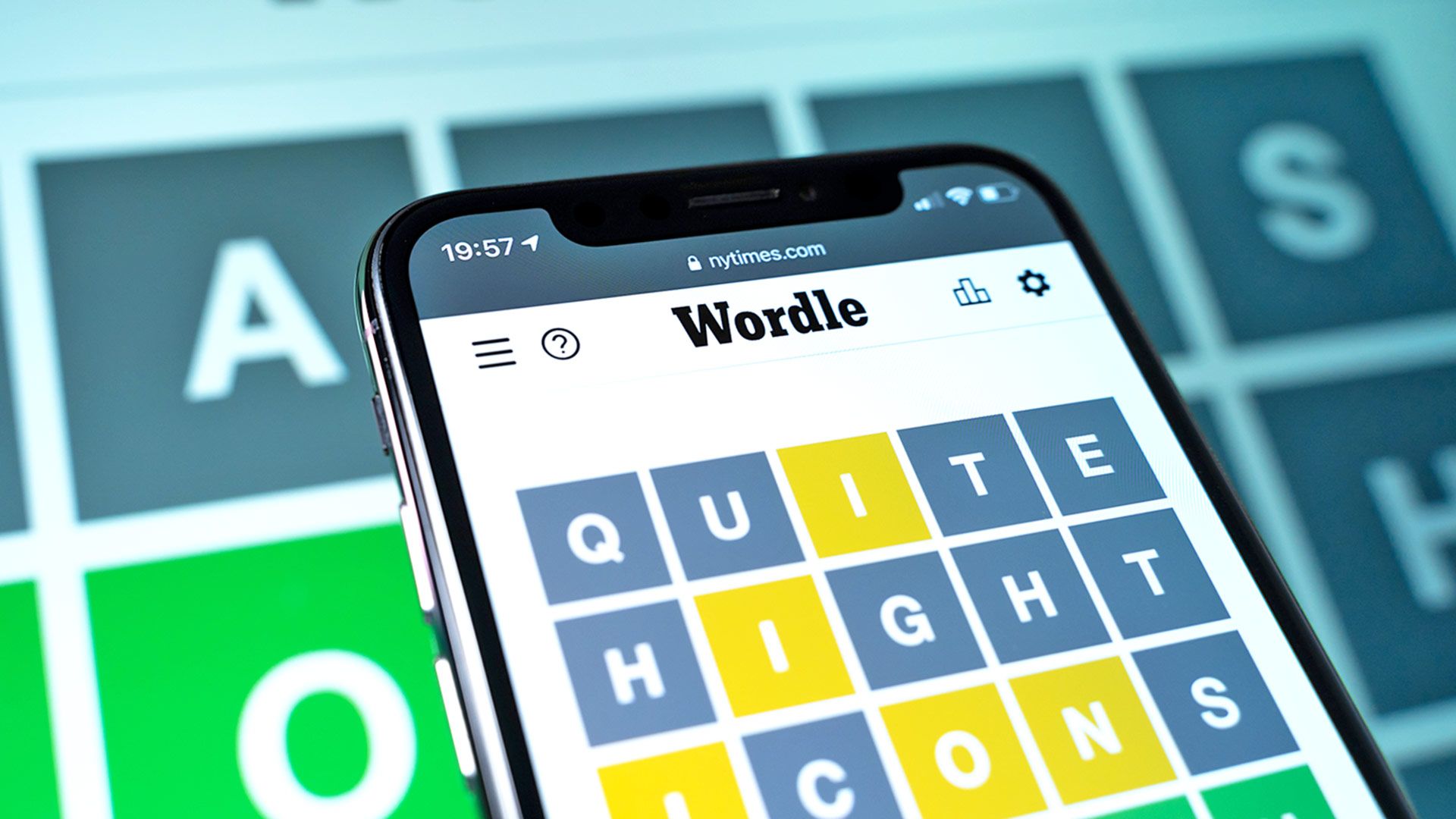
The morning ritual for the global Wordle community is less about leisure and more about precision. It is a high-stakes mental sprint where a single misstep can end a streak that has been built over weeks, months, or even years. On August 29, 2026, the field faced Wordle #1,897—a puzzle that demanded not just vocabulary, but a sophisticated understanding of letter frequency and double-letter recognition.
The Performance Metrics: A Statistical Overview
Today's contest was defined by its deceptive difficulty. According to data from the New York Times' WordleBot, the average player completed the puzzle in 4.0 moves in easy mode, while those playing under the more stringent hard rules saw a slightly more efficient 3.9 moves. While these numbers suggest a relatively smooth field performance, the underlying mechanics of the puzzle were anything but straightforward.
The target word was a "fluid," a category that often trips up even the most seasoned competitors. The solution, BLOOD, presented a specific tactical challenge: it required navigating a double-letter configuration and managing a limited set of common letters. In a game where efficiency is the ultimate metric, the "double letter" days are often where the most significant errors occur.
Game Tape: Analyzing the Tactical Play-by-Play
To understand how the elite players navigated this, we have to look at the "game tape." A typical high-level approach involves a heavy emphasis on the opening gambit. For many, the standard opening is ORATE, a word chosen specifically because it contains all five of the most common Wordle letters.
In today's match, we saw a fascinating tactical progression:
- The Opening Gambit: Starting with ORATE yielded a single yellow 'O', leaving a massive field of 193 possible answers according to WordleBot.
- The Mid-Game Scouting: To narrow the field, players pivoted to high-utility words. While PLOTS can reduce the field to 30 options and PALED to just 17, the elite strategy often involves testing a variety of consonants. A player testing 'L', 'I', 'S', 'N', and 'C' might utilize SONIC to clear the board.
- The Closing Move: Once the field is narrowed, the ability to anticipate repeated characters becomes decisive. For today's puzzle, recognizing the double 'O' in BLOOD was the final hurdle to a three-turn victory.
The contrast with yesterday's performance is stark. Wordle #1,896, which resulted in the answer TWEEN, was described as an "immensely frustrating" contest. That match required a much more granular approach to vowel and consonant placement, whereas today's match was a battle of pattern recognition against a fluid-based target.
The Wider Cognitive Arena: Training the Mind
The discipline required for daily Wordle is part of a broader ecosystem of mental athletics. From the mathematical rigor of the Collatz Conjecture to the logic-heavy 100 Prisoners Problem, the modern cognitive enthusiast is constantly engaging in high-level problem-solving. Whether it is navigating the complexities of the Sleeping Beauty Problem or solving the geometric puzzles found in TED-Ed's curriculum, the goal remains the same: sharpening the analytical tools required for split-second decision-making.

Even the commercial sector reflects this demand for mental stimulation. From the physical challenges of Pandora's Legacy to specialized publications like Arrowwords—which features over 60 puzzles per issue—the market for "brain-teasers" is no longer niche; it is a robust arena for those looking to maintain cognitive edge as they age.
Tactical Summary: Wordle #1,897
| Metric/Feature | Details |
|---|---|
| Target Category | Fluid |
| Solution | BLOOD |
| Difficulty Indicator | Double letter / One repeated character |
| Optimal Start Words | ORATE, PLOTS, PALED, LOPED |
| Avg. Moves (Easy) | 4.0 |
Evidence-Led Forecast: The Meta-Trend of Wordle
Based on the recent shift from the vowel-heavy challenges of TWEEN to the consonant-and-double-letter density of BLOOD, we are seeing a tactical trend toward "structural" puzzles. These are contests that do not rely solely on knowing the word, but on predicting the internal architecture of the word itself.
Likely Tactical Pattern: Expect an increase in puzzles featuring repeated characters, which will force players to abandon "elimination-style" opening words in favor of "testing-style" second moves. Decisive Matchup: The battle between "Hard Mode" purists and "Easy Mode" efficiency-seekers will continue to widen as the Bot's statistical influence grows. What Would Change the Read: A sudden shift toward high-vowel density (four or more vowels) would reset the current meta, favoring players who prioritize vowel-clearing strategies over consonant-mapping.
Sources
These sources formed the evidence pack for this article. Links open the original publisher; inclusion does not imply endorsement.
- kidzsearch.com original
- tomsguide.com original
- greatmagazines.co.uk original
- apps.apple.com original