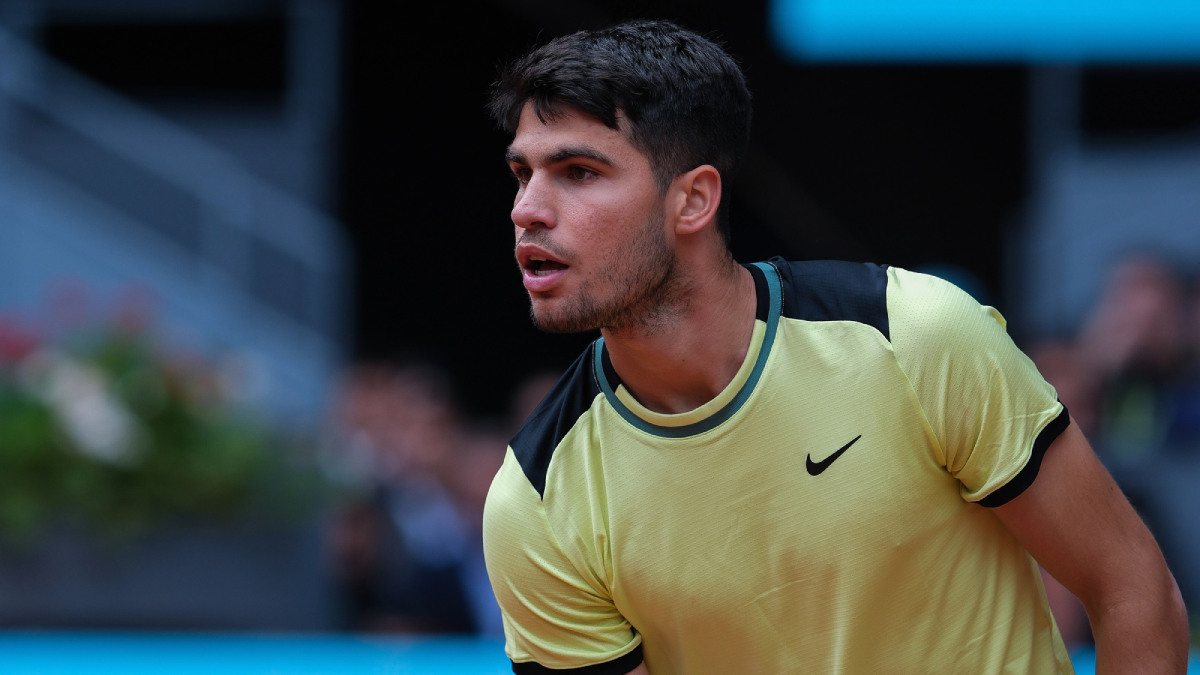
When Jannik Sinner steps onto a hard court, he is not merely defending his status as the world number one; he is reinforcing the foundations of a financial empire. While the South Tyrolean champion works out of his training base in Monte Carlo to prepare for the hard-court stretch—his favorite and most lucrative surface—his professional trajectory has entered a completely different stratosphere. Having secured 23 of his 30 career titles on hard courts alongside three of his five Grand Slam crowns over the past three seasons, Sinner is rapidly closing in on a milestone that once belonged exclusively to the legends of the sport.
By the close of the year, cumulative career prize money alone is projected to approach 100 million euros, lifting off from a base of nearly 61 million euros. Yet, as Sinner has noted more than once, money is kept in perspective. Non gioco per soldi. Il denaro è importante ma non così tanto,
he has maintained. True to his roots, his very first major purchase after winning a tournament as a teenager was a stringing machine—acquired to curb the high costs of outsourcing racket maintenance.
The Architecture of the 'Red Fox' Economy
Today, that modest thrift has evolved into a sophisticated corporate lattice headquartered in Monte Carlo. Far from relying solely on tournament checks, Sinner's financial ecosystem operates as a multi-tiered corporate machine. Managed through entities like Foxera, overseen by manager Alex Vittur, and Wooly Lemon—the corporate vehicle handling his image rights and commercial licenses—the structure coordinates global marketing, financial investments, and real estate assets.
This asset diversification strategy saw a significant pivot in late 2025 with the acquisition of two sprawling offices and properties in central Milan, including spaces in the Casa Barelli complex near San Babila backed by a 15-year mortgage. Montecarlo serves as the operational and fiscal hub for these holdings, allowing the world number one to bypass personal income tax structures while maintaining status as a global taxpayer on events hosted internationally, such as the ATP Finals in Turin.
| Player | Career Earnings |
|---|---|
| Novak Djokovic | $193,215,570 |
| Rafael Nadal | $134,946,100 |
| Roger Federer | $130,594,339 |
| Serena Williams | $94,816,730 |
| Carlos Alcaraz | $64,274,163 |
| Alexander Zverev | $60,969,344 |
| Jannik Sinner | $60,039,831 |
| Daniil Medvedev | $51,150,419 |
The Sponsorship Portfolio and the Tour's Prize Paradox
While Sinner's on-court prowess commands attention—averaging roughly 37,000 euros per day in prize money during peak stretches and capturing a record-shattering 5.07 million euro payday at the ATP Finals—off-court partnerships form an equally formidable pillar. Backed by an elite portfolio of 14 international agreements including Nike (anchored by a reported 150-million-dollar, ten-year commitment), Gucci, Rolex, Lavazza, De Cecco, Fastweb, and Allianz, his annual commercial intake brings in an estimated 35 million euros in fixed fees and performance bonuses.
This dual stream of revenue provides a crucial buffer against recent shifts in tennis economics. As former player John Isner noted regarding shrinking winner shares—such as Miami tournaments distributing smaller winner checks in 2026 compared to 2018 in order to inflate early-round payouts for the sport's middle class—top players must look beyond tournament checks. Sinner's mastery of the business side ensures that his career remains insulated from the changing distribution models of the ATP tour.
The Road Ahead: Autumn Stakes and Exhibition Windfalls
As the calendar pushes toward the indoor swing, the pursuit of history and capital continues in tandem. With the US Open, late-season Masters 1000 events in Cincinnati, Shanghai, and Paris indoor, and the lucrative Saudi-backed Six Kings Slam—which carries a staggering 5.5 million dollar winner's purse alongside gold-standard novelty prizes—the path to the century mark in total earnings is well within reach.
Whether he manages to eclipse rival Carlos Alcaraz in the upcoming rankings battle, Sinner has fundamentally rewritten what it means to be a modern sports tycoon: a blend of relentless baseline discipline, high-performance efficiency, and institutional autonomy.
Sources
These sources formed the evidence pack for this article. Links open the original publisher; inclusion does not imply endorsement.
- gazzetta.it original
- Tommy Principe original
- Redazione Assodigitale original
- Filippo Bonsignore original
- Today original
- ilmattino.it original