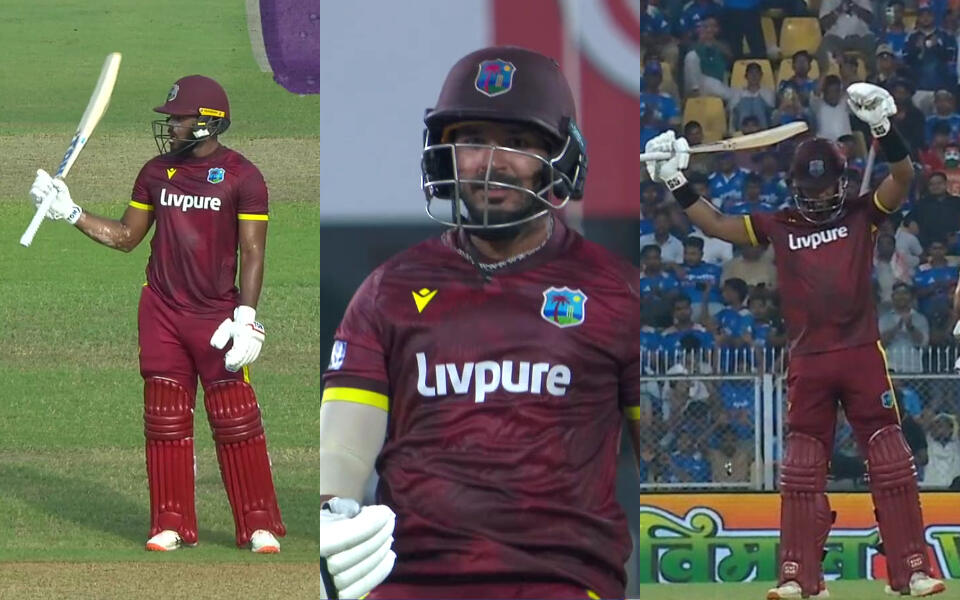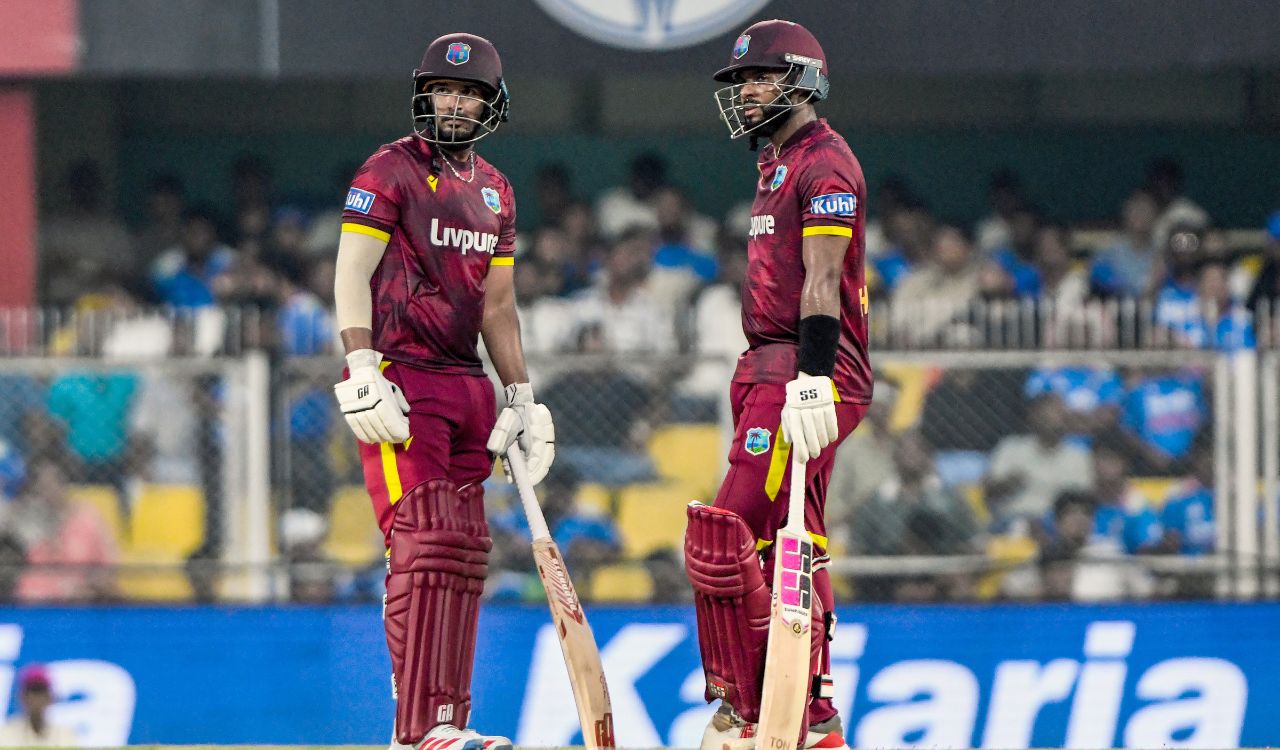
The air in Guwahati is thick with more than just the humidity of the Barsapara Cricket Stadium; it is heavy with the weight of impending history. The West Indies have just done something unprecedented in ODI history, breaching the 400-run barrier to post a mammoth 405. As India prepares to hunt this target, they aren't just chasing a victory—they are chasing the absolute ceiling of what is possible in the 50-over format.
If the Men in Blue succeed, the record books will not just be updated; they will be torn up and rewritten. To understand the magnitude of what lies ahead, one must look back at the moments when India turned the impossible into the inevitable.
The 2013 Jaipur Standard: Rohit and Kohli’s Clinical Demolition
For over a decade, the gold standard for Indian run chases has been the breathtaking display in Jaipur on October 16, 2013. Australia had set a formidable target of 360, fueled by a collective batting masterclass where Aaron Finch, Phillip Hughes, Shane Watson, George Bailey, and Glenn Maxwell all struck half-centuries to reach 359/5.
What followed was not just a win, but a statement of intent. Under the captaincy of MS Dhoni, India didn't just scrape home; they decimated the Australian attack, reaching 362/1 with nine wickets and 39 balls to spare. The architects of this destruction were Rohit Sharma and Virat Kohli.
- The Opening Salvo: Rohit Sharma provided the foundation, sharing a 176-run opening stand with Shikhar Dhawan, who narrowly missed a century.
- The Acceleration: The real damage was dealt when Kohli joined Rohit. The duo smoked 100 runs off just 52 deliveries, a partnership that effectively broke the Australian spirit.
- The Stats of Greatness: Rohit finished unbeaten on 141 from 123 balls, while Kohli anchored the chase with a century, operating at a staggering strike rate of 192.30. Their 186-run partnership in only 104 deliveries remains a blueprint for modern chasing.
The Mid-Order Resilience and the 350+ Club
While Rohit and Kohli provided the high-octane brilliance in 2013, India's history of chasing large totals is also defined by grit and mid-order intervention. The record for the second-highest chase belongs to a different kind of hero: Kedar Jadhav.

During England's 2017 tour, Jadhav turned his home ground in Pune into a fortress. Chasing 351, Jadhav played arguably his finest ODI innings, smashing 120 runs off just 76 deliveries. The match hung in the balance until the final overs; with the scores locked at 350 after 48 overs, Ravichandran Ashwin provided the final flourish, hitting a six off Moeen Ali to seal the win. This match highlighted a recurring theme in Indian cricket: the ability to find a way when the top order falters, evidenced by the 200-run 5th-wicket partnership between Kohli and Jadhav.
In total, India has successfully navigated the 350+ territory three times, including a 351/6 chase against Australia in Nagpur in 2013, where Kohli again proved his mettle with a clinical 115 not out.
Analytical Distinction: Setting vs. Chasing
In discussions regarding India's dominance, it is vital to distinguish between total scores posted and successful chases. For instance, during the 2023 encounter with Sri Lanka, India posted a massive 373, powered by Virat Kohli’s unbeaten 166 and a Shubman Gill century. While that score was dominant, it does not count as a successful chase because India was the side setting the target.
Similarly, while South Africa holds the record for the highest total ever posted on Indian soil (438 in 2015), the current West Indian total of 405 represents a different kind of psychological pressure. A total is a target; a chase is a race against time and mounting run-rate requirements.
Evidence-Led Forecast: The Guwahati Pursuit
The pursuit of 405 in Guwahati presents a tactical puzzle that differs significantly from the Jaipur or Pune chases. Based on the current match state, here is the analytical outlook:
Tactical Pattern
Given the flat surface reported at Barsapara, India cannot afford a slow start. The historical precedent—specifically the 100 runs in 52 balls by Kohli and Sharma—suggests that India’s only path to 405 is through aggressive early acceleration to prevent the required run rate from becoming insurmountable.
Decisive Matchup
The battle between the Indian top order and the West Indian bowlers will be the fulcrum. Following the centuries by John Campbell, Shai Hope, and Amir Jangoo, the West Indian momentum is high. India’s ability to rotate strike against the spin and exploit the boundaries will be the deciding factor.
Strongest Counter-Case
The sheer scale of the target is the primary obstacle. While India has chased 350+ three times, 405 is a leap into uncharted territory. If the early wickets fall, the pressure of the run rate on a flat deck may force desperate shots, potentially mirroring the struggles seen when bowlers fail to find purchase on such surfaces.

What Would Change the Read
An early collapse of the Indian top order would shift the requirement from a standard chase to a mid-order rescue mission, reminiscent of the Jadhav-Ashwin 2017 finish, though at a much higher mathematical difficulty.
Sources
These sources formed the evidence pack for this article. Links open the original publisher; inclusion does not imply endorsement.
- cricindeed.com original
- sports.yahoo.com original
- jagranjosh.com original
- cricketnews.com original