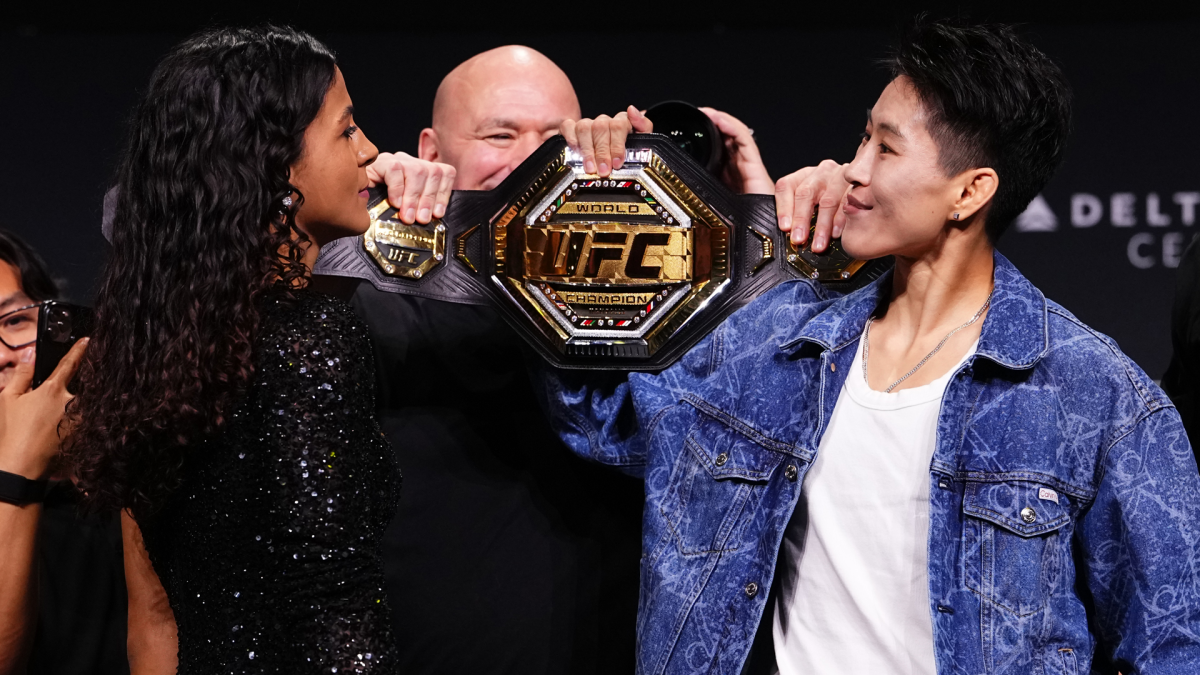
The battle between Islam Makhachev and Alexander Volkanovski is rarely just about the physical exchange of strikes or the leverage of a single takedown. It is a war of psychological attrition. Before they ever stepped into the cage at UFC 284, the narrative was already etched in the digital ether: a clash between Volkanovski’s disciplined composure and Makhachev’s surgical ability to induce panic.
On Twitter, Makhachev issued a chilling prediction that would hang over the entire lightweight division: After the first 15 helpless seconds on the ground, I guarantee you will panic,
he warned. It was a direct challenge to Volkanovski’s claim that his preparation was so exhaustive that even the most elite wrestling could not break his poise.
The Psychology of Panic vs. The Science of Preparation
Volkanovski, the reigning featherweight champion at the time, did not shy away from the mental burden. His approach was grounded in a heavy emphasis on training volume. "I’ll be even more than ready," Volkanovski stated in the Believe You Me podcast, countering the idea that a takedown would lead to a breakdown. "I will be even, I will be calm and I will fight to get back to my feet, and I will not panic. You won't see me lose my cool, because the amount of hours I train is why I will be so calm."
For Makhachev, the objective was clear. He wasn't just looking for control; he was looking for the moment the Australian champion’s technique would be overtaken by instinctual fear. This wasn't just a sport; it was a test of whether Volkanovski’s "preparation" could withstand the specific, high-pressure grappling of a Dagestani specialist trained in Sambo and elite wrestling.
The Weight of the Jump: A Tactical Disadvantage
Beyond the mental games, the physical reality of the matchup presented a massive hurdle for Volkanovski. Moving from the 65.8kg featherweight division to the 70.3kg lightweight division meant facing a man who was not only heavier but also roughly 10cm taller.
Makhachev's toolkit is built on the relentless efficiency of the takedown and ground control. His performance against Charles Oliveira, where he utilized an arm-triangle choke to secure a second-round finish, served as a blueprint for what Volkanovski would have to navigate. The tactical question wasn't just whether Volkanovski could stay standing, but whether he could withstand the sheer strength of a champion who had mastered the art of the grind.
The Tactical Anatomy of UFC 284
The actual encounter in Perth, Australia, provided a masterclass in how these two styles interact when the stakes are highest. The fight was a fascinating study of tactical shifts across five rounds:
- Round 1: The Immediate Threat. Makhachev validated his aggression early, landing a knockdown and attempting to secure a submission from the back. The threat of an early finish loomed large.
- Rounds 2 & 3: The Grinding Stalemate. The fight transitioned into a high-intensity exchange. While Makhachev showcased his striking capability, Volkanovski proved his ability to defend the wrestling, preventing the very panic Makhachev had predicted.
- Round 4: The Control Phase. Makhachev secured a successful takedown in the center of the octagon and achieved back control, once again attempting to hunt for a submission.
- Round 5: The Resurgent Finale. In perhaps the most impressive display of composure, Volkanovski dominated the final frame. He managed to get Makhachev to the ground and worked aggressively for a finish, proving that even under extreme fatigue, his tactical awareness remained intact.
While Makhachev ultimately walked away with the decision victory, the fight shattered the notion of his invincibility. Volkanovski’s ability to navigate the waters of the 70.3kg division sent a message to the rest of the lightweight landscape: the champion is human, but his composure is a weapon in its own right.
Evidence-Led Forecast
Looking toward a potential rematch or similar high-stakes encounters, the tactical patterns suggest a highly predictable but volatile collision.
Tactical Pattern & Decisive Matchup
The fight is likely to be dictated by the sprawl-and-brawl vs. chain-wrestling dynamic. The decisive matchup will be Volkanovski’s ability to maintain hip distance and clinch defense against Makhachev’s ability to initiate the clinch and transition into high-amplitude takedowns. If Volkanovski can force a high-paced striking match, he leverages his boxing; if Makhachev dictates the floor, he leverages his Sambo heritage.
The Counter-Case
The strongest counter-case to a Makhachev dominance is Volkanovski’s proven ability to recover and dominate late in fights, as seen in his fifth-round surge in Perth. If the fight goes to the championship rounds, the physical toll of Makhachev's wrestling may actually work against him, opening the door for a Volkanovski striking blitz.
The Variable
A single successful knockdown or a submission attempt in the first three minutes remains the primary variable that would shift the momentum entirely in Makhachev's favor, preventing Volkanovski from ever establishing a rhythmic striking pace.
Sources
These sources formed the evidence pack for this article. Links open the original publisher; inclusion does not imply endorsement.