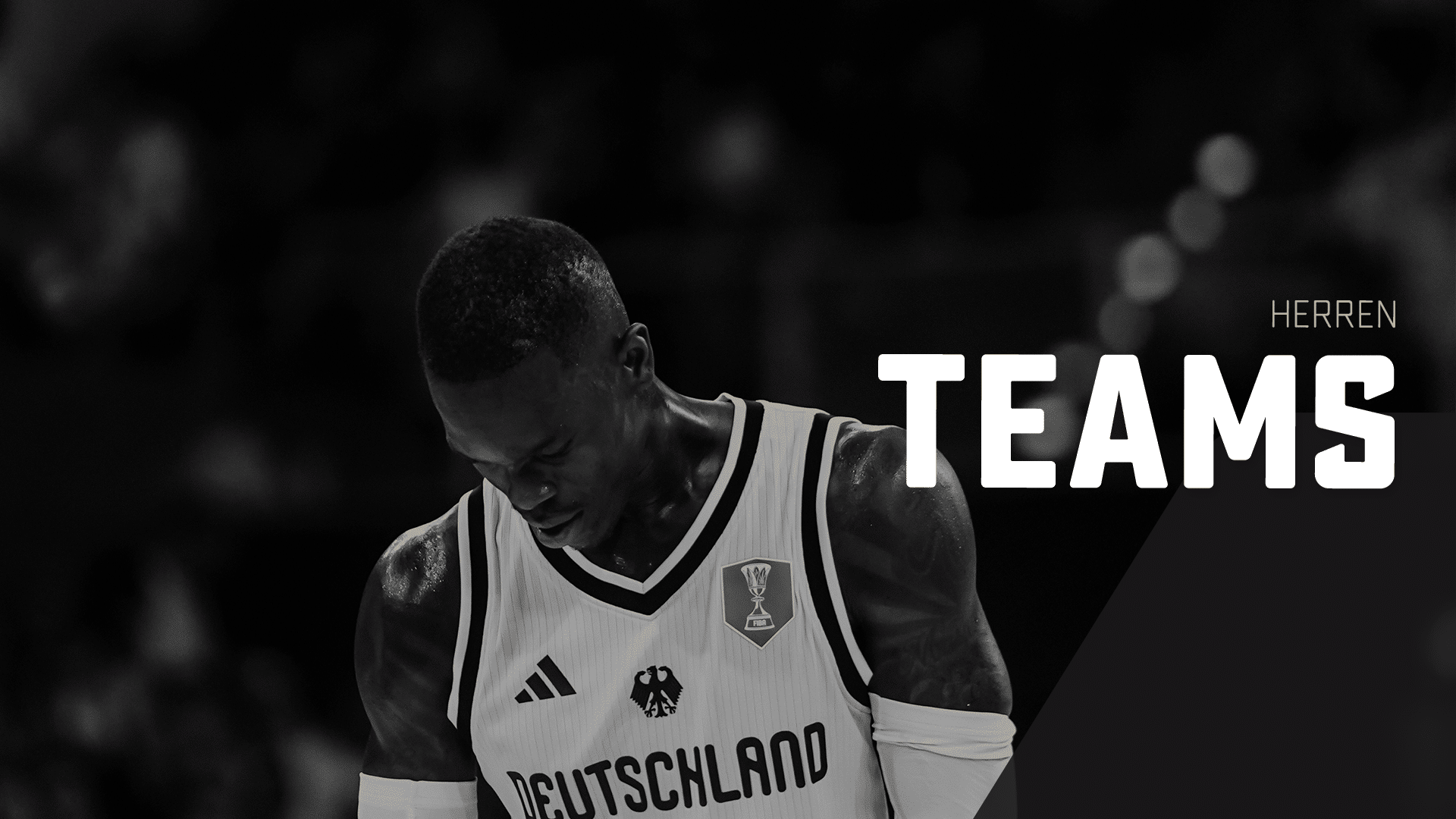
There is a specific kind of tension that exists when a reigning champion enters the territory of the group leader and finds themselves fighting not just for a score, but for their composure. In Danzig, that tension wasn't just palpable; it was physical. The German national team, the current holders of both the World and European titles, secured a monumental 96-94 overtime victory against a relentless Polish side, but the path to that win was a jagged, bruising odyssey through foul trouble and momentum swings.
The Schröder Dilemma and the Foul Factor
For Bundestrainer Álex Mumbrú, the game plan was compromised almost before the opening tip. The tactical rhythm of the German offense relies heavily on the engine of Dennis Schröder, but the Polish defense ensured that engine would be running on fumes early. Within minutes, Schröder was navigating a minefield of officiating, picking up his second foul in quick succession and eventually his third, forcing him to the bench and disrupting Germany's established flow.
"It was very physical today with a lot of fouls," Schröder noted after the game, acknowledging the difficulty of navigating Poland's aggressive defensive stance, particularly against the German pick-and-roll. This early foul trouble wasn't limited to the point guard; the team had to manage the defensive presence of Daniel Theis, who also faced significant foul pressure. When a team's defensive anchors and offensive catalysts are constantly threatening disqualification, the margin for error vanishes.
The Pendulum of Momentum
The game's structure was defined by violent shifts in control. Germany began with authoritative intent, carving out a 28-15 lead in the first quarter behind the scoring of Schröder and the interior presence of Johannes Thiemann. For a moment, it looked like a comfortable progression toward the 2027 World Cup in Qatar.
However, the second and third quarters saw the pendulum swing toward the hosts. Poland, buoyed by a crowd of nearly 12,000, found a new gear of intensity. The Polish side utilized the technical volatility of the game—including a second technical foul on Jordan Loyd—to stay within striking distance. By the time the third quarter ended, the game had descended into a high-stakes grind where rhythm was a luxury few could afford.
The fourth quarter was perhaps the most harrowing for the DBB selection. Poland's aggression saw them erase the deficit, pulling within a single point at several intervals. "In the fourth quarter, there were some blows to the face, but we stayed calm," Mumbrú observed, reflecting on a period where Germany's control slipped. The German squad found themselves unable to pull away, eventually being forced into overtime after Poland hit a crucial free throw to tie the game at 83-83.
The Free-Throw Lifeline
When the offensive rhythm faltered and the game became "broken" (zerfahren), Germany found an unlikely stabilizer: the free-throw line. As the game reached its crescendo, the German offensive strategy shifted from complex sets to a reliance on drawing contact. This allowed them to breathe during the chaos and eventually clinch the extra minutes.
In the overtime period, the composure of the veterans proved decisive. Schröder once again stepped up, hitting a high-difficulty shot to extend the lead, while Maodo Lo and Johannes Thiemann capitalized at the stripe. Despite a late Polish surge that brought the score to a nail-biting 94-92, a critical offensive foul by Poland and a clutch trip to the line by Schröder in the final 17 seconds sealed the 96-94 victory.
Key Performers: The Danzig Box Score
While the victory was collective, several players provided the necessary production to survive the Polish onslaught:
- Dennis Schröder (Charlotte Hornets): 18 points, crucial late-game scoring and leadership.
- Johannes Thiemann (FC Bayern München): 14 points, providing interior stability and critical free throws.
- Maodo Lo (Zalgiris Kaunas): 13 points, including high-impact three-pointers.
- Isaac Bonga (Panathinaikos): 10 points, adding defensive energy and scoring.
- Tristan da Silva (Orlando Magic): 9 points, providing much-needed spacing.
The victory keeps Germany firmly in the hunt for qualification. In the Group K standings, Poland remains at the top with 14 points, while Germany sits closely with 13 points. With only the top three teams qualifying for the World Cup, every possession in this qualifying window carries massive weight.
Evidence-Led Forecast: The Road to Latvia
Tactical Pattern: Expect Germany to prioritize foul management and defensive discipline. The reliance on the free-throw line in Danzig was a symptom of a disrupted offensive flow; against a more disciplined Latvian side, Mumbrú will likely demand higher ball security to avoid the "broken" game states that allowed Poland to comeback.
Decisive Matchup: The battle between Germany's interior defense (Theis/Thiemann) and Latvia's ability to stretch the floor. If Germany can control the glass without fouling, they can mitigate the momentum swings seen in Poland.
Strongest Counter-Case: If Germany continues to struggle with early foul trouble for key players like Schröder, they will be forced into deep rotations that could exhaust their bench before the crucial final quarters of the qualifying window.
What Would Change the Read: The return of full NBA/EuroLeague availability would transform this from a struggle for survival into a dominant showcase, but the current reality remains one of tactical adaptation with a split roster.
Sources
These sources formed the evidence pack for this article. Links open the original publisher; inclusion does not imply endorsement.
- basketball-bund.de original
- basketballwm.com original
- basketballnationalm.com original
- deutschland.de original

