Professional tennis has long projected an image of a single, unified traveling circus, but beneath the surface lies a fractured economic architecture. While the regular calendar rolls through standardized framework events managed by the ATP and WTA Tours, the four Grand Slams operate entirely independently. They control their own media rights, revenue streams, and sponsorships—a separation of powers that has increasingly rubbed the sport's elite the wrong way.
That structural friction boiled over when top-20 players cosigned a formal letter addressed to the organizers of the Australian Open, French Open, Wimbledon, and the US Open. According to reports from French outlet L’Équipe, the players are calling for a substantial redistribution of Slam profits. The financial disparity is stark: at tour-level 1000-series events, players pocket roughly 22 percent of tournament revenue. At the majors, that share languishes between 12 and 15 percent. Even as Grand Slam prize pots swell—such as the US Open's record $75 million payout and Wimbledon's £50 million purse—player shares have either stagnated or shrunk relative to total revenue growth.
World No. 8 Zheng Qinwen pointed out the foundational necessity of these changes, noting to reporters at the Charleston Open that players need sustainable income to survive and fund the quality teams required to compete. American Emma Navarro echoed the sentiment, characterizing the push as an effort to correct unfair pay ratios. The player proposals are specific: a formal Grand Slam Player Council, an immediate bump in prize money to 16 percent of revenue scaling toward 22 percent by 2030, and direct contributions to player welfare programs.
This financial revolt coincides with a broader institutional fracture. The Professional Tennis Players’ Association (PTPA) has filed antitrust lawsuits against the ATP, WTA, ITF, and ITIA, alleging monopolization and a systemic disregard for player interests—accusations that the governing bodies have vowed to defend vigorously.
Meanwhile, the physical and competitive realities of the sport continue to write their own dramas on the court. On the hard courts of Toronto during the National Bank Open, home favorite Leylah Annie Fernandez found a renewed spark. Seeded No. 30, Fernandez manufactured a breakthrough 6-1, 6-4 victory over fifth-seeded Mirra Andreeva, marking her first top-10 win in over a year. Crediting mental work and a tactical nudge from her father and coach Jorge Fernandez—encouraging her to attack the net more frequently amid the loud home crowd—Fernandez leaned into the momentum.
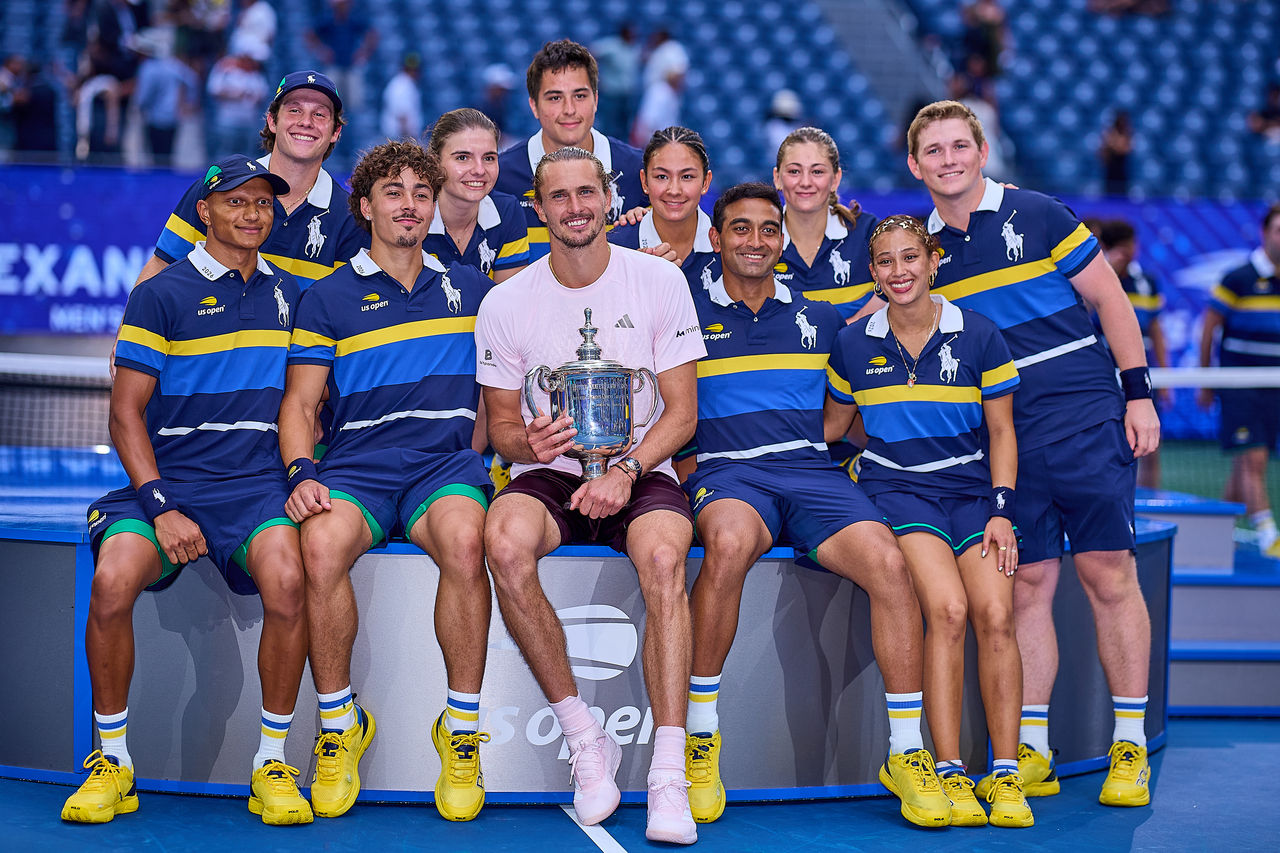
Elsewhere in Toronto, the draw suffered early attrition. Top seeds fell as Alexander Zverev and Daniil Medvedev exited early, with Zverev falling to Tallon Griekspoor. Zverev's Toronto stumble stood in sharp contrast to his grass-court mastery weeks prior at Wimbledon, where the German carved a ruthless path to his first semifinal at the All England Club. Breaking a seven-match losing streak against Taylor Fritz, Zverev dismissed the American 6-4, 6-4, 6-2. Fritz later revealed that a sudden flare-up of chronic knee tendinitis completely derailed him mentally and physically.
At the top of the men's game, Jannik Sinner cemented his dominance by capturing his second consecutive Wimbledon title and fifth career Grand Slam crown, comfortably sweeping aside Novak Djokovic along the way. In the women's draw, Czech standout Noskova claimed her maiden Grand Slam title in an all-Czech final against Muchova, receiving the Venus Rosewater Dish from Princess Kate.
As tennis navigates these parallel battles—players fighting for institutional equity and a fairer slice of major revenue on one side, and athletes managing injuries and fierce rivalries on the other—the economics of the sport are proving just as volatile as any deciding-set tiebreak.
Sources
These sources formed the evidence pack for this article. Links open the original publisher; inclusion does not imply endorsement.
- tsn.ca original
- tenisportal.cz original
- cnn.com original
- linkedin.com original