In the lexicon of cricket, the term "all-rounder" is often diluted by modern specialization, yet Sir Garfield Sobers existed on a pedestal that remains uniquely his own. With his passing at the age of 89, the game loses more than a titan of statistics; it loses a man who, despite his celestial status, remained fundamentally a teacher, driven by a desire to pass on the mechanics of the game he mastered on the streets of St Michael.
Sobers was, by any measure, a phenomenon. Born with two extra fingers that he famously removed himself as a boy, he navigated a path from a humble wooden house on Walcott Avenue to the pinnacle of world sport. Whether hitting Malcolm Nash for six sixes in an over at Swansea or playing a superhuman 254-run innings against Dennis Lillee that even Sir Don Bradman hailed as the greatest he had seen on Australian soil, Sobers played with a fluidity that defied convention. He was a master of pace and spin, a brilliant fielder, and a batsman of destructive grace.
However, the essence of Sobers was found not just in his triple-century or his 1,000-plus wickets, but in his personal approach to the game. Former Bengal captain Sambaran Banerjee, who shared the field with him in 1984, recalled that the gap between Sobers and the rest of the world was so wide it felt "monumental." Yet, to those who knew him, Sobers was remarkably humble, often failing to grasp the sheer scale of his own genius. He carried himself with a quiet dignity, refusing to use sledging and maintaining a philosophy that the team always superseded the individual.

His commitment to the future was just as profound. In an era where modern players often prize hitting every ball for six, Sobers repeatedly emphasized the importance of mastering mechanics. During a 2012 grassroots launch in Barbados, he expressed frustration at the reliance on rigid coaching manuals, preferring the wisdom of experience. "I wanted to see how they moved and to learn the mechanics of the game," he said. "When I went into the nets it was to practise and perfect those mechanics."
This teaching spirit manifested in countless ways, from his annual international schools tournament in Barbados to his direct intervention with young players. Arjuna Ranatunga, the future Sri Lankan great, recalled a moment in England when the team struggled; Sobers simply walked onto the pitch, borrowed a stump, and began to play shots with perfect technique to prove a point. Even at Chepauk in 1966-67, he famously knelt down to teach a young boy the correct batting stance—a memory that endures as a portrait of a legend who never felt too big to help a beginner find their footing.
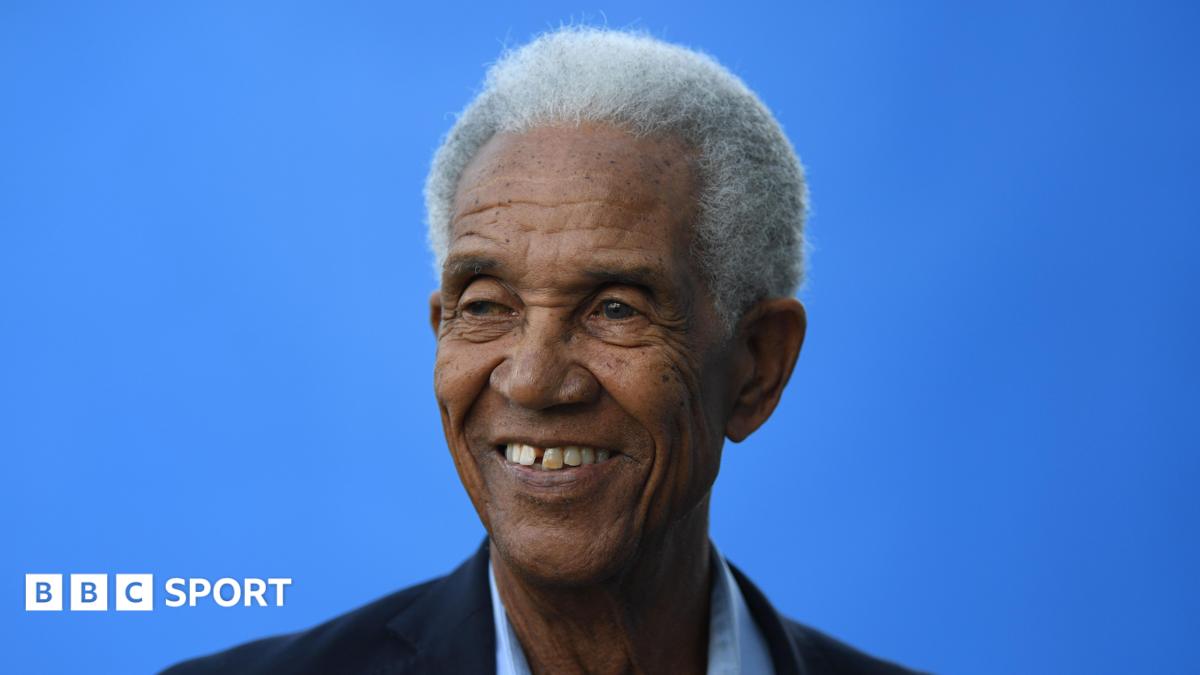
As the cricket world reflects on his 89 years, the focus naturally shifts to his 365 not out or his transformative impact on the all-rounder role. But perhaps his most enduring footprint is the one he left on the young cricketers he encountered. As he once noted, "It was not just what I did on the field, but how I carried myself off it." Whether through his foundation, his coaching stints in Australia, or a simple moment on a training ground, Sir Garry ensured that the "boy days" of discovery remained alive for those who followed him. The architect of the modern all-rounder has left us, but the mechanics of his greatness—and the generosity with which he shared them—remain a permanent part of the game's fabric.
Sources
These sources formed the evidence pack for this article. Links open the original publisher; inclusion does not imply endorsement.
- m.dailyhunt.in original
- deccanherald.com original
- Editor original
- indianexpress.com original
- thecricketer.com original
- Staff Editor original
- readingchronicle.co.uk original