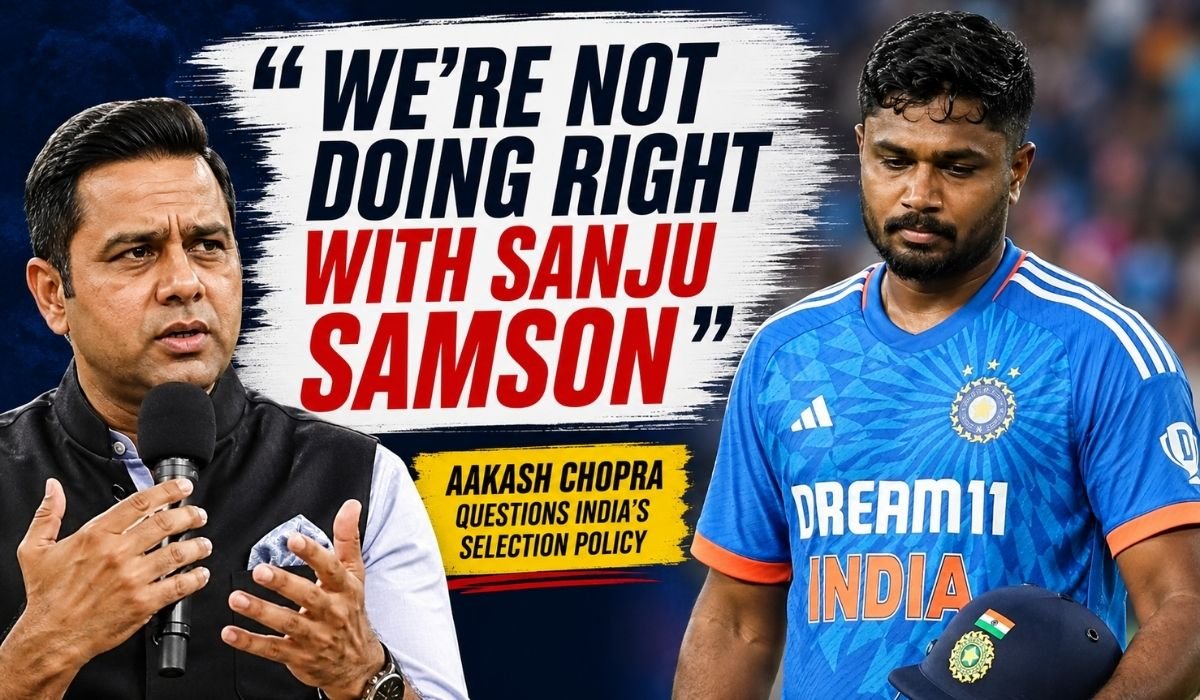
When international selection operates in an ecosystem as congested as Indian cricket, a brief drop in white-ball rhythm can relegate an established match-winner to the bench. Sanju Samson once again finds himself at the focal point of that tension. Despite providing a crucial story of redemption during India's T20 World Cup campaign after struggling in the tournament's build-up, the Kerala wicketkeeper-batter has returned to an all-too-familiar spot on the fringe, sparking sharp debate among former players over how team management handles high-grade talent.
Former India batsman Aakash Chopra delivered a blunt assessment on his YouTube channel, arguing that the selection committee and team leadership are failing to manage Samson with the consistency he requires to flourish. Chopra stated that Indian management is not doing justice with Sanju Samson,
emphasizing that an accomplished stroke-maker should not be subjected to constant squad rotation or judged harshly on isolated low scores.
The Old Trafford Catalyst and Middle-Order Squeeze
The latest flashpoint in Samson's career occurred during India's T20I series in England. Samson was omitted from the playing XI after a cluster of low scores, while team management handed an international debut to 15-year-old prodigy Vaibhav Sooryavanshi at Old Trafford. Sooryavanshi was brought straight into the cauldron, later facing fast bowler Jofra Archer, who got the better of the youngster in the third T20I. For critics of the current selection policy, benching Samson for teenage potential highlighted an unyielding roster environment where even elite performers are given remarkably short leashes.
Chopra is not alone in questioning the heavy rotation. Former Test opener Cheteshwar Pujara has urged selectors to afford Samson extended backing rather than making swift interventions. Former selector Saba Karim similarly voiced support, classifying Samson as a fabulous
player who has earned the right to continuing faith from management.
Yet, supporters of the selection panel point out that competition in the batting order has never been more intense. With a constant influx of young options pressuring established names, management faces the intricate task of balancing immediate international results with long-term roster construction.
Dressing Room Philosophies Under Gambhir and Agarkar
This middle-order volatility plays out against a broader structural evolution driven by head coach Gautam Gambhir and chief selector Ajit Agarkar. Insiders note that Gambhir seeks an absolute free hand to institute his vision, actively resisting any notion of a superstar culture
in favor of absolute accountability to the public. That philosophical shift coincides with Shubman Gill taking over the ODI captaincy from Rohit Sharma as part of a structured progression toward the 2027 World Cup in South Africa.
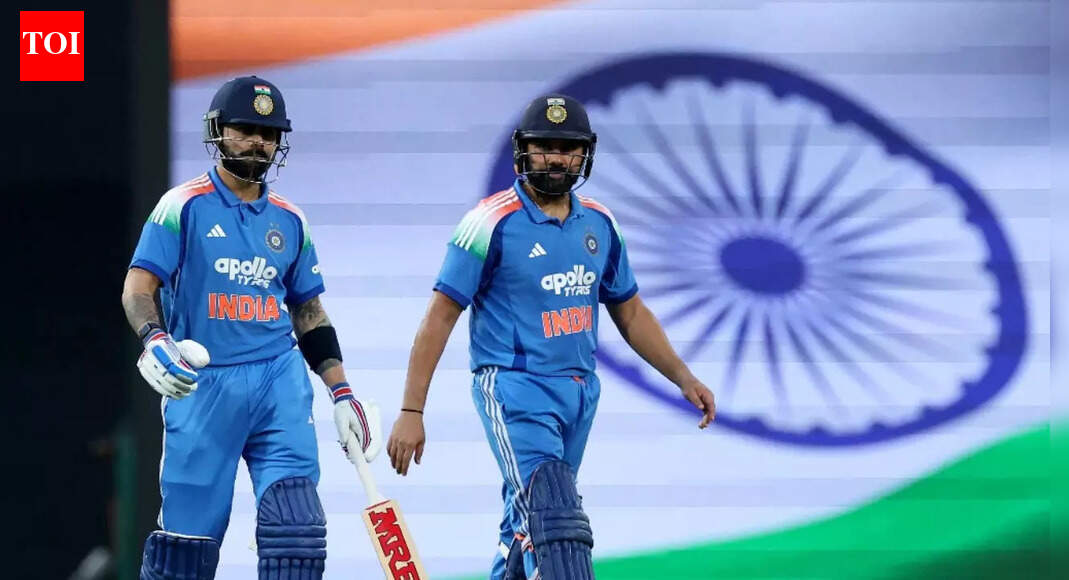
While veterans Rohit and Virat Kohli now focus exclusively on the 50-over format, their presence creates a distinct dynamic alongside younger players. Kohli underscored his enduring sharpness in Ranchi against South Africa with a masterclass knock of 135 off 120 balls, afterwards reinforcing his approach to international competition:
blockquote>I have never been a believer in a lot of preparation. All my cricket has been mental,
Kohli said during the post-match presentation.
Former selection committee chairman MSK Prasad believes managing veteran certainty and emerging talent requires absolute clarity from the top down. Drawing comparisons to the smooth captaincy transition between MS Dhoni and Kohli, Prasad stressed that ambiguity only harms performance.
First thing that needs to be ensured is that you shouldn't be messing with the minds of such big players,
Prasad noted. There should be clear communication up front. Or else, stick to the perform-or-perish policy. There should not be any scope for ambiguity.
Broadcaster and former India wicketkeeper Deep Dasgupta echoed that call for clarity, urging management to resolve internal debate before entering upcoming white-ball assignments. You can't go into every series with the same discussions going around,
Dasgupta remarked, pointing out that players and management must align on World Cup preparation schedules to maintain a peaceful dressing room.
Evidence-Led Forecast: Middle-Order Rotation and Selection Benchmarks
Given the competing priorities established by Gambhir's management philosophy and the volume of incoming talent, India's white-ball selection hierarchy is likely to adopt specific tactical and selection patterns over the next phase of international fixtures:
- Tactical Pattern: Expect team management to enforce rigid role-based criteria rather than relying on historical reputation. Top-order slots will prioritize immediate scoring impact, leaving middle-order spots subject to strict form benchmarks.
- Decisive Matchup: Samson's international standing will depend on his ability to convert brief opportunist starts against high-pace bowling into game-defining scores, particularly when competing against flexible top-order options like Gill and emerging youth options.
- Strongest Counter-Case: Sustained backing for Samson could stabilize India's middle order, preventing premature burning of raw talent like Sooryavanshi while maintaining experienced depth for foreign conditions.
- What Would Change the Read: A clear public mandate from Agarkar guaranteeing Samson an uninterrupted run through a full series—or a severe injury crisis in the central ODI pool—would shift the selection dynamic back toward long-term trust over immediate substitution.
Sources
These sources formed the evidence pack for this article. Links open the original publisher; inclusion does not imply endorsement.
- timesofindia.indiatimes.com original
- independent.co.uk original
- ballebazzi.com original