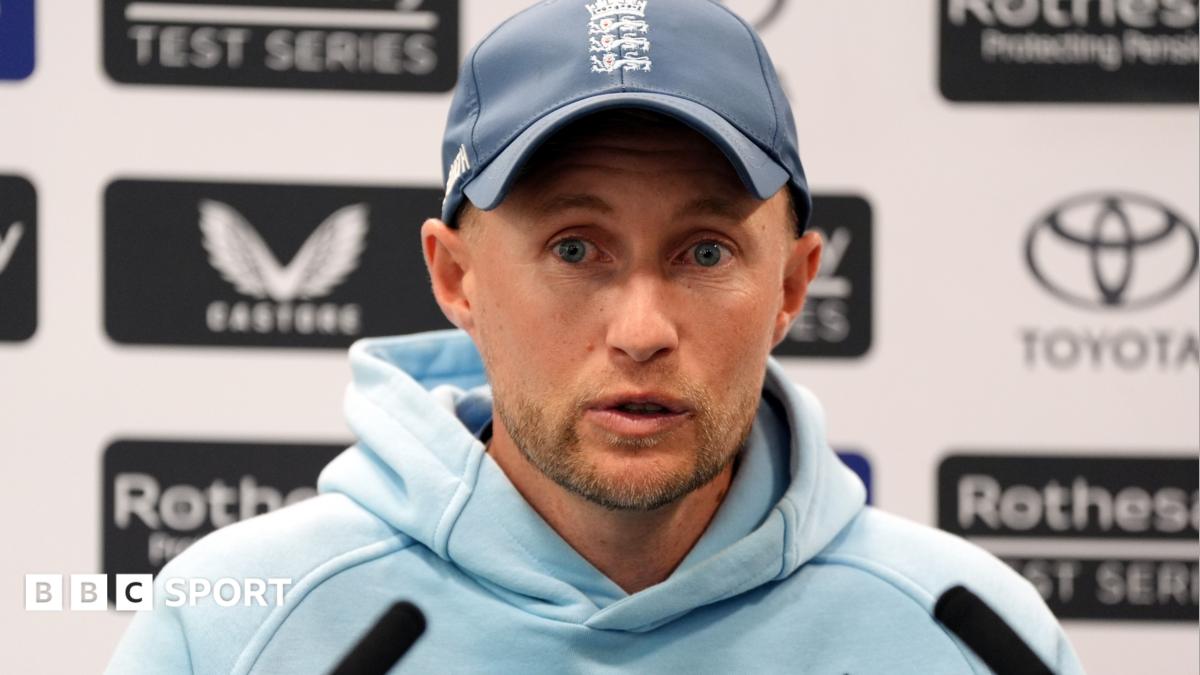
Joe Root is not interested in making excuses. Standing before the media at Lord's, the England captain did not offer the usual polished diplomacy of a leader shielding his players. Instead, he offered something far more raw: frustration. He is "hacked off."
The catalyst for this uncharacteristic bluntness was the weekend’s chaotic scenes in Derby, where fast bowler Brydon Carse was captured on social media in handcuffs outside a nightclub. While Carse was subsequently de-arrested, the optics were catastrophic for a team attempting to rebuild its professional identity. The fallout was immediate; Carse, 31, has been dropped from the squad for the second Test against Pakistan, with Sonny Baker stepping into the vacancy.

A Pattern of Distraction
The Carse incident is not an anomaly; it is a symptom. For a leadership group that has spent the last year trying to pivot toward a more autonomous, high-trust environment, the recurring theme of "stupid mistakes" is becoming impossible to ignore. Root’s frustration stems from the fact that these off-field lapses are actively cannibalizing the team's on-field efforts.
To understand the gravity of the situation, one must look at the sheer frequency of these disruptions. In the last twelve months, more than a quarter of England's 30 centrally contracted players have been implicated in or present during late-night incidents. This is not a fringe issue; it is a systemic vulnerability.
| Player(s) Involved | Incident Context | Location |
|---|---|---|
| Harry Brook (with Bethell and Tongue) | Brook was punched by a bouncer outside a nightclub | Wellington, New Zealand |
| Ben Duckett | Filmed appearing intoxicated during a holiday | Noosa, Australia |
| Ben Stokes and Gus Atkinson | Breached team curfew; present during a security staff assault | London, UK |
| Brydon Carse (with Stokes and Potts) | Arrested/handcuffed outside a bar | Derby, UK |
The presence of Ben Stokes at the Derby incident—not as the primary subject, but as a witness alongside Carse and Matthew Potts—underscores a recurring pattern of senior players being present in high-risk environments. Even as Stokes remains a centrally contracted player despite his June international retirement, the cultural weight of his presence in these settings cannot be overstated.
The Curfew Gamble
When Root was reappointed as Test captain, he made a definitive tactical choice: he abolished the midnight curfew that had been a staple of the Stokes and Brendon McCullum era. It was a move designed to treat players as adults and foster a sense of ownership. Root has stood by that decision, even as the team’s reputation suffers.
"In many ways we're going to have to earn a lot of trust back, and it's something that we're going to have to live and breathe consistently," Root admitted.
The leadership's current challenge is proving that autonomy does not equal anarchy. Root’s strategy appears to be one of high-stakes accountability. He has made it clear that while the midnight curfew is gone, the expectation to avoid "situations that could lead to trouble" is non-negotiable. He is attempting to cultivate a culture where players avoid the very environments that lead to these distractions.
The Leadership Test
If there were any lingering questions about Root's ability to navigate the complexities of modern captaincy, the Lord's press conference provided an answer. He managed to strike a difficult equilibrium: expressing compassion for Carse as a person while simultaneously condemning the behavior that jeopardizes the collective.
By stating that he was "brutally honest" about his disappointment, Root has signaled to his dressing room that the era of quiet management is over. He is not just managing a cricket team; he is managing a brand in crisis. For a group of players who may be in the dressing room for another decade, the message is clear: the talent is evident, but the standards are currently insufficient. The path forward is not through more rules, but through the consistent, unglamorous work of earning back the public's trust.
Sources
These sources formed the evidence pack for this article. Links open the original publisher; inclusion does not imply endorsement.
- bbc.co.uk original
- independent.co.uk original
- geo.tv original