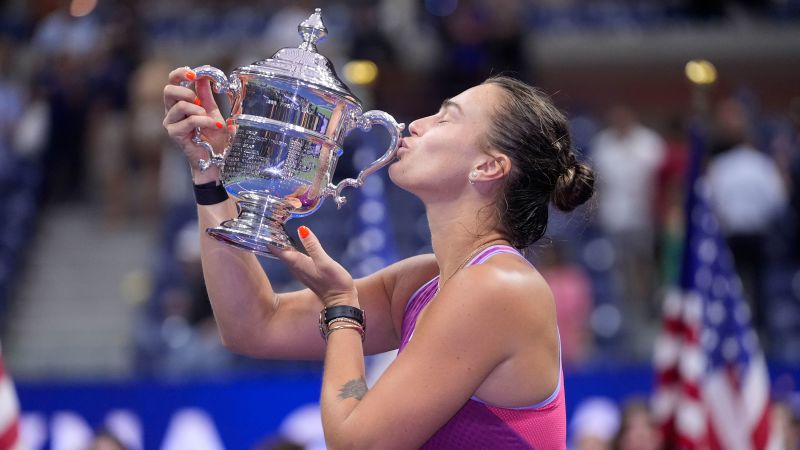
When the final point landed and the reality of the scoreboard set in, Aryna Sabalenka didn't celebrate with a standard victory lap. Instead, she collapsed to the Arthur Ashe Stadium court, a visceral release of the tension that has defined her 2026 campaign. The 7-5, 7-5 victory over America’s Jessica Pegula was more than just a Grand Slam title; it was the culmination of a season that, for much of the summer, looked destined to be a footnote of 'what ifs.'
The Momentum of a Champion
On paper, a straight-sets victory often implies a one-sided affair. The reality in New York was far more turbulent. Sabalenka opened with the clinical dominance that has become her trademark, racing to a set and 3-0 lead. For a moment, it looked as though the Belarusian would cruise to her first US Open trophy.
However, Pegula—who entered the final following a blistering summer run where she went 15-2—refused to be a bystander. The American found her rhythm at the most critical juncture, reeling off five consecutive games to snatch a 5-3 lead in the second set. The stadium held its breath as the match teetered on the edge of a deciding third set.
This was where the distinction between a contender and a champion emerged. Rather than succumbing to the pressure of Pegula’s surge, Sabalenka tightened her game. She reasserted control, winning the final four games of the match to close the door on Pegula and secure her third career Grand Slam singles title. With this win, Sabalenka becomes the first woman to sweep the hard court Grand Slams since Angelique Kerber in 2016.
Navigating the Slump
To understand the magnitude of this triumph, one must look at the preceding months. Before the winning streak that saw her take 12 consecutive matches, Sabalenka’s 2026 season had been, by her own standards, a "dud." The cracks had appeared prominently in the summer:
- Wimbledon: A fourth-round exit at the hands of Naomi Osaka.
- Canadian Open: A disappointing fourth-round loss in Toronto to Ekaterina Alexandrova.
- The Mid-Season Lull: A period of struggle where she had failed to secure a title since the spring in Miami.
Sabalenka was candid about the mental toll of these setbacks. "This summer, I had huge expectations that I’d succeed in the tournaments, and I desperately wanted to. But my body stopped me from that, and some things didn’t really work my way," she admitted prior to the US Open. Her strategy for recovery was a deliberate retreat—a period of VIP relaxation in Mykonos to "refresh, restart and be hungry again." That hunger was clearly present in New York.
The Psychological Shift: From Hostility to Support
For Sabalenka, the Arthur Ashe crowd has historically been a source of friction. In the 2023 final, she faced a New York audience that was almost entirely aligned with Coco Gauff, leaving the Belarusian feeling isolated in the heat of competition. She admitted that the lack of support last year was a factor she had to actively resolve.
"I felt like last year there was kind of like close to zero on my side, and this year I felt a lot of support, even in the finals," Sabalenka noted. This shift in atmosphere provided a crucial emotional buffer. Even when facing American favorites, the warmth from the stands allowed her to maintain focus rather than fighting against the stadium itself.
"Every time I see my name on that trophy, I’m so proud of myself, I’m proud of my family that they never gave up on my dream and that they were doing everything they could to keep me going." Aryna Sabalenka
That sense of legacy was deeply personal. Reflecting on the loss of her father, Sabalenka emphasized that her pursuit of greatness is inextricably linked to her family name. The trophy is not merely a professional milestone, but a tribute to a support system that endured the lows of her early 2026 season alongside her.
The Rise of Pegula
While the night belonged to Sabalenka, it also marked a significant breakthrough for Jessica Pegula. The Buffalo native, daughter of the owners of the Buffalo Bills and Sabres, transformed her game during the North American hard court swing. Previously an underdog at the major level with a 0-6 record in quarterfinals, Pegula’s run in New York catapults her from No. 6 to No. 3 in the world, matching her career-high ranking. Though she fell to the head-to-head dominance of Sabalenka—who now holds a 6-2 edge over the American—Pegula has firmly established herself as a perennial threat on the world stage.
Sources
These sources formed the evidence pack for this article. Links open the original publisher; inclusion does not imply endorsement.
- cnn.com original
- si.com original
- sports.inquirer.net original
- independent.co.uk original