
The skies at Korogi Sports Park made the call no captain wanted to make. With Sri Lanka and Nepal ready to meet in the third quarter-final of the Asian Games men’s cricket tournament, continuous rain associated with Typhoon Dujuan washed the match out before a ball was bowled. Under the tournament’s knockout rule, Sri Lanka advanced to the semi-final on their higher ICC T20I ranking, leaving Nepal to watch from the sidelines.
It was a bitterly familiar ending at this venue. Not a single quarter-final at these Games was completed; every last-eight match was settled by the weather rather than by bat or ball. Nepal had earned their place the hard way, topping Group A after stunning Afghanistan by five wickets in the opener. Kushal Bhurtel and Lalit Rajbanshi combined for seven wickets in that victory, and Sundeep Jora followed with an unbeaten 57 off 32 balls against Japan, supported by Lokesh Bam’s 52 not out from just 22 deliveries. Sri Lanka, meanwhile, had qualified directly for the quarter-finals and waited for the knockout stage.
There was genuine intrigue in the match-up that never happened. Sri Lanka and Nepal had never completed a men’s T20I against each other. Their only scheduled meeting, at the 2024 T20 World Cup, was washed out without a ball being bowled. Captain Sahan Arachchige was to lead a Sri Lankan mix of Niroshan Dickwella, Ashen Bandara, Nuwanidu Fernando, Chamika Karunaratne, Nuwan Thushara, Binura Fernando, Vijayakanth Viyaskanth, Dushan Hemantha and Wanuja Sahan, against a Nepal side built around Dipendra Singh Airee, Rohit Paudel, Sandeep Lamichhane, Karan KC, Kushal Malla and Sompal Kami. Nepal had pushed England close at the 2026 T20 World Cup and arrived on a five-match completed-T20I winning streak, while Sri Lanka’s recent form read LLLLW.
Korogi Sports Park’s own record suggested the match would have been difficult for batters anyway. Across completed group-stage matches and semi-finals at the venue this tournament, the average first-innings score was just 108, a low par by modern T20I standards. The hybrid clay-and-synthetic pitch offered bounce and grip, with spin dominating as innings progressed. Afghanistan’s Arab Gul Momand took the best figures at the ground, 4 for 8 against Japan, while Ishan Kishan’s 80 off 46 balls for India against Sri Lanka stood as the highest individual score. India posted the venue’s highest tournament total, 169 for 7, and also inflicted the lowest, bowling Sri Lanka out for 45 in the semi-final.
Had play been possible, Nepal would have entered as the form side. Their group-stage momentum was real, built on beating Afghanistan and thriving in Nisshin’s conditions. Sri Lanka brought experience and a deeper pool of international players, but several squad members faced a high-pressure knockout game with something to prove. The winner was set to face India or Afghanistan in the semi-final, meaning the abandoned match denied both teams a clear path toward a medal.
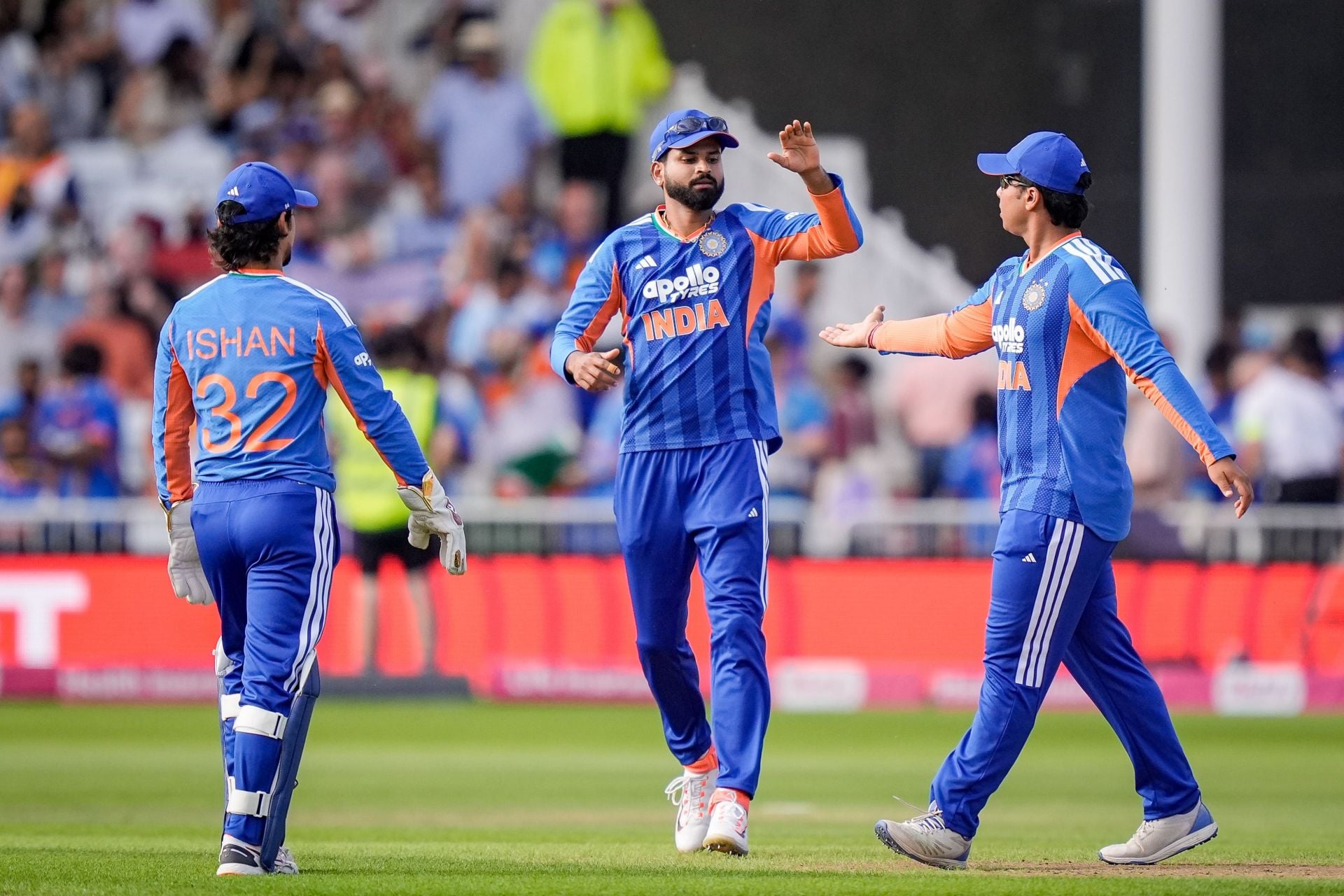
The Asian Games Men’s cricket competition has reached its knockout stage, and there is no room for a second chance when Sri Lanka take on Nepal in the third quarter-final at Korogi Sports Park.
For Nepal, the abandonment is especially cruel. They had already bowed out at this stage in the previous Asian Games, fighting India before the eventual champions progressed. Three years later, they once again reached the quarter-finals only to have the outcome decided by ranking rather than performance. Sri Lanka, too, know the frustration: their Hangzhou campaign ended in a close quarter-final loss to Afghanistan, who went on to take silver behind gold medallists India.
It is worth distinguishing what happened from what nearly did not. The fourth quarter-final, between Bangladesh and Malaysia, was scheduled to begin at 5 am GMT on the same rain-threatened day, with build-up starting well in advance. Bangladesh ultimately delivered a strong performance to secure victory against Malaysia at Korogi Sports Park, played on September 29, 2026. That completed result offered a contrast: one quarter-final was eventually decided on the field, while Sri Lanka and Nepal never got theirs.
The broader picture is a tournament whose knockout identity has been shaped more by the forecast than by the fixture list. All four quarter-finals were washed out, and India and Pakistan reached the final after their own quarter-finals were abandoned, with both teams playing only one game on the road to the gold-medal match. Semi-finals were conducted without hindrance, including India’s match against Sri Lanka on October 1 under sunny conditions, but the quarter-finals remain the most conspicuous casualty of the weather.
For Nepal, the ranking rule meant their five-match winning streak counted for nothing once the rain persisted. For Sri Lanka, advancement came without the knockout test they had been waiting to take. Neither side can be said to have earned this semi-final place on the field at Korogi Sports Park, and that uncertainty may be the most honest read of an abandoned contest.
Sources
These sources formed the evidence pack for this article. Links open the original publisher; inclusion does not imply endorsement.
- timesofindia.indiatimes.com original
- sportingnews.com original
- sportskeeda.com original
- indiatoday.in original