Powerplay Blitz and Middle-Over Recovery
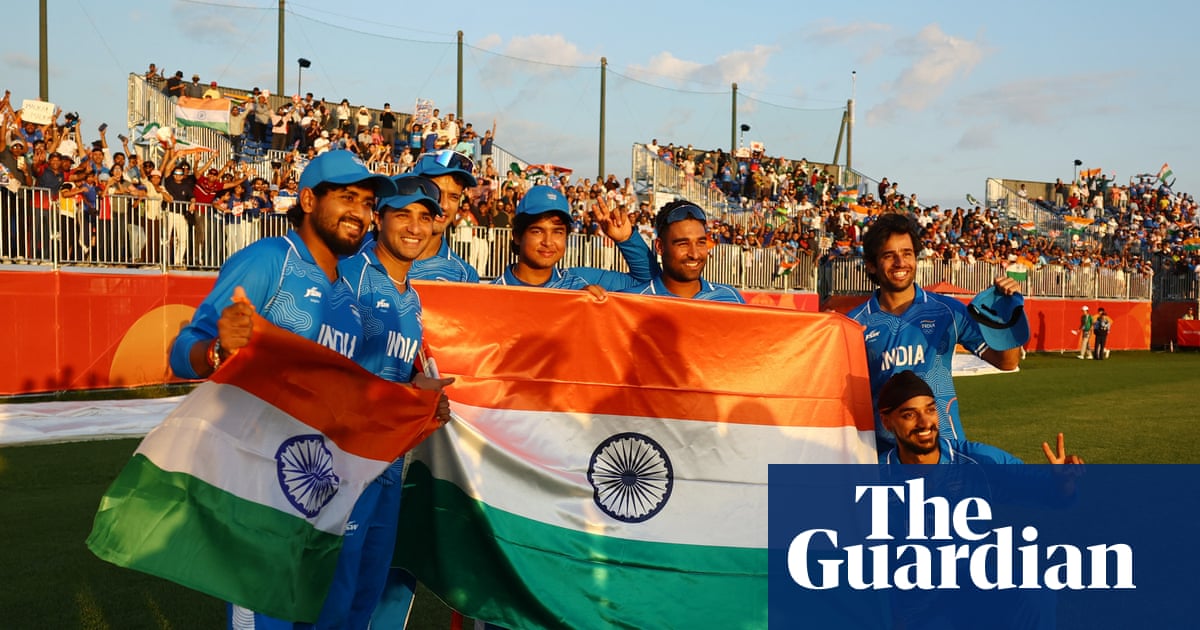
The distance between India and Pakistan was measured as much by diplomatic protocol as by run rate at Nagoya’s Korogi Sports Park on Saturday. Captains Shreyas Iyer and Sahibzada Farhan bypassed the customary pre-match handshake at the toss, extending a frostiness established during last year’s Asia Cup and reinforced by months of diplomatic freeze across South Asia. When the Asian Games T20 final concluded, the divide remained total: India celebrated a 19-run victory and a sweep of continental cricket gold with a flag-draped lap of honour, while Pakistan’s squad retreated straight to the dressing room without exchanging handshakes.
Opting to bat first on a converted baseball surface in Nisshin, India established early momentum in the second over when 15-year-old batting sensation Vaibhav Sooryavanshi smashed back-to-back sixes off Saad Masood in a 24-run over. Though Sooryavanshi fell four balls later for 15, opener Abhishek Sharma accelerated aggressively. Aided by erratic Pakistan fielding—Abhishek was dropped twice and survived a botched run-out chance when Ahmed Daniyal missed the stumps with the batsman stranded on 46—he raced to a 20-ball half-century before exiting for 61 off 28 deliveries.
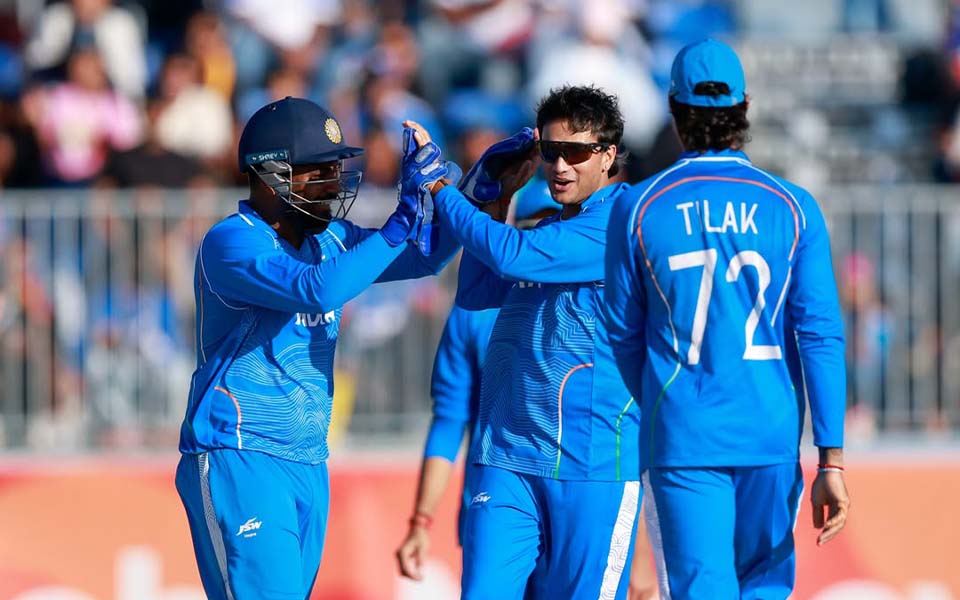
Pakistan briefly wrested control back through the middle overs. Ishan Kishan managed 20 and captain Iyer fell for 21, leaving India pegged back at 133 for five in the 15th over. However, Tilak Varma and Shivam Dube reconstructed the innings with a late surge, adding 62 runs off 30 balls for the sixth wicket. Tilak finished unbeaten on 51 off 22 balls with four sixes, while Dube bludgeoned 27 off 15 deliveries to push the T20 world champions to 211 for six.

Hasan Nawaz Threat and Death-Over Pressure
Faced with a steep chase—surpassing Pakistan’s previous highest successful second-innings T20 total of 208—the chasers stumbled early to 39 for three as Sahibzada Farhan (10) and Maaz Sadaqat (23) departed. Hasan Nawaz then ignited a brilliant counter-offensive, reaching his fifty off 28 balls and combining with Saim Ayub in an 87-run fourth-wicket stand. Ayub, who had earlier dropped two catches in the field, helped steady the chase before Dube altered the match’s trajectory at the start of the 15th over, inducing a miscue that Washington Sundar caught running in from square leg to leave Pakistan 126 for four.
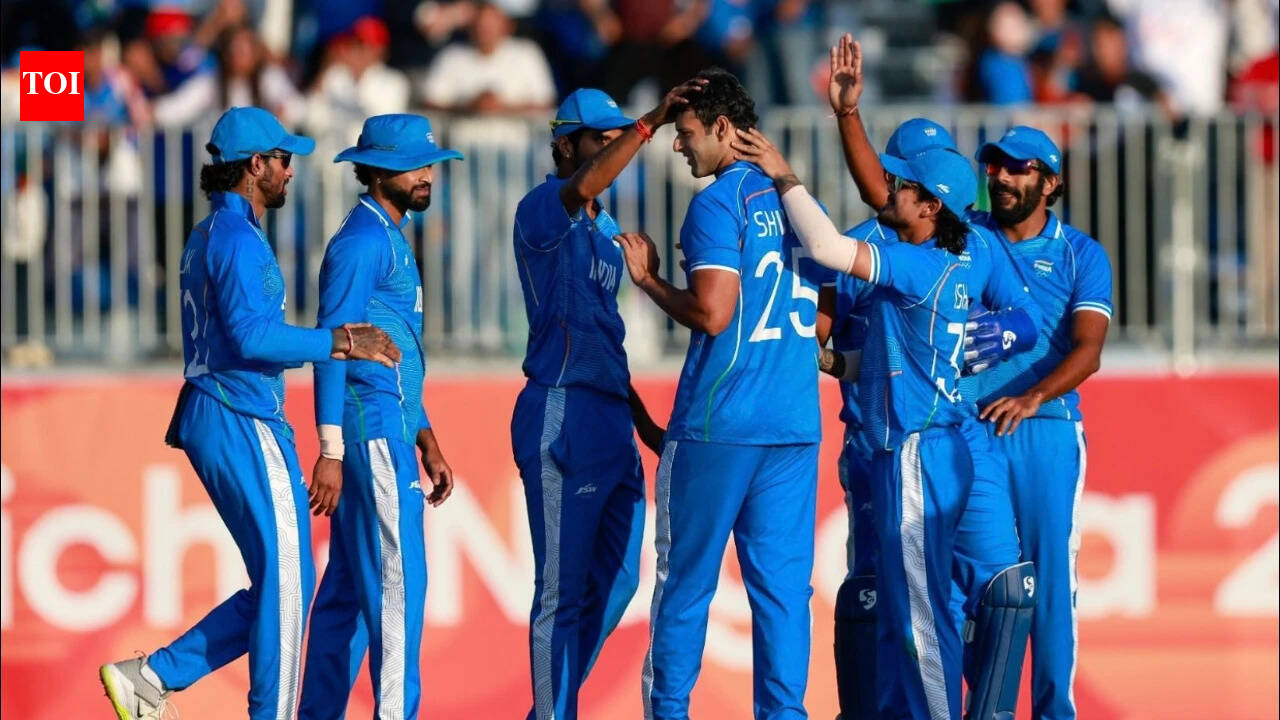
Sundar subsequently dismissed Abdul Samad at long-on, leaving Pakistan requiring 52 runs from the final three overs. Jasprit Bumrah delivered a crucial 19th over, yielding only 11 runs to leave Pakistan needing an improbable 33 from the final six balls. Dube closed out the match, removing Hasan off the final delivery for a heroic 51-ball 96 featuring seven sixes and five fours. Pakistan finished on 192 for six—though secondary match summaries noted five wickets down, detailed ball-by-ball reporting confirmed Hasan fell on the final delivery of the 20th over.

Diplomatic Standoff Shapes Continental Sweep
The men's victory completes a dual gold-medal performance for India at the Games, following the women’s team’s 147-run final win over Sri Lanka on September 22. Sri Lanka captured the men's bronze earlier in the day by defeating Bangladesh by 63 runs. Yet the political backdrop hovered heavily over the Korogi Sports Park venue. Following the May 7 border hostilities, both governments implemented reciprocal punitive measures: suspending the 1960 Indus Waters Treaty, shutting the Attari-Wagah land crossing, expelling defense attachés, closing airspace to commercial traffic, and halting bilateral trade.
On the field, tactical composure down the stretch allowed India to defend their continental crown. Off it, the deliberate avoidance of handshakes at the toss and post-match confirmed that diplomatic freeze remains firmly intact across South Asian sport.
Sources
These sources formed the evidence pack for this article. Links open the original publisher; inclusion does not imply endorsement.
- bbc.co.uk original
- theguardian.com original
- outlookindia.com original
- sports.yahoo.com original