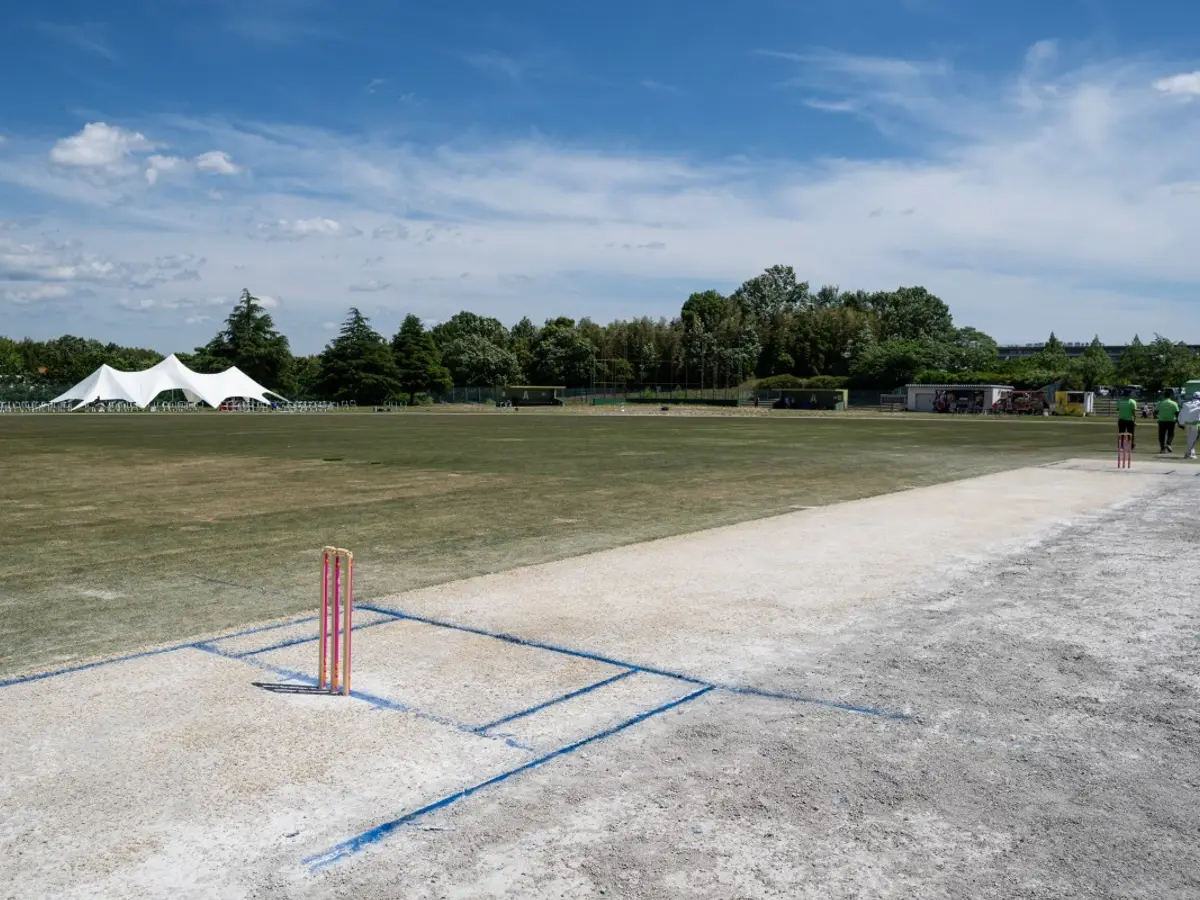
There is a specific kind of heartbreak reserved for sports administrators who spend a year preparing a stage, only for the weather to pull the curtain before the first act begins. At the Korogi Sports Park on the southern outskirts of Nagoya, that heartbreak is palpable. Organizers spent twelve months painstakingly converting a baseball diamond into a cricket venue, a feat of engineering and logistics that has, so far, been met with nothing but persistent rain.
"Cricket, like baseball, you can't play it in the rain. A year of my life on this, and it rains," lamented Jarrad Shearer, the games' sports director, as the second consecutive day of no play turned the quarter-finals into a series of administrative decisions rather than athletic contests.
A Year of Preparation Drowned by Clouds
The Tuesday washout at the Aichi-Nagoya Asian Games was a blunt instrument. The scheduled quarter-final matchups—Sri Lanka against Nepal and Bangladesh against Malaysia—were both abandoned without a single ball being bowled. The persistent rain arrived well before the toss, rendering the pitch unplayable and the stands a sea of rain ponchos.
While the players were denied a chance to compete, the tournament's structure provided a mathematical solution to the atmospheric chaos. Because both Sri Lanka and Bangladesh held higher seedings in the ICC T20I rankings, they were granted automatic progression to the semi-finals. This safety net is a byproduct of the tournament's design, which saw the four highest-ranked teams—India, Pakistan, Sri Lanka, and Bangladesh—receive direct entry into the quarter-final stage.
The organizers are not surrendering to the elements just yet. Shearer remains optimistic that the combination of manual labor and a favorable forecast might salvage the schedule. "Come tomorrow morning it will be all hands on deck to dry up the areas that aren't under the covers," Shearer noted, detailing a tactical arsenal of "soppers," "squeegees," "big old brooms," and "sponges." With temperatures expected to hit 32°C (89.6°F) under sunny skies, the hope is that the sun will do the heavy lifting in the afternoon.
The Ranking Safety Net: How Seedings Decided the Semis
The washouts have fundamentally altered the momentum of the tournament. Instead of earning their spots through on-field dominance, Sri Lanka and Bangladesh advance via the spreadsheet. This creates a unique tension heading into the semi-finals on Thursday, October 1, where the stakes are governed by both skill and the contingency of the ICC T20I rankings.
The semi-final matchups are set:
- First Semi-final: Bangladesh vs. Pakistan
- Second Semi-final: India vs. Sri Lanka
The tournament rules have built in a secondary layer of protection against the Nagoya weather. Should the semi-finals also be plagued by rain or result in a no-result, the higher-seeded team will advance to the final. This means that in the first semi-final, any washout or no-result will automatically propel Pakistan into the final. In the second semi-final, India—the defending gold medallists—will move on to the final over Sri Lanka if the match is abandoned.
The Path to an India-Pakistan Final
Cricket fans are already eyeing the potential for a blockbuster showdown between arch-rivals India and Pakistan. Under the current circumstances, there are four distinct paths to an India-Pakistan final:
- India defeats Sri Lanka and Pakistan defeats Bangladesh.
- A washout in the second semi-final allows India to advance, while Pakistan defeats Bangladesh.
- India defeats Sri Lanka, and a washout/no-result in the first semi-final allows Pakistan to advance.
- Both semi-finals are abandoned, allowing both India and Pakistan to advance via their superior rankings.
Squad Depletion and High-Stakes Matchups
While the weather is the primary antagonist, Bangladesh faces a secondary challenge in their personnel. The team will be competing without Najmul Hossain Shanto, who has been ruled out of the tournament due to a fever and infection. This loss adds significant weight to their semi-final clash against a powerhouse Pakistan side.
Meanwhile, India enters the semi-finals with the target of their backs on. As the defending gold medallists, their encounter with Sri Lanka will be the litmus test for whether they can maintain their grip on the podium, regardless of whether the sun decides to cooperate.
Evidence-Led Forecast: The October 1st Outlook
Likely Tactical Pattern: Given the recent weather disruptions, expect the semi-finals to be played at a high tempo. If the pitches are dry after the heavy manual clearing described by Shearer, the emphasis will likely shift to aggressive T20I styles. However, if the ground remains heavy, we may see a more cautious approach from the top-order batters in the early overs.
Decisive Matchup: The battle between the Pakistan bowling attack and a depleted Bangladesh batting lineup (missing Shanto) will likely determine the first semi-final. Conversely, India's ability to navigate a Sri Lankan side that has had significant time to rest while waiting out the rain will be critical.
Strongest Counter-Case: The "Ranking Rule" is the ultimate disruptor. If the rain returns on Thursday, the tactical nuance of the players becomes secondary to the statistical reality of the ICC T20I rankings, potentially handing a final berth to a team without having played a single ball in the knockout stages.
What would change the read: Any shift in the 32°C sunny forecast toward increased cloud cover would immediately increase the probability of the tournament being decided by rankings rather than runs.
Sources
These sources formed the evidence pack for this article. Links open the original publisher; inclusion does not imply endorsement.
- wionews.com original
- channelnewsasia.com original
- straitstimes.com original
- thestar.com.my original