When the Saudi Public Investment Fund announced it would cease its open-ended funding of LIV Golf at the conclusion of the 2026 season, the breakaway circuit was thrust into an immediate existential crisis. Having absorbed more than $5 billion in capital since its inception in 2022, the four-year-old league has entered a defining restructuring window under Chief Executive Scott O’Neil. With a self-imposed or implied operating deadline of September 1 to secure between $250 million and $300 million in fresh investment, the organization is attempting a rapid pivot from unlimited state backing to a sustainable standalone model dubbed LIV 2.0.
Yet the logistical and operational realities confronting O'Neil and potential investors present a daunting mountain. According to financial filings for its UK entity, direct annual revenue sat at roughly $65 million, set against annual net losses exceeding $450 million. Cumulative losses across the venture have cleared $1.1 billion, prompting auditors to flag material uncertainty over whether the company can continue as a going concern. While O'Neil has pointed to half a billion dollars in sponsorship commitments from brands such as HSBC, Salesforce, Aramco, and Riyadh Air, those figures measure cumulative commitments rather than annual realized cash flow.
The Balance Sheet Conundrum: Assets vs. Liabilities
Financial and legal experts in investment, restructuring, and bankruptcy note that LIV faces a unique paradox: its most valuable assets are also its most severe liabilities. The league's player roster is anchored by staggering multi-million dollar contracts—Jon Rahm at $300 million, Bryson DeChambeau and Dustin Johnson at $125 million each, and Phil Mickelson at $200 million. At the same time, ageing veterans like Lee Westwood, Ian Poulter, Graeme McDowell, and Richard Bland hold contracts in the tens of millions believed to expire at the end of this season.
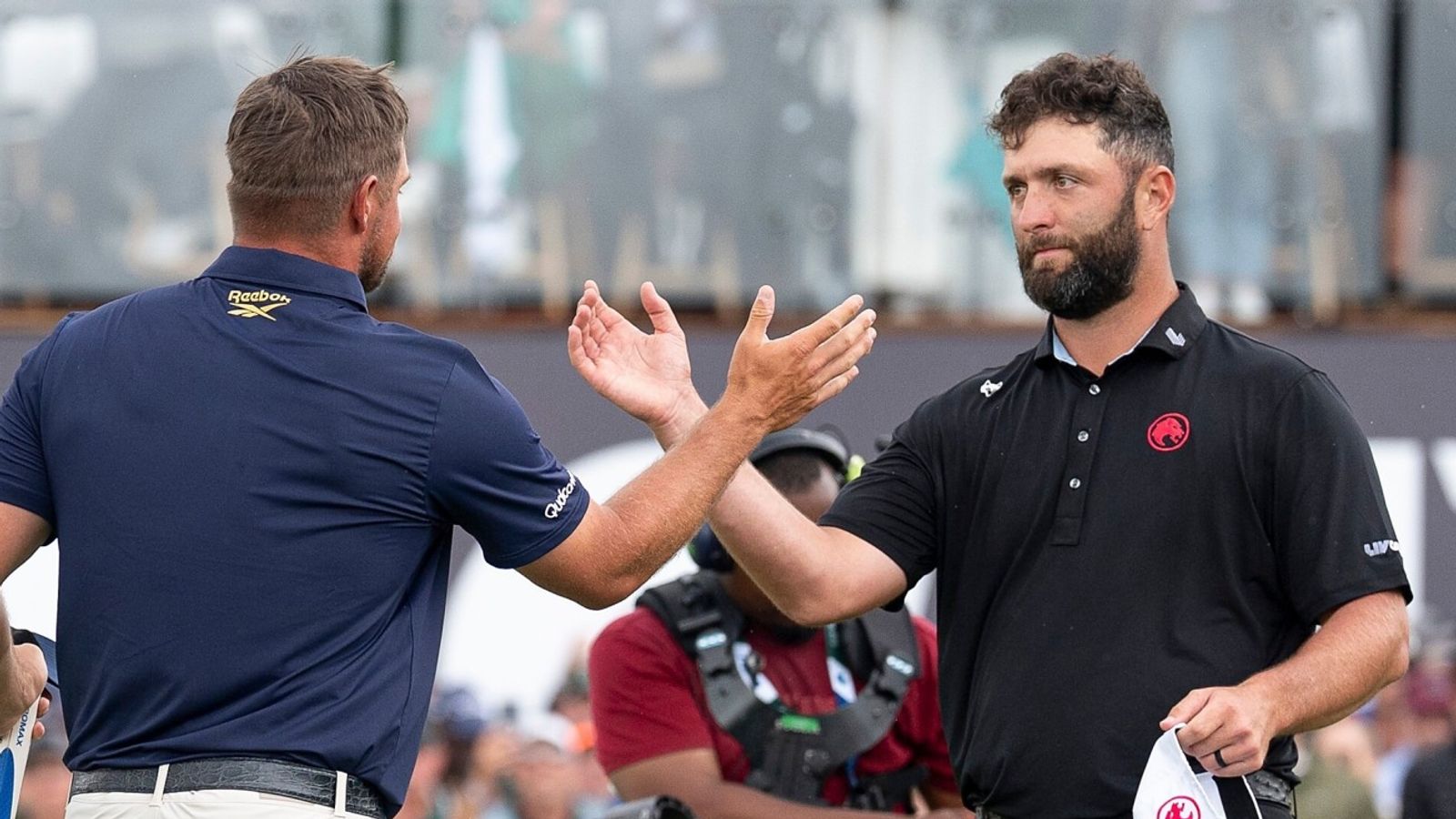
Crucially, these contracts are agreements with LIV Golf as an entity, not guaranteed by the PIF. If the league ceases to exist, those outstanding financial obligations dissolve into bankruptcy proceedings. Legal experts point out that management risks utilizing Chapter 11 restructuring or liquidation as leverage to force stakeholders to the table, warning creditors that refusal to compromise leads straight to receivership.
The Equity Swap and Tax Tailwinds
To attract the targeted $300 million in fresh capital from ultra-high-net-worth individuals, family offices, private equity, and media partners, LIV 2.0's investment deck centers on player ownership and equity participation. Under this framework, top stars would take substantial cuts to their guaranteed cash compensation in exchange for equity stakes in the league's 13 standalone team franchises—modeled similarly to traditional major sports team ownership.

As Mason Champion, managing director at Morgan Stanley Wealth Management, noted regarding the player equity proposition, If the players converted cash compensation to equity, and if it’s real, franchise-based team golf, it’s a different model. It’s like Aaron Judge having ownership of the Yankees.
Compounding the pitch to prospective investors is LIV’s massive stockpile of net-operating loss (NOL) carryforwards. Having burned through billions, the league carries tax losses that new investors could utilize to minimize future taxes on capital gains—up to 100 percent of NOLs in the UK and capped at 80 percent in the US. However, realizing this tax benefit requires careful staging, as a sudden change of ownership would dramatically diminish the annual value of those carryforwards under current IRS guidelines.
Schedule Friction and Structural Headwinds
The financial scramble coincides with mounting operational friction. Reports emerged that LIV is planning to cancel its season-ending Team Championship in Michigan, scheduled for August 27-30 at The Cardinal at Saint John’s Resort, where no infrastructure buildout had commenced. This follows player Martin Kaymer telling outlets that the finale was highly unlikely
to take place, alongside a postponed June event in New Orleans and a breach-of-contract lawsuit from tech vendor Mobii seeking $1 million in damages over cut broadcast innovations.
Compounding matters, LIV recently lost its closest regional partner when the Asian Tour agreed to a new alignment with the PGA Tour and DP World Tour. With only two events remaining on the 2026 calendar—Bedminster and Chatham Hills near Indianapolis—the runway for resolving the league's structural deficits is narrowing by the day.
Evidence-Led Forecast
Assessing the trajectory through September requires weighing opposing structural pressures. The strongest argument for survival is that private equity and strategic investors may find the discounted entry valuation, paired with multi-billion-dollar NOL tax shields and stand-alone team franchise concepts, too lucrative to ignore if top players successfully absorb equity conversions. The counter-case, articulated by sports marketing executives like Mongoose Group CEO Chris O’Donoghue, points to a fundamentally flawed commercial program where low ticket sales, weak US television viewership relative to the PGA Tour, and the complete withdrawal of sovereign funding make the capital raise a long shot.
Decisive Factor: Whether Bryson DeChambeau, Jon Rahm, and other marquee names formally execute binding agreements to trade guaranteed cash for team equity before the September deadline.
What Would Change the Read: An official, verified announcement of institutional capital wired into escrow before September 1 paired with signed player equity restructuring documents. Absent that proof, the circuit's transition into formal insolvency or court-supervised restructuring remains the more probable outcome.
Sources
These sources formed the evidence pack for this article. Links open the original publisher; inclusion does not imply endorsement.
- US Golf Digest original
- bunkered.co.uk original
- skysports.com original
- Streamline original
- Eamon Lynch, Golfweek Sat, August 1, 2026 at 9:16 PM UTC · 4 min read original
- sportsbusinessjournal.com original