Related coverage
View the Instagram post
Cricket, once defined by the rhythmic thud of leather on willow, is currently navigating a period of profound structural change. The cricket equipment market is no longer a localized trade of tradition; it is a burgeoning global industry projected to reach USD 1,137.8 million by 2033, growing at a CAGR of 6.01%. As the sport expands into North America and new African territories, the humble cricket ball finds itself at the center of a tension between artisanal heritage and digital-age disruption.
The Meerut Crossroads: Craft vs. Commodity
In the quiet villages of Meerut, India, the production of a cricket ball remains a feat of human dexterity. With over 10,000 people across 30 villages involved in the trade, the process is a multi-generational skill transfer known as the ustaad system. Hand-stitching remains the gold standard for performance, offering a seam profile and durability that machines struggle to replicate. Yet, this industry is under pressure. Raw material costs, specifically for high-quality "puttha" leather, are volatile, and the labor force remains largely unorganized, often earning as little as INR 20-30 per ball for a product that retails for significantly more.
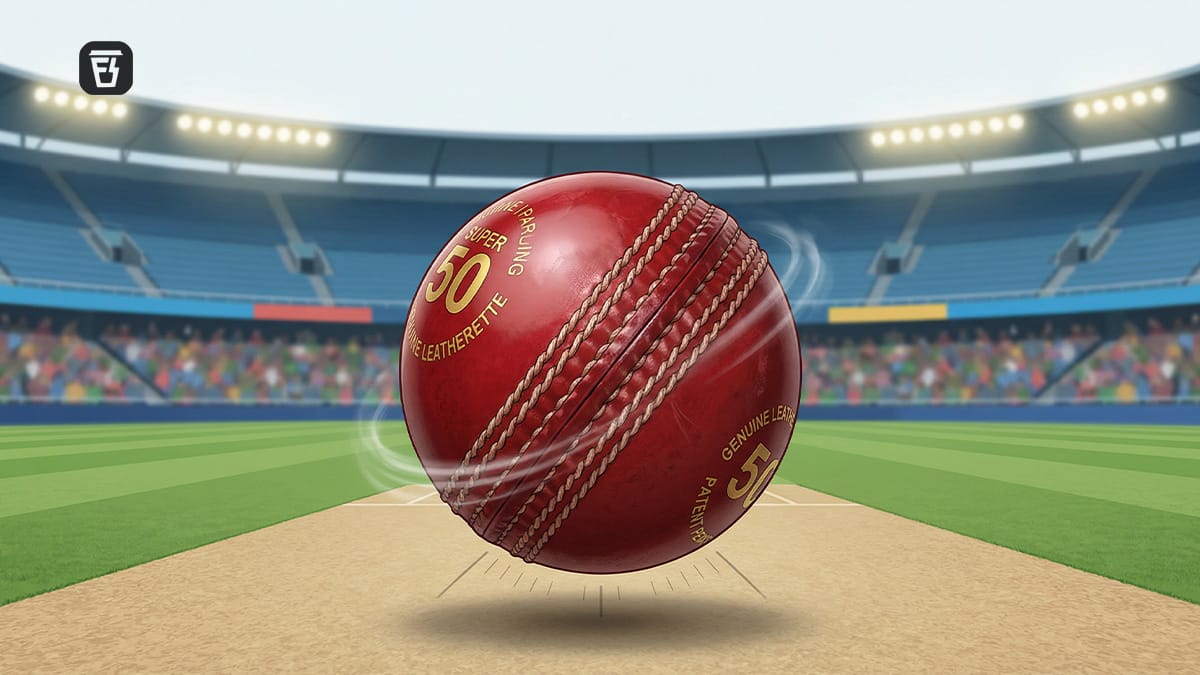
This economic disparity is driving an interest in modernization. The emergence of the "Super 50," a synthetic, vegan-leather ball, represents a direct response to these pressures. By eliminating the reliance on traditional tanneries, manufacturers like SG are not only addressing environmental and ethical concerns but also solving for the "moisture problem" that plagues leather in variable climates. However, this shift risks alienating the cottage industries that have formed the backbone of the global supply chain for decades.
Silicon Inside the Seam: The Rise of the Smart Ball
While vegan leather changes the exterior, the integration of smart chips into the core is rewriting the economics of the sport itself. Kookaburra and Sportcor have successfully pivoted to replacing the traditional cork center with a silicone composite housing a Nordic Semiconductor nRF52840 chip. The strategic value here is immense: in an era of billion-dollar player portfolios and legalized sports betting, "soft signals" from umpires are increasingly insufficient.
These smart balls provide zero-latency data—RPM, impact power, and pace decay—that broadcasters and bookmakers now consider essential currency. Data is replacing intuition. As professional leagues like the BBL and CPL experiment with this technology, the shift is clear: the ball has become a high-tech asset class. For a bowler, this data is now a tool for contract negotiation; for a franchise, it is a scouting metric that allows for remote recruitment based on objective spreadsheet performance rather than manual observation.
Market Dynamics and Future Sustainability
The global demand for cricket equipment is driven by a paradox: as the sport grows in popularity, the infrastructure needed to support it—coaching academies, schools, and professional leagues—demands both affordable bulk supplies and high-tech professional gear. In Europe, the market is poised for the fastest growth, supported by regional championships like the Hamburg Cricket Championship and the Europe Cricket League. Conversely, the Asia-Pacific region continues to hold the largest market share, anchored by the deep-rooted passion in India, Australia, and Pakistan.
The challenges ahead are largely logistical and socio-economic. Supply chain disruptions, port congestion, and currency volatility pose risks to manufacturers who rely on international distribution. Furthermore, the push for mechanization in the manufacturing of synthetic balls could render the specialized hand-stitching skills of thousands redundant. The future of the cricket ball will likely be defined by a delicate balance: maintaining the traditional feel that players demand while embracing the digital transparency that investors and broadcasters now mandate. The sport is becoming a data-mining operation, and the most valuable information is that which is hidden inside the ball.
Sources
These sources formed the evidence pack for this article. Links open the original publisher; inclusion does not imply endorsement.
- Devin Cho original
- sphericalinsights.com original
- Ayush Nanda original
- finshots.in original
- SPHERICAL INSIGHTS LLP original
- fortunebusinessinsights.com original
- theenterpriseworld.com original