The calendar said late November, but the transaction wire read like the first week of December — because, effectively, it was. With a lockout set to freeze all player movement at 11:59 p.m. ET on Dec. 1, front offices compressed months of negotiation into a few frantic days, and the result was a pitcher-specific spending spree unlike any recent offseason.
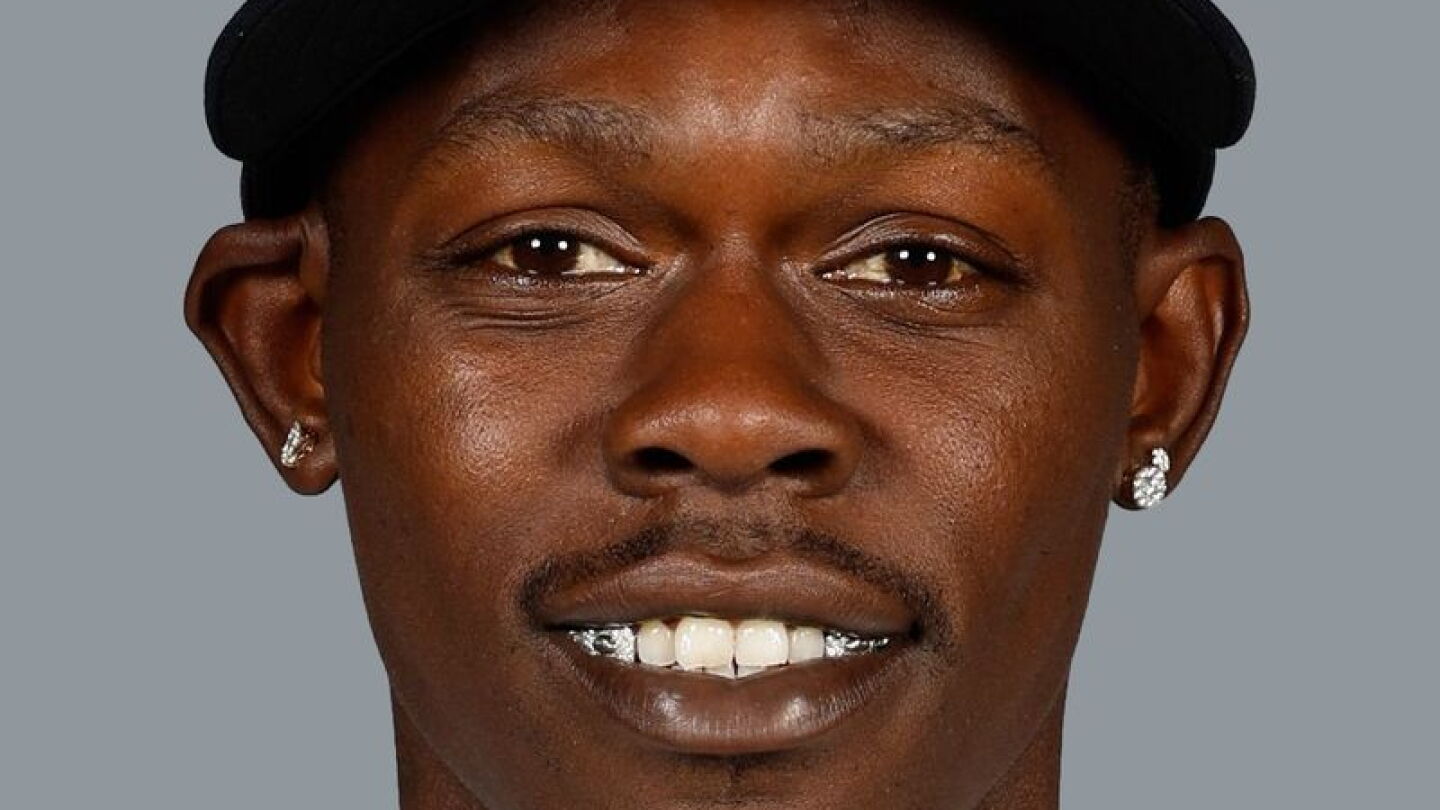
The centerpiece was inevitable. Tarik Skubal, the back-to-back Cy Young winner the Tigers refused to extend a year ago, agreed to a nine-year, $450 million contract with the New York Mets, shattering Yoshinobu Yamamoto's $325 million total-value record and the $43.3 million AAV benchmark shared by Max Scherzer and Justin Verlander. The deal includes a $45 million signing bonus — useful liquidity with a work stoppage looming — and no opt-outs. Steve Cohen, baseball's wealthiest owner, outbid the Dodgers, Padres and Blue Jays for a 30-year-old lefty who had arthroscopic elbow surgery in May yet returned to post a 2.73 ERA over 19 starts split between Detroit and Los Angeles. "Free agency is a negative expected value," Cohen said in September. "But if you have to fill in holes, you've got to fill in holes, too." The Mets now carry three of the game's top five AAVs: Skubal ($50M), Juan Soto ($51M) and Bo Bichette ($42M).
Colorado's Coors Field Calculus
While New York bought certainty, Colorado bought volume — and a very specific profile. The Rockies committed $42 million over three years to Patrick Sandoval and $32 million over two to David Peterson, making them the fourth and fifth starting pitchers added to the organization in a week. Neither signing aligns with conventional surface stats. Sandoval, 30, owns a 5.12 ERA in 13 post-Tommy John starts for Boston in 2026 but a 3.77 FIP and a 4.85 xERA; he has never thrown 150 innings in a season. Peterson, 31, posted a 3.70 ERA in 80⅓ innings with the Cubs after a 6.09 ERA in New York, yet his 4.56 xERA with Chicago was barely better than his 4.97 mark with the Mets. Both pitchers generate elite ground-ball rates. At Coors Field, where the ball carries and the outfield is expansive, keeping the ball on the ground is a survivable strategy. Whether it justifies $14M and $16M average annual values for pitchers who struck out below-average hitters and walked above-average hitters is the gamble.

The Middle-Class Crunch
Beyond the headlines, the market's middle tier moved with startling speed. Kevin Gausman, 35, coming off a 4.51 ERA — his first season above 4.00 since 2019 — still secured a one-year, $25M deal from Detroit, $3M above his previous AAV, betting on a 3.74 FIP and a six-year track record of 30+ starts. Foster Griffin, who reinvented himself in Japan before a 3.60 ERA, 31-start season for Washington and Cleveland, returned to the Guardians on three years, $48M despite a 5.19 ERA in nine Cleveland starts; his underlying metrics were better in Ohio. Kris Bubic, limited to nine starts and 14 appearances split between Kansas City and Los Angeles, landed a one-year, $17.5M pillow contract from Cleveland. The Twins added Kevin Ginkel (two years, $18M) and welcomed back Sonny Gray (two years, $55M) for a second stint after his 2.72 ERA, 29-start campaign in Boston. Even the White Sox, in full rebuild, guaranteed Dustin May "just north" of $50M over three years.

Japanese Imports and the Opt-Out Lever
The international market followed the same accelerated timeline. Toronto, missing on Skubal, pivoted to Kaima Taira: five years, $80M with an opt-out after year three and a $5M signing bonus. The 27-year-old right-hander posted a 1.36 ERA as a full-time starter for the Seibu Lions in 2026 after toggling between rotation and bullpen. Chicago countered with a six-year, $120M commitment to outfielder Teruaki Sato, the 2026 Central League Triple Crown winner and two-time MVP, and a separate five-year, $120M deal for lefty Trevor Rogers, whose 1.81 ERA breakout in 2025 Baltimore gave way to a 4.03 ERA in 2026. The Cubs are betting on the 2025 version reappearing at Wrigley.
What the Lockout Changes
History offers a guide. The 2021-22 lockout triggered a similar pre-freeze flurry, then a 99-day silence before business resumed in March. This year's class, thin on elite talent outside Skubal, may have forced the middle class off the board early — players and teams alike preferring defined terms over an undefined economic landscape. The Mets' rotation now leads with Skubal, but David Stearns still needs bullpen depth, a veteran starter, and a right-handed bat. The Rockies have quantity but unproven Coors compatibility. The Guardians have depth but innings questions. And every club now waits for a new CBA to learn whether the rules they just spent millions under will still apply when play resumes. Skubal's first pitch in a Mets uniform is months away, but the offseason's defining story has already been written: when the clock ticks loudest, the checks get biggest.
Sources
These sources formed the evidence pack for this article. Links open the original publisher; inclusion does not imply endorsement.
- sportingnews.com original
- newsday.com original
- sports.yahoo.com original
- cbssports.com original